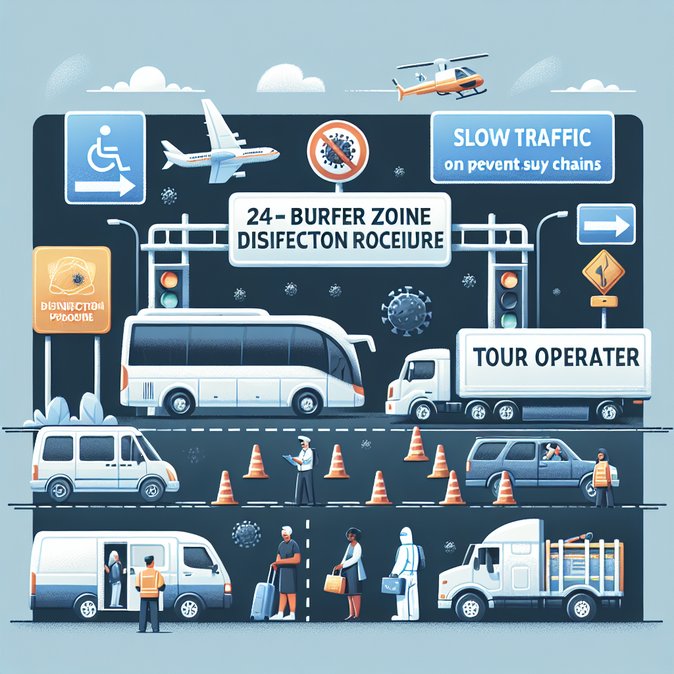
Cyprus has tightened bio-security along the Green Line, introducing round-the-clock vehicle spraying at all official crossing points. The Agriculture Ministry directive, issued late on 30 December, follows confirmed cases of foot-and-mouth disease in the island’s north and aims to stop the virus jumping into government-controlled areas.
Until now, disinfectant teams worked in shifts, leaving gaps—especially during night-time haulage peaks. From today, mixed crews drawn from Veterinary Services, police, the National Guard and British Bases will operate continuously. Every car, coach and truck arriving from the north will receive a virucidal wash; freight trailers must produce proof of prior cleansing before entry.
The clamp-down is expected to add 20–30 minutes to each crossing. Tour operators that shuttle day-trippers between the divided capital’s two halves are already rerouting coaches to quieter checkpoints, while logistics firms moving perishable goods are extending driver hours.
![24-Hour Vehicle Disinfection Ordered at Green-Line Checkpoints After Foot-and-Mouth Alert]()
If the new checks prompt a revision of travel plans, VisaHQ can help visitors and residents access up-to-date entry requirements, obtain Cyprus visas where needed and manage supporting documents online—minimising uncertainty while border protocols remain fluid (https://www.visahq.com/cyprus/).
For global-mobility managers the message is clear: staff who live in one zone and work in the other should carry residence documents and build buffer time into commutes. Companies moving equipment across the line must budget delays and verify that insurance policies cover potential livestock-disease contamination.
Officials stress the measures are temporary but could last weeks. A daily committee of livestock-sector representatives will review lab results to decide when to relax controls. A wider outbreak would jeopardise halloumi exports and trigger EU market bans—a risk the government is keen to avert.
Until now, disinfectant teams worked in shifts, leaving gaps—especially during night-time haulage peaks. From today, mixed crews drawn from Veterinary Services, police, the National Guard and British Bases will operate continuously. Every car, coach and truck arriving from the north will receive a virucidal wash; freight trailers must produce proof of prior cleansing before entry.
The clamp-down is expected to add 20–30 minutes to each crossing. Tour operators that shuttle day-trippers between the divided capital’s two halves are already rerouting coaches to quieter checkpoints, while logistics firms moving perishable goods are extending driver hours.

If the new checks prompt a revision of travel plans, VisaHQ can help visitors and residents access up-to-date entry requirements, obtain Cyprus visas where needed and manage supporting documents online—minimising uncertainty while border protocols remain fluid (https://www.visahq.com/cyprus/).
For global-mobility managers the message is clear: staff who live in one zone and work in the other should carry residence documents and build buffer time into commutes. Companies moving equipment across the line must budget delays and verify that insurance policies cover potential livestock-disease contamination.
Officials stress the measures are temporary but could last weeks. A daily committee of livestock-sector representatives will review lab results to decide when to relax controls. A wider outbreak would jeopardise halloumi exports and trigger EU market bans—a risk the government is keen to avert.