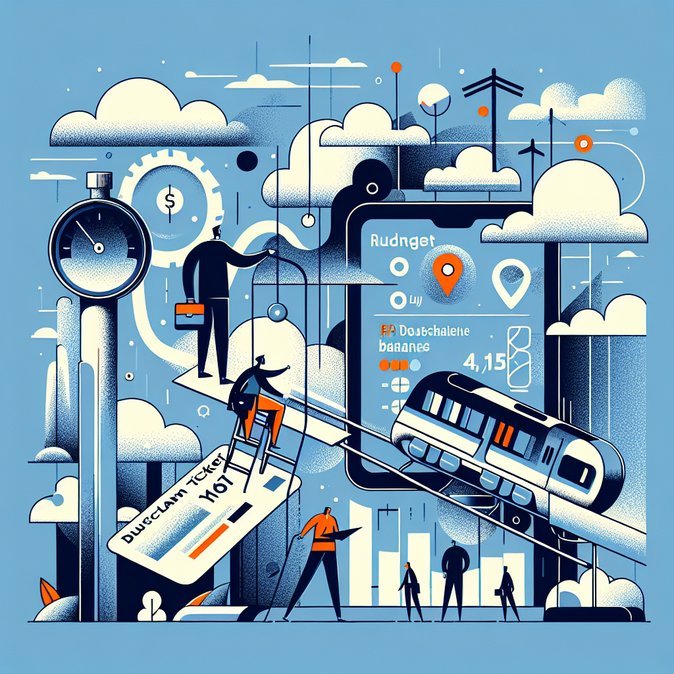
Germany’s flagship Deutschlandticket – the flat-rate pass that gives unlimited use of regional trains, trams and buses – will jump from €58 to €63 a month on New Year’s Day . The €5 hike is part of a broader 2026 mobility package that also lifts the commuter tax allowance to €0.38 per kilometre and raises the statutory minimum wage to €13.90.
Federal and Länder transport ministers blame higher energy and wage costs for the second price increase in as many years. With roughly 14 million active subscribers, the new rate adds €60 per year to the travel budgets of frequent business commuters and assignees.
Employers that reimburse the ticket as a tax-free benefit under §3 Nr. 15 EStG must update payroll ceilings immediately. HR teams relying on fixed mobility stipends may need to top up allowances, especially for employees based outside major cities who combine the pass with long-distance rail or company-car mileage.
![Deutschlandticket to Cost €63 from 1 January as 2026 Mobility Package Kicks In]()
For international staff who need the right paperwork before hopping on a Deutsche Bahn regional train, VisaHQ can streamline the German visa process in just a few clicks. Its online platform (https://www.visahq.com/germany/) offers up-to-date requirements, digital application tools, and real-time status tracking, helping HR teams align travel documents with mobility benefits like the Deutschlandticket.
The government is trying to offset the rise by permanently boosting the commuter allowance (Pendlerpauschale) for the entire journey, not just distances above 20 km. For transferees settling in exurban areas, the higher deduction will partly offset the more expensive pass and rising fuel costs linked to the next step in Germany’s CO₂ levy.
Global mobility managers should refresh onboarding materials, adjust 2026 cost-of-living projections and remind travellers that receipts dated after 1 January will reflect the €63 rate. Companies should also watch ongoing discussions about additional ticket taxes on domestic flights – a move the coalition has floated if rail punctuality improves.
Federal and Länder transport ministers blame higher energy and wage costs for the second price increase in as many years. With roughly 14 million active subscribers, the new rate adds €60 per year to the travel budgets of frequent business commuters and assignees.
Employers that reimburse the ticket as a tax-free benefit under §3 Nr. 15 EStG must update payroll ceilings immediately. HR teams relying on fixed mobility stipends may need to top up allowances, especially for employees based outside major cities who combine the pass with long-distance rail or company-car mileage.

For international staff who need the right paperwork before hopping on a Deutsche Bahn regional train, VisaHQ can streamline the German visa process in just a few clicks. Its online platform (https://www.visahq.com/germany/) offers up-to-date requirements, digital application tools, and real-time status tracking, helping HR teams align travel documents with mobility benefits like the Deutschlandticket.
The government is trying to offset the rise by permanently boosting the commuter allowance (Pendlerpauschale) for the entire journey, not just distances above 20 km. For transferees settling in exurban areas, the higher deduction will partly offset the more expensive pass and rising fuel costs linked to the next step in Germany’s CO₂ levy.
Global mobility managers should refresh onboarding materials, adjust 2026 cost-of-living projections and remind travellers that receipts dated after 1 January will reflect the €63 rate. Companies should also watch ongoing discussions about additional ticket taxes on domestic flights – a move the coalition has floated if rail punctuality improves.