Cyprus moved quickly on Monday, 29 December 2025, to shield the government-controlled south from a foot-and-mouth disease (FMD) outbreak that emerged last week on farms in the island’s Turkish-occupied north. After an emergency meeting chaired by Agriculture Minister Maria Panayiotou, authorities announced an immediate escalation of controls at all seven vehicular crossing points along the UN-patrolled buffer zone separating the two communities.
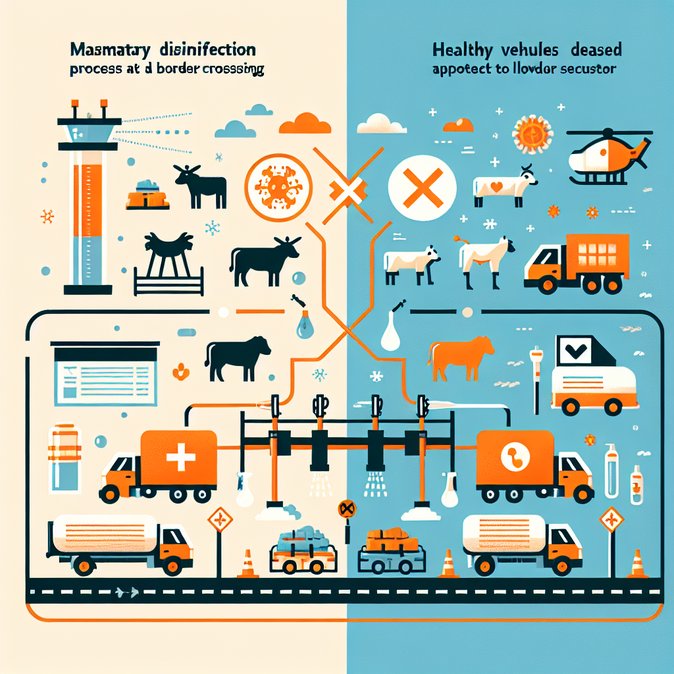
For the first time since the COVID-19 era, every vehicle entering the Republic from the north must now drive through disinfectant mats while officers spray wheel arches and under-carriages with virucidal solution. Veterinary Services chief Christodoulos Pipis told reporters the measure is “strict but proportionate”, noting that cloven-hoofed livestock south of the line represent a €200 million export industry, including the island’s flagship halloumi cheese.
Surveillance has also been stepped up on farms within five kilometres of the buffer zone. Mobile teams are inspecting herds for lesions and enforcing a temporary ban on animal movements without ministry clearance. The British Sovereign Base Areas at Pergamos and Strovilia—through which thousands of commuters transit daily—have installed their own disinfection stations in coordination with Cypriot officials and UN peacekeepers.
![Cyprus Tightens Green-Line Biosecurity After Foot-and-Mouth Outbreak in the North]()
While FMD poses no risk to human health, trade partners can impose costly embargoes if they fear contaminated consignments. The ministry said it is already liaising with Australian biosecurity authorities to ensure a large shipment of halloumi in transit is not delayed. European Commission veterinarians who visited over the weekend praised Cyprus for acting “in line with best practice” and emphasised the need for constant monitoring until the northern outbreak is fully contained. Businesses that rely on cross-line deliveries—courier firms, shuttle operators and construction suppliers—are being advised to factor extra time into schedules as queues at crossing points lengthen.
Amid these heightened controls, VisaHQ’s Cyprus portal (https://www.visahq.com/cyprus/) offers a streamlined way for travelers and companies to check up-to-the-minute entry requirements, secure visas or travel authorizations, and receive instant alerts about any additional health checks. By simplifying paperwork and keeping stakeholders informed, VisaHQ helps ensure that essential staff, visitors and shipments can continue moving across the island with minimal disruption.
For global-mobility managers, the episode is a reminder that animal-health emergencies can spill over into human logistics. Companies moving expatriate staff or critical cargo between the island’s two jurisdictions should stay in close contact with service providers, verify cleaning certificates for vehicles, and monitor ministry bulletins in case additional restrictions are imposed.
For the first time since the COVID-19 era, every vehicle entering the Republic from the north must now drive through disinfectant mats while officers spray wheel arches and under-carriages with virucidal solution. Veterinary Services chief Christodoulos Pipis told reporters the measure is “strict but proportionate”, noting that cloven-hoofed livestock south of the line represent a €200 million export industry, including the island’s flagship halloumi cheese.
Surveillance has also been stepped up on farms within five kilometres of the buffer zone. Mobile teams are inspecting herds for lesions and enforcing a temporary ban on animal movements without ministry clearance. The British Sovereign Base Areas at Pergamos and Strovilia—through which thousands of commuters transit daily—have installed their own disinfection stations in coordination with Cypriot officials and UN peacekeepers.

While FMD poses no risk to human health, trade partners can impose costly embargoes if they fear contaminated consignments. The ministry said it is already liaising with Australian biosecurity authorities to ensure a large shipment of halloumi in transit is not delayed. European Commission veterinarians who visited over the weekend praised Cyprus for acting “in line with best practice” and emphasised the need for constant monitoring until the northern outbreak is fully contained. Businesses that rely on cross-line deliveries—courier firms, shuttle operators and construction suppliers—are being advised to factor extra time into schedules as queues at crossing points lengthen.
Amid these heightened controls, VisaHQ’s Cyprus portal (https://www.visahq.com/cyprus/) offers a streamlined way for travelers and companies to check up-to-the-minute entry requirements, secure visas or travel authorizations, and receive instant alerts about any additional health checks. By simplifying paperwork and keeping stakeholders informed, VisaHQ helps ensure that essential staff, visitors and shipments can continue moving across the island with minimal disruption.
For global-mobility managers, the episode is a reminder that animal-health emergencies can spill over into human logistics. Companies moving expatriate staff or critical cargo between the island’s two jurisdictions should stay in close contact with service providers, verify cleaning certificates for vehicles, and monitor ministry bulletins in case additional restrictions are imposed.