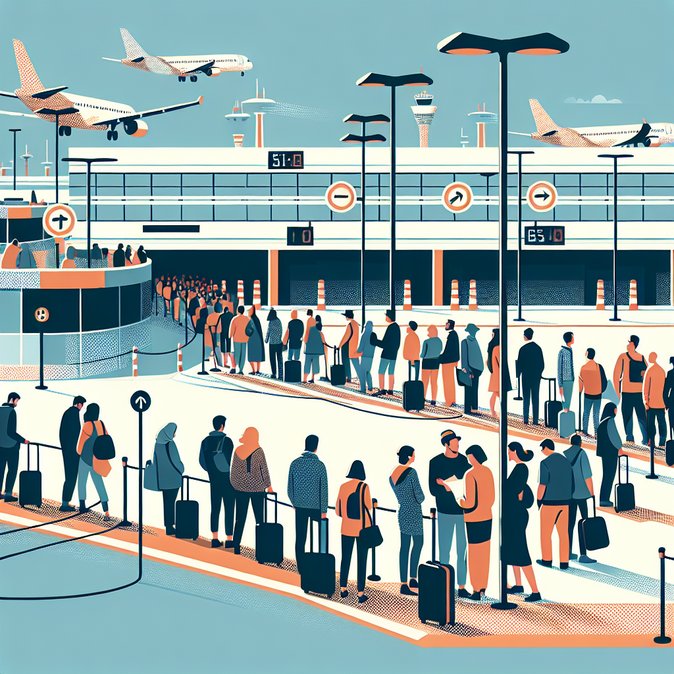
A deep Atlantic low that forecasters have nick-named the “Christmas Cyclone” barrelled across the Italian peninsula between 26 and 27 December, unleashing winds in excess of 70 km/h and throwing the end-of-year travel rush into disarray. The heaviest disruption was felt at Florence-Peretola (FLR), where cross-winds and low cloud forced airport authorities to cancel or heavily delay seven departures on Saturday evening and early Sunday. Hundreds of passengers were deplaned after boarding had already begun and spent the night in terminal 2 or nearby hotels. Airlines invoked EU Regulation 261/2004, offering re-routing or accommodation, but many travellers still faced onward delays of up to 12 hours because seats on Bologna and Rome connections quickly sold out.
The ripple-effects reached well beyond Tuscany. Italy’s Civil Protection Department issued a red-alert for Emilia-Romagna and orange alerts for Liguria, Lombardy, Veneto, Marche and parts of Tuscany, warning that gusty conditions could topple scaffolding and make mountain passes impassable. Trenitalia imposed precautionary 140 km/h speed limits on the Bologna–Milan and Florence–Rome high-speed corridors, adding 20-40 minutes to typical journey times. Motorway operator Autostrade per l’Italia urged motorists to postpone non-essential trips on the A1 and A14 and deployed snow-clearing crews to the Apennine stretch between Barberino and Roncobilaccio.
Business-travel managers are again reminded how quickly Italy’s meteorological extremes can snarl mobility. December is usually classified as a “shoulder season” for corporate travel, but the growing popularity of work-from-anywhere weeks has seen a surge in remote workers booking short-notice flights home for the holidays. Employers with posted workers or commuters on rotational schedules should review their duty-of-care protocols: EU 261 guarantees meals, hotel rooms and refund options, yet travellers may still require cash advances or emergency support when connections or rental cars disappear.
![“Christmas Cyclone” Grounds Flights at Florence and Triggers Nationwide Travel Warnings]()
If paperwork becomes the next hurdle, specialist help can ease the strain. VisaHQ, for example, offers end-to-end assistance with Italian visas, residence-permit renewals and emergency appointment rescheduling—services that are invaluable when weather disruptions upset carefully planned timelines. Their Italy portal (https://www.visahq.com/italy/) lets travellers and mobility teams track applications in real time and arrange courier pickups, ensuring compliance issues don’t snowball alongside flight cancellations.
From an immigration-compliance perspective, missed appointments at police immigration offices (Questura) can be costly. Several non-EU nationals reported being unable to collect their residence-permit cards in Florence on 27 December because local trains were suspended. The Ministry of Interior confirmed late on Sunday that applicants unable to attend biometric appointments due to weather can request re-scheduling without penalty provided they file a written statement within 48 hours. Employers should circulate this guidance to foreign assignees immediately.
Meteorologists expect the cyclone to weaken as it moves into the Balkans on 29 December, but a second low is forming over the Gulf of Lion and could reach northern Italy on New Year’s Eve. Corporate mobility teams should therefore keep contingency plans—flexible tickets, alternative rail routings and remote-work options—in place at least until 2 January. The episode underlines a broader trend: extreme weather events are happening more frequently in Italy, and they are becoming a decisive factor in travel-risk assessments for global mobility programmes.
The ripple-effects reached well beyond Tuscany. Italy’s Civil Protection Department issued a red-alert for Emilia-Romagna and orange alerts for Liguria, Lombardy, Veneto, Marche and parts of Tuscany, warning that gusty conditions could topple scaffolding and make mountain passes impassable. Trenitalia imposed precautionary 140 km/h speed limits on the Bologna–Milan and Florence–Rome high-speed corridors, adding 20-40 minutes to typical journey times. Motorway operator Autostrade per l’Italia urged motorists to postpone non-essential trips on the A1 and A14 and deployed snow-clearing crews to the Apennine stretch between Barberino and Roncobilaccio.
Business-travel managers are again reminded how quickly Italy’s meteorological extremes can snarl mobility. December is usually classified as a “shoulder season” for corporate travel, but the growing popularity of work-from-anywhere weeks has seen a surge in remote workers booking short-notice flights home for the holidays. Employers with posted workers or commuters on rotational schedules should review their duty-of-care protocols: EU 261 guarantees meals, hotel rooms and refund options, yet travellers may still require cash advances or emergency support when connections or rental cars disappear.

If paperwork becomes the next hurdle, specialist help can ease the strain. VisaHQ, for example, offers end-to-end assistance with Italian visas, residence-permit renewals and emergency appointment rescheduling—services that are invaluable when weather disruptions upset carefully planned timelines. Their Italy portal (https://www.visahq.com/italy/) lets travellers and mobility teams track applications in real time and arrange courier pickups, ensuring compliance issues don’t snowball alongside flight cancellations.
From an immigration-compliance perspective, missed appointments at police immigration offices (Questura) can be costly. Several non-EU nationals reported being unable to collect their residence-permit cards in Florence on 27 December because local trains were suspended. The Ministry of Interior confirmed late on Sunday that applicants unable to attend biometric appointments due to weather can request re-scheduling without penalty provided they file a written statement within 48 hours. Employers should circulate this guidance to foreign assignees immediately.
Meteorologists expect the cyclone to weaken as it moves into the Balkans on 29 December, but a second low is forming over the Gulf of Lion and could reach northern Italy on New Year’s Eve. Corporate mobility teams should therefore keep contingency plans—flexible tickets, alternative rail routings and remote-work options—in place at least until 2 January. The episode underlines a broader trend: extreme weather events are happening more frequently in Italy, and they are becoming a decisive factor in travel-risk assessments for global mobility programmes.