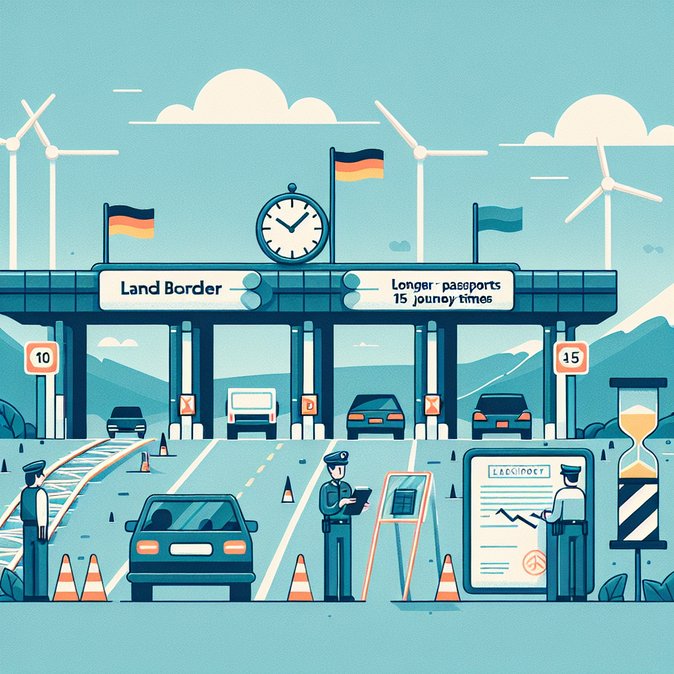
Germany’s Federal Ministry of the Interior has quietly prolonged the “temporary” controls it re-introduced at all nine of the country’s land borders in September, publishing the extension notice in the official Bundesanzeiger on 26 December. The move means that Bundespolizei officers will continue to conduct spot identity checks on cars, coaches and trains entering from Austria, Czechia, Poland, Denmark, the Netherlands, Luxembourg, France and Switzerland until at least 15 March 2026. Berlin first revived fixed controls three months ago after a spike in irregular arrivals along the Balkan route and the dismantling of several people-smuggling rings.
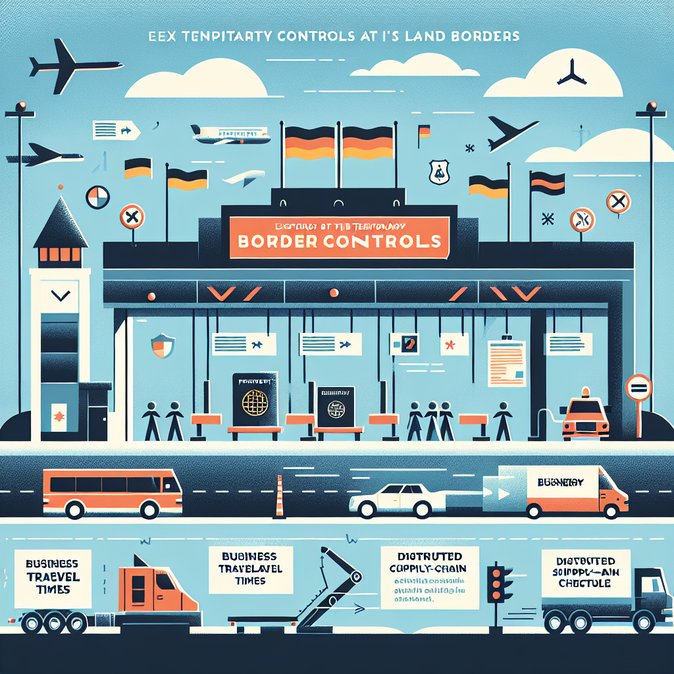
For global mobility and travel managers the decision has immediate operational consequences. Travellers arriving overland—even on short hops from Salzburg or Amsterdam—must once again build extra time into their itineraries for inspections. Non-EU assignees who normally rely on residence cards in lieu of passports are strongly advised to carry both documents; officers have broad discretion to refuse entry if identity cannot be verified on the spot. Freight forwarders moving high-value or time-critical cargo through Silesia and Brandenburg already report delays of up to 45 minutes per truck, costs that are being passed on to shippers.
To help companies and individual travellers stay compliant amid these evolving border formalities, VisaHQ offers an end-to-end document concierge service: its Germany portal (https://www.visahq.com/germany/) provides up-to-date entry requirements, digital application tools and on-demand support for visas, residence cards and A1 certificates alike. Leveraging the platform can save mobility teams hours of administrative time while ensuring that assignees have the right papers in hand before they hit the road.
![Germany Extends Internal Schengen Border Checks Until 15 March 2026]()
Legally, the extension pushes Germany up against the six-month maximum tolerated by the European Commission for internal-Schengen checks. Under Article 25 of the Schengen Borders Code, any further renewal after March would require Brussels’ explicit blessing. Interior-minister Nancy Faeser defended the decision, arguing that “human-smuggling networks adapt quickly and remain a serious threat to public order.” Critics—including the German Chambers of Commerce—warn that rolling extensions risk normalising a measure designed for exceptional crises and could erode Schengen’s core principle of friction-free movement.
In the short term, corporates should update travel policies, advise road warriors and rail commuters to carry passports, and monitor journey-time buffers for cross-border meetings. Mobility teams handling French or Dutch commuters into the Rhineland may also need to adjust per-diem allowances and working-time calculations. Employers of posted workers should remember that spot checks create opportunities for labour-inspectorate referrals; ensuring that A1 certificates and German minimum-wage documentation are on hand is prudent risk mitigation.
Looking ahead, many observers expect the issue to resurface in early March when Germany must justify any further renewal to Brussels. If irregular arrivals continue to trend downward—as preliminary December figures suggest—a return to fully open borders could follow in the spring, easing pressure on business travel schedules in time for the summer conference season.
For global mobility and travel managers the decision has immediate operational consequences. Travellers arriving overland—even on short hops from Salzburg or Amsterdam—must once again build extra time into their itineraries for inspections. Non-EU assignees who normally rely on residence cards in lieu of passports are strongly advised to carry both documents; officers have broad discretion to refuse entry if identity cannot be verified on the spot. Freight forwarders moving high-value or time-critical cargo through Silesia and Brandenburg already report delays of up to 45 minutes per truck, costs that are being passed on to shippers.
To help companies and individual travellers stay compliant amid these evolving border formalities, VisaHQ offers an end-to-end document concierge service: its Germany portal (https://www.visahq.com/germany/) provides up-to-date entry requirements, digital application tools and on-demand support for visas, residence cards and A1 certificates alike. Leveraging the platform can save mobility teams hours of administrative time while ensuring that assignees have the right papers in hand before they hit the road.

Legally, the extension pushes Germany up against the six-month maximum tolerated by the European Commission for internal-Schengen checks. Under Article 25 of the Schengen Borders Code, any further renewal after March would require Brussels’ explicit blessing. Interior-minister Nancy Faeser defended the decision, arguing that “human-smuggling networks adapt quickly and remain a serious threat to public order.” Critics—including the German Chambers of Commerce—warn that rolling extensions risk normalising a measure designed for exceptional crises and could erode Schengen’s core principle of friction-free movement.
In the short term, corporates should update travel policies, advise road warriors and rail commuters to carry passports, and monitor journey-time buffers for cross-border meetings. Mobility teams handling French or Dutch commuters into the Rhineland may also need to adjust per-diem allowances and working-time calculations. Employers of posted workers should remember that spot checks create opportunities for labour-inspectorate referrals; ensuring that A1 certificates and German minimum-wage documentation are on hand is prudent risk mitigation.
Looking ahead, many observers expect the issue to resurface in early March when Germany must justify any further renewal to Brussels. If irregular arrivals continue to trend downward—as preliminary December figures suggest—a return to fully open borders could follow in the spring, easing pressure on business travel schedules in time for the summer conference season.