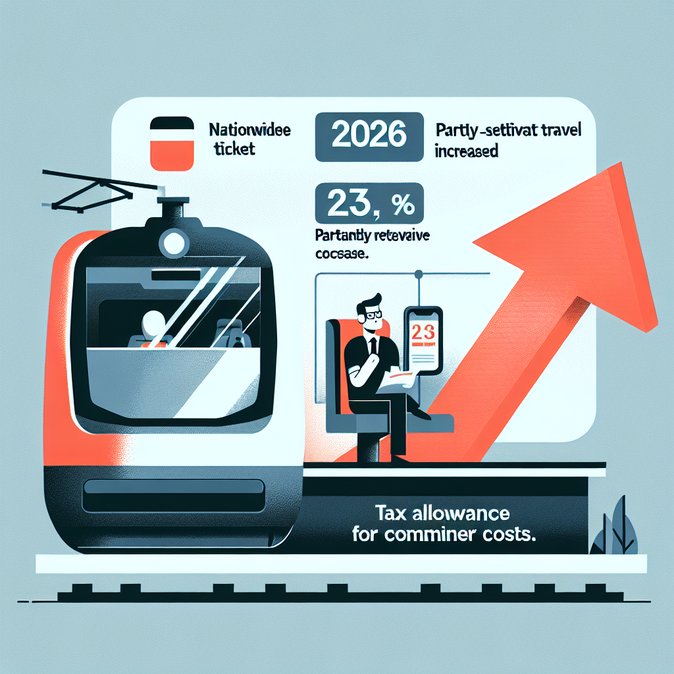
Germany’s annual round of New-Year rule changes brings several headline shifts for commuters, business travellers and employers in 2026. Chief among them is a second price hike for the Deutschlandticket, the nationwide monthly pass that grants unlimited travel on local and regional trains, trams and buses. From 1 January its subscription cost will increase from €58 to €63—almost 30 % higher than at launch in 2023. Transport ministers from the federal and state governments blame inflation and higher energy prices for the adjustment. With roughly 14 million active users, the €5 jump will cost frequent business travellers an extra €60 a year and may prompt some companies to revisit mobility stipends.
The higher ticket price is accompanied by a permanent boost to the commuter allowance (Pendlerpauschale). From 2026, employees can claim €0.38 per kilometre for the entire journey between home and workplace—up from €0.30 for the first 20 km today. For transferees living outside the big metros this more generous tax deduction will partially offset pricier rail subscriptions and rising fuel costs triggered by the next step in Germany’s CO₂ levy.
Other measures entering into force include an increase in the statutory minimum wage to €13.90 and a lift of the minijob earnings cap to €603 per month. While not strictly mobility rules, both figures are relevant when structuring relocation packages for accompanying spouses or students who take up part-time work. Mobility managers should also note that domestic flights remain under political scrutiny; the new coalition has hinted at additional ticket taxes if rail punctuality improves.
![Deutschlandticket Price Rises to €63 as 2026 Mobility Reforms Take Effect]()
Meanwhile, companies arranging short-term assignments or frequent cross-border meetings should remember that visa paperwork can be as decisive as train fares. VisaHQ’s Germany portal (https://www.visahq.com/germany/) lets mobility teams and travellers check entry requirements, complete Schengen applications online, book consular appointments and track couriered passports in real time—streamlining a process that often competes with tax and transport planning for attention.
For international assignees, the Deutschlandticket remains a cost-effective way to explore Germany’s regions and commute between client sites without navigating complex local fare zones. Employers covering the pass can continue to claim a tax-free benefit under §3 Nr. 15 EstG, provided the subsidy is offered company-wide. Firms that reimburse on actuals should update expense systems with the new ceiling and inform travellers to upload January invoices reflecting the €63 rate.
Taken together, the 2026 changes reinforce a broader policy trend: nudging residents toward public transport while using tax levers to soften the blow for longer-distance commuters. Global mobility teams should refresh onboarding materials, adjust cost projections for 2026 moves and remind staff that receipts dated after 1 January will show the new pricing.
The higher ticket price is accompanied by a permanent boost to the commuter allowance (Pendlerpauschale). From 2026, employees can claim €0.38 per kilometre for the entire journey between home and workplace—up from €0.30 for the first 20 km today. For transferees living outside the big metros this more generous tax deduction will partially offset pricier rail subscriptions and rising fuel costs triggered by the next step in Germany’s CO₂ levy.
Other measures entering into force include an increase in the statutory minimum wage to €13.90 and a lift of the minijob earnings cap to €603 per month. While not strictly mobility rules, both figures are relevant when structuring relocation packages for accompanying spouses or students who take up part-time work. Mobility managers should also note that domestic flights remain under political scrutiny; the new coalition has hinted at additional ticket taxes if rail punctuality improves.
Meanwhile, companies arranging short-term assignments or frequent cross-border meetings should remember that visa paperwork can be as decisive as train fares. VisaHQ’s Germany portal (https://www.visahq.com/germany/) lets mobility teams and travellers check entry requirements, complete Schengen applications online, book consular appointments and track couriered passports in real time—streamlining a process that often competes with tax and transport planning for attention.
For international assignees, the Deutschlandticket remains a cost-effective way to explore Germany’s regions and commute between client sites without navigating complex local fare zones. Employers covering the pass can continue to claim a tax-free benefit under §3 Nr. 15 EstG, provided the subsidy is offered company-wide. Firms that reimburse on actuals should update expense systems with the new ceiling and inform travellers to upload January invoices reflecting the €63 rate.
Taken together, the 2026 changes reinforce a broader policy trend: nudging residents toward public transport while using tax levers to soften the blow for longer-distance commuters. Global mobility teams should refresh onboarding materials, adjust cost projections for 2026 moves and remind staff that receipts dated after 1 January will show the new pricing.