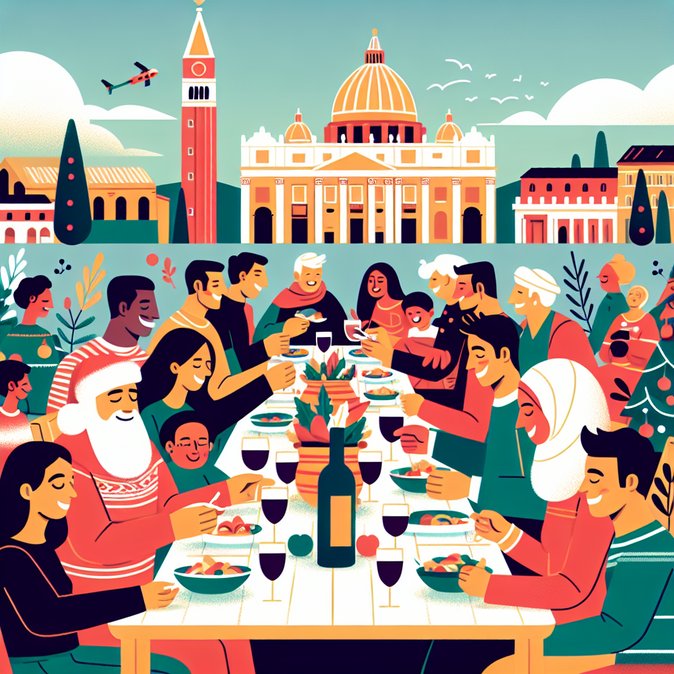
The Rome-based Community of Sant’Egidio celebrated its 43rd annual Christmas lunch on 25 December, serving meals to 80,000 people in more than 100 Italian cities and 250,000 worldwide. Refugees admitted under Italy’s humanitarian corridors—many recently evacuated from Gaza—sat alongside homeless Italians and elderly people without family.
The event underscores Italy’s dual role as both a frontline arrival country and a promoter of legal, safe entry pathways. Since 2016, church-sponsored corridors have brought over 7,000 vulnerable refugees to Italy on humanitarian visas, bypassing dangerous sea routes. Participants yesterday were greeted by volunteers who also helped them schedule appointments at immigration offices to convert temporary humanitarian permits into two-year “special protection” residence cards.
![Sant’Egidio hosts record 80,000-person Christmas lunch for poor and refugees across Italy]()
For individuals and companies supporting such initiatives, navigating the visa landscape can be complex. VisaHQ’s Italy portal (https://www.visahq.com/italy/) offers streamlined, up-to-date guidance on humanitarian, work, and family-reunification visas, helping sponsors focus on integration efforts while ensuring all documents are submitted correctly and on time.
For global mobility and CSR teams, Sant’Egidio’s model offers a template for private-sector sponsorship: large employers can co-fund similar corridors under Italy’s “complementary pathways” pilot, gaining access to pre-screened talent and fulfilling ESG targets. Tax deductions of up to 30 % are available on donations to recognised NGOs.
Local authorities reported no security incidents, a testament to the effectiveness of community-based integration. According to the Interior Ministry, 92 % of corridor beneficiaries obtain A2-level Italian within 12 months, outperforming other migrant groups. The 2025 lunch therefore doubles as a public-relations success, countering narratives that refugees strain social cohesion.
The event underscores Italy’s dual role as both a frontline arrival country and a promoter of legal, safe entry pathways. Since 2016, church-sponsored corridors have brought over 7,000 vulnerable refugees to Italy on humanitarian visas, bypassing dangerous sea routes. Participants yesterday were greeted by volunteers who also helped them schedule appointments at immigration offices to convert temporary humanitarian permits into two-year “special protection” residence cards.

For individuals and companies supporting such initiatives, navigating the visa landscape can be complex. VisaHQ’s Italy portal (https://www.visahq.com/italy/) offers streamlined, up-to-date guidance on humanitarian, work, and family-reunification visas, helping sponsors focus on integration efforts while ensuring all documents are submitted correctly and on time.
For global mobility and CSR teams, Sant’Egidio’s model offers a template for private-sector sponsorship: large employers can co-fund similar corridors under Italy’s “complementary pathways” pilot, gaining access to pre-screened talent and fulfilling ESG targets. Tax deductions of up to 30 % are available on donations to recognised NGOs.
Local authorities reported no security incidents, a testament to the effectiveness of community-based integration. According to the Interior Ministry, 92 % of corridor beneficiaries obtain A2-level Italian within 12 months, outperforming other migrant groups. The 2025 lunch therefore doubles as a public-relations success, countering narratives that refugees strain social cohesion.