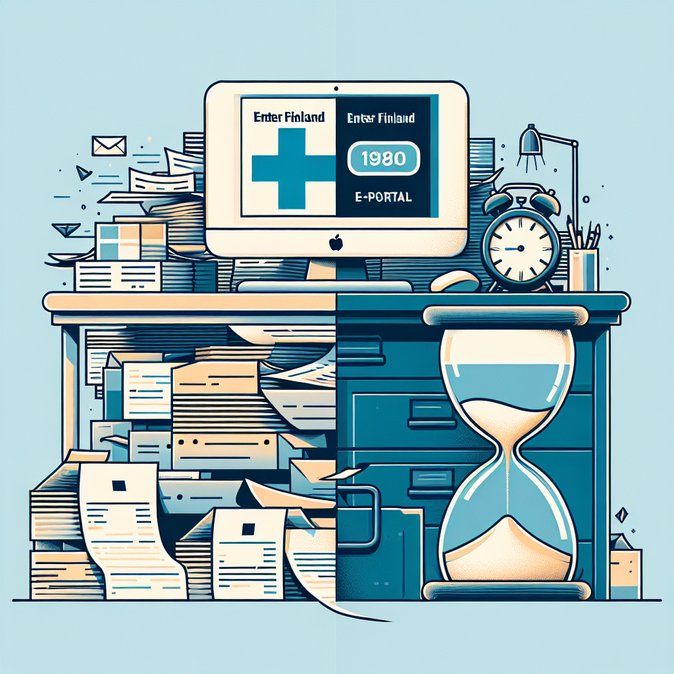
Effective 17 December 2025—and publicised in a detailed release on 26 December—the Finnish Immigration Service (Migri) has switched all citizenship applications to its Enter Finland e-portal, ending paper forms, postal submissions and walk-in counters nationwide. Every applicant must now create a secure profile, upload supporting documents, pay fees online and receive decisions electronically. Behind the front-end, the upgraded platform connects real-time to tax, population-register and police databases, allowing officials to pre-populate data fields and flag discrepancies automatically.
Alongside the digital roll-out, Parliament has amended the Citizenship Act to lengthen the residence requirement for naturalisation from five to six consecutive years. Applicants must also show “sustainable earned income” and maintain A2-level skills in Finnish or Swedish. Migri projects that processing time will drop from eight months to roughly six thanks to automated data pulls, while annual back-office savings of €4 million will be reinvested in a multilingual AI chatbot and complex-case staff training.
For corporate mobility teams, the move is significant: assignees can now complete the entire naturalisation journey remotely, and authorised HR representatives can monitor case status in the portal. The platform offers API hooks for large employers to integrate case milestones into global mobility dashboards, easing compliance reporting. However, the extra year of required residence may delay citizenship aspirations for staff on five-year packages, so companies should update relocation policies accordingly.
![Finland Makes Citizenship Filings 100 % Digital and Extends Residence Requirement to Six Years]()
For applicants who would like expert assistance navigating the new requirements, VisaHQ can help streamline the process. Our Finland desk (https://www.visahq.com/finland/) offers document checking, deadline reminders and personalised support that dovetails with Migri’s Enter Finland portal, giving both individual candidates and HR teams added confidence that submissions are complete and compliant from day one.
Digital-rights advocates have praised the convenience but urged Migri to publish transparency reports on data-sharing with other agencies. Meanwhile, immigration lawyers predict a temporary learning curve as applicants master two-factor authentication and document-compression rules. Migri has scheduled weekly webinars in January to walk users through the new interface and will keep a small call centre for accessibility support.
Looking ahead, the government plans to migrate permanent-residence and work-permit renewals to the same portal by early 2026, creating a single digital gateway for nearly all immigration services in Finland.
Alongside the digital roll-out, Parliament has amended the Citizenship Act to lengthen the residence requirement for naturalisation from five to six consecutive years. Applicants must also show “sustainable earned income” and maintain A2-level skills in Finnish or Swedish. Migri projects that processing time will drop from eight months to roughly six thanks to automated data pulls, while annual back-office savings of €4 million will be reinvested in a multilingual AI chatbot and complex-case staff training.
For corporate mobility teams, the move is significant: assignees can now complete the entire naturalisation journey remotely, and authorised HR representatives can monitor case status in the portal. The platform offers API hooks for large employers to integrate case milestones into global mobility dashboards, easing compliance reporting. However, the extra year of required residence may delay citizenship aspirations for staff on five-year packages, so companies should update relocation policies accordingly.

For applicants who would like expert assistance navigating the new requirements, VisaHQ can help streamline the process. Our Finland desk (https://www.visahq.com/finland/) offers document checking, deadline reminders and personalised support that dovetails with Migri’s Enter Finland portal, giving both individual candidates and HR teams added confidence that submissions are complete and compliant from day one.
Digital-rights advocates have praised the convenience but urged Migri to publish transparency reports on data-sharing with other agencies. Meanwhile, immigration lawyers predict a temporary learning curve as applicants master two-factor authentication and document-compression rules. Migri has scheduled weekly webinars in January to walk users through the new interface and will keep a small call centre for accessibility support.
Looking ahead, the government plans to migrate permanent-residence and work-permit renewals to the same portal by early 2026, creating a single digital gateway for nearly all immigration services in Finland.