Belgium’s Council of Ministers has quietly adopted a draft Royal Decree that fixes how the country will pay for air-navigation services in 2026, the second year of the current EU performance cycle. Under the decree, skeyes—the autonomous public company that provides air-traffic control at Brussels Airport and the regional airports of Charleroi, Liège, Antwerp and Ostend—will continue to receive a hybrid mix of user charges and federal subsidies. Airline charges at Brussels Airport will be kept at 2025 levels, while at the four regional gateways the federal and regional governments will again cover the full cost so that carriers are not billed directly.
The decree translates Belgium’s revised Performance Plan (2025-2029) into national law and gives skeyes legal certainty to prepare its budgets, staffing and technology investments for the year ahead. According to government figures, the federal contribution will total €34.5 million after EU traffic-volume correction mechanisms are applied. Maintaining predictable fees is seen as critical to shielding Brussels Airport—an EU hub for passenger connectivity and pharma cargo—from competitive pressure as neighbouring countries tighten environmental levies.
![Belgian Government Locks-In 2026 Funding Model for Air Navigation Services]()
For companies and travelers mapping itineraries through Belgium in 2025-2026, getting the right travel documents in place is just as critical as stable air-navigation fees. VisaHQ’s online platform streamlines Belgian visa applications, offers real-time status tracking, and provides expert support for business travelers, assignees, and crews alike. Explore the service at https://www.visahq.com/belgium/
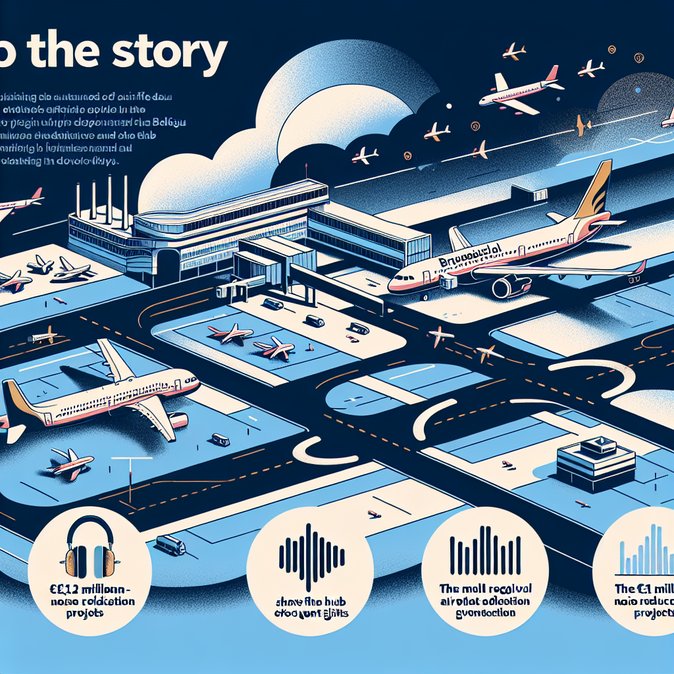
The funding text also earmarks an additional €1.2 million for measures that cut noise and other environmental externalities around airports. That pot is expected to finance flight-procedure redesigns, continuous-descent operations and research into sustainable aviation fuels. Industry groups welcomed the gesture but emphasised that a comprehensive national aviation strategy—linking taxation, slot allocation and climate targets—remains overdue.
For global-mobility managers the decree provides reassurance that Belgian air-traffic control capacity, punctuality and staffing levels should remain stable through 2026. Companies routing assignees or time-critical cargo through Belgian airports can plan budgets without fear of mid-year fee spikes. The freeze on higher terminal charges at Brussels could also keep Belgium attractive for long-haul network airlines and preserve the range of connections prized by business travellers and corporate relocation teams.
The decree translates Belgium’s revised Performance Plan (2025-2029) into national law and gives skeyes legal certainty to prepare its budgets, staffing and technology investments for the year ahead. According to government figures, the federal contribution will total €34.5 million after EU traffic-volume correction mechanisms are applied. Maintaining predictable fees is seen as critical to shielding Brussels Airport—an EU hub for passenger connectivity and pharma cargo—from competitive pressure as neighbouring countries tighten environmental levies.

For companies and travelers mapping itineraries through Belgium in 2025-2026, getting the right travel documents in place is just as critical as stable air-navigation fees. VisaHQ’s online platform streamlines Belgian visa applications, offers real-time status tracking, and provides expert support for business travelers, assignees, and crews alike. Explore the service at https://www.visahq.com/belgium/
The funding text also earmarks an additional €1.2 million for measures that cut noise and other environmental externalities around airports. That pot is expected to finance flight-procedure redesigns, continuous-descent operations and research into sustainable aviation fuels. Industry groups welcomed the gesture but emphasised that a comprehensive national aviation strategy—linking taxation, slot allocation and climate targets—remains overdue.
For global-mobility managers the decree provides reassurance that Belgian air-traffic control capacity, punctuality and staffing levels should remain stable through 2026. Companies routing assignees or time-critical cargo through Belgian airports can plan budgets without fear of mid-year fee spikes. The freeze on higher terminal charges at Brussels could also keep Belgium attractive for long-haul network airlines and preserve the range of connections prized by business travellers and corporate relocation teams.