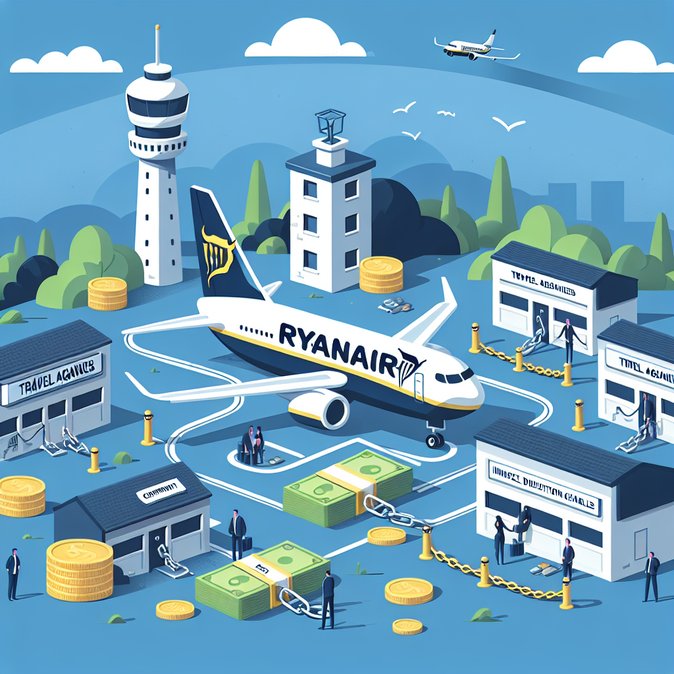
Italy’s Competition and Market Authority (AGCM) has fired a warning shot at low-cost carrier Ryanair just as the Christmas travel surge hits its peak. In a decision published on 23 December the watchdog imposed a record €255 million penalty, saying the airline used an “elaborate strategy” to block or hinder both traditional and online travel agencies from buying seats on Ryanair’s website and combining them with other travel services.
Amid the upheaval, corporate travel coordinators juggling tight timelines often discover that visa or work-permit needs slip through the cracks. VisaHQ can fill that gap: its Italy page (https://www.visahq.com/italy/) lets companies and individual travelers arrange Schengen visas, residence permits and ancillary paperwork entirely online, with real-time status tracking and multilingual support—saving precious hours when flight options are already limited.
According to investigators, the airline repeatedly changed its website architecture, introduced CAPTCHA traps and threatened legal action against agencies that scraped fare data. AGCM argued that these tactics limited consumer choice, raised search costs for business-travel bookers and prevented agencies from packaging Ryanair flights with rail tickets or insurance—options that are increasingly popular with corporate mobility managers.
![Italian Antitrust hits Ryanair with €255 million fine for abuse of dominance]()
Ryanair, which dominates Italy’s domestic and short-haul leisure market, has 40 % share of seats on routes touching the country. The fine therefore carries major significance for companies relying on Rome–Milan shuttles and other intra-EU connections for project work and commuter assignments. Mobility teams will watch closely whether the carrier now opens GDS distribution or continues its direct-booking approach and appeals the ruling.
For global-mobility budgets the decision could translate into lower booking fees and easier policy compliance if agencies regain the ability to issue bundled itineraries that include Ryanair legs. Employers are advised to review their preferred-supplier agreements and prepare for fare-class changes Ryanair may introduce to offset the financial hit.
Finally, the penalty adds regulatory momentum behind the EU’s Digital Markets Act, under which transport platforms could be labelled “gatekeepers” and required to provide fair access to third-party sellers—a development that would reshape European business-travel procurement.
Amid the upheaval, corporate travel coordinators juggling tight timelines often discover that visa or work-permit needs slip through the cracks. VisaHQ can fill that gap: its Italy page (https://www.visahq.com/italy/) lets companies and individual travelers arrange Schengen visas, residence permits and ancillary paperwork entirely online, with real-time status tracking and multilingual support—saving precious hours when flight options are already limited.
According to investigators, the airline repeatedly changed its website architecture, introduced CAPTCHA traps and threatened legal action against agencies that scraped fare data. AGCM argued that these tactics limited consumer choice, raised search costs for business-travel bookers and prevented agencies from packaging Ryanair flights with rail tickets or insurance—options that are increasingly popular with corporate mobility managers.
Ryanair, which dominates Italy’s domestic and short-haul leisure market, has 40 % share of seats on routes touching the country. The fine therefore carries major significance for companies relying on Rome–Milan shuttles and other intra-EU connections for project work and commuter assignments. Mobility teams will watch closely whether the carrier now opens GDS distribution or continues its direct-booking approach and appeals the ruling.
For global-mobility budgets the decision could translate into lower booking fees and easier policy compliance if agencies regain the ability to issue bundled itineraries that include Ryanair legs. Employers are advised to review their preferred-supplier agreements and prepare for fare-class changes Ryanair may introduce to offset the financial hit.
Finally, the penalty adds regulatory momentum behind the EU’s Digital Markets Act, under which transport platforms could be labelled “gatekeepers” and required to provide fair access to third-party sellers—a development that would reshape European business-travel procurement.