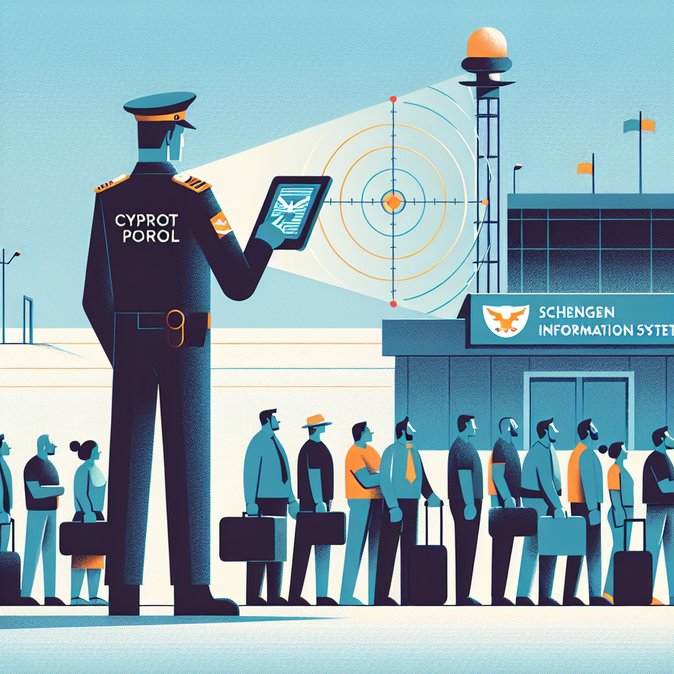
Cyprus’ decade-long quest to join the passport-free Schengen zone entered its make-or-break phase yesterday when a 25-member delegation from the European Commission, Frontex and five EU member states began a three-day, on-site audit of the island’s border-control systems. Inspectors are stress-testing everything from e-gates at Larnaca and Pafos airports to drone-supported patrols along the UN-monitored Green Line that separates the Republic from the Turkish-controlled north.
Behind the scenes, specialised task forces have spent two years rewiring Cyprus’ migration apparatus. More than €80 million has been poured into real-time links with the Schengen Information System (SIS), automatic data exchange with Interpol and GDPR-proof data-protection protocols. Officials say the airport e-gates now clear an EU passport in eight seconds—well inside the ten-second benchmark Brussels sets for external borders.
For business travellers the upside is huge. Once accession is confirmed—Nicosia is targeting late-2026—passport controls on intra-EU flights will disappear, cutting connection times by up to 40 minutes. Shared-service centres in Nicosia and Limassol estimate annual savings of €3-5 million in staff downtime and visa-processing fees. Carriers are already modelling new fifth-freedom routes that would use Cyprus as an Eastern-Mediterranean hub.
![EU Evaluation Team Begins Final Schengen Inspection in Cyprus]()
Until that day arrives, travellers who still require documentation—whether they are non-EU visitors or companies relocating talent—can simplify the red tape through VisaHQ’s digital platform (https://www.visahq.com/cyprus/). The service aggregates the latest entry rules, offers step-by-step checklists and organizes courier pick-ups, turning what used to be a multi-week ordeal into a streamlined online transaction.
Yet the inspection is no formality. Evaluators will focus on Cyprus’ ability to rapidly return failed asylum-seekers, a politically sensitive issue given steady arrivals via the north. Interior-ministry sources expect a “short list of corrective actions”, including beefed-up reception capacity and faster asylum rulings, but say preliminary feedback has been positive.
If the audit is cleared and the Council of Ministers gives the green light next year, Cyprus will become the 29th Schengen state—cementing its place in European supply chains and giving multinationals one more reason to base regional headquarters on the island.
Behind the scenes, specialised task forces have spent two years rewiring Cyprus’ migration apparatus. More than €80 million has been poured into real-time links with the Schengen Information System (SIS), automatic data exchange with Interpol and GDPR-proof data-protection protocols. Officials say the airport e-gates now clear an EU passport in eight seconds—well inside the ten-second benchmark Brussels sets for external borders.
For business travellers the upside is huge. Once accession is confirmed—Nicosia is targeting late-2026—passport controls on intra-EU flights will disappear, cutting connection times by up to 40 minutes. Shared-service centres in Nicosia and Limassol estimate annual savings of €3-5 million in staff downtime and visa-processing fees. Carriers are already modelling new fifth-freedom routes that would use Cyprus as an Eastern-Mediterranean hub.

Until that day arrives, travellers who still require documentation—whether they are non-EU visitors or companies relocating talent—can simplify the red tape through VisaHQ’s digital platform (https://www.visahq.com/cyprus/). The service aggregates the latest entry rules, offers step-by-step checklists and organizes courier pick-ups, turning what used to be a multi-week ordeal into a streamlined online transaction.
Yet the inspection is no formality. Evaluators will focus on Cyprus’ ability to rapidly return failed asylum-seekers, a politically sensitive issue given steady arrivals via the north. Interior-ministry sources expect a “short list of corrective actions”, including beefed-up reception capacity and faster asylum rulings, but say preliminary feedback has been positive.
If the audit is cleared and the Council of Ministers gives the green light next year, Cyprus will become the 29th Schengen state—cementing its place in European supply chains and giving multinationals one more reason to base regional headquarters on the island.