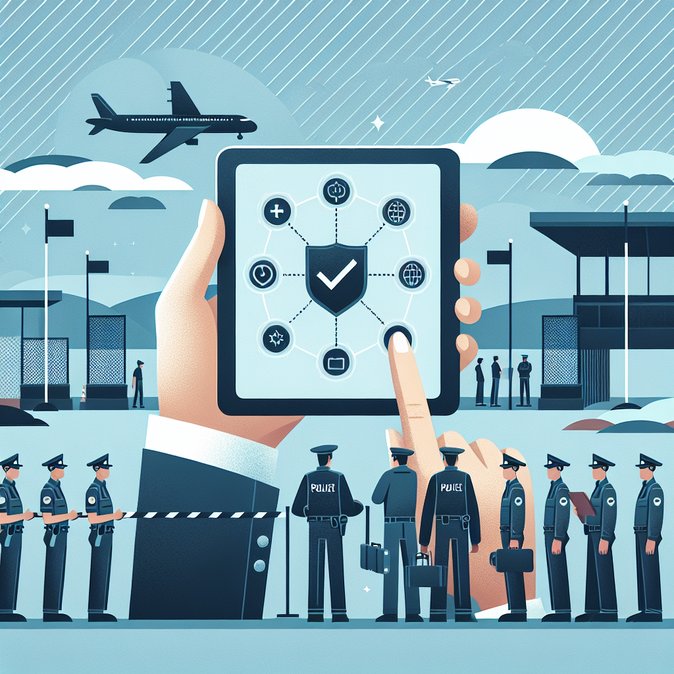
Cyprus has moved another step closer to meeting Schengen technical criteria by equipping every police patrol unit with rugged Android tablets linked directly to the Schengen Information System (SIS) and Interpol notices. Interior Minister Constantinos Ioannou confirmed on 7 December that the €4 million “CY Patrol Check” project, piloted since July, is now fully live nationwide.
Until now, officers who stopped a suspicious traveller at Larnaca Airport or a Green-Line crossing point had to radio station operators for database checks—a process that could take several minutes. The new tablets cut response times to seconds, allowing field agents to verify travel documents, vehicle registrations and outstanding warrants in real time.
Training at the Police Academy focused heavily on data-protection compliance, reflecting Brussels’ insistence that candidate states uphold EU privacy standards. Supervisors must submit fortnightly usage reports, and an EU evaluation team will audit the system in spring 2026 ahead of a key Schengen readiness mission.
![Schengen push: Cyprus rolls out mobile tablets giving police real-time access to EU security databases]()
For corporate mobility teams trying to keep pace with these changes, VisaHQ’s Cyprus portal (https://www.visahq.com/cyprus/) offers an efficient one-stop solution. The platform monitors Schengen policy updates in real time and provides step-by-step assistance with Cyprus entry visas, document legalisation and residence permits, helping travellers avoid delays as new border-control technologies come online.
For business travellers the upgrade means potentially faster document inspections, but mobility managers should warn staff that on-the-spot checks may actually increase in the short term as officers familiarise themselves with the technology. Companies should also confirm that employees carry original passports rather than photocopies when driving rental cars—random roadside queries are expected to rise.
The investment dovetails with recent upgrades to passport-control software and airport network security, signalling Nicosia’s determination to secure Schengen accession—and eventual passport-free travel for Cypriot residents—by the end of 2026.
Until now, officers who stopped a suspicious traveller at Larnaca Airport or a Green-Line crossing point had to radio station operators for database checks—a process that could take several minutes. The new tablets cut response times to seconds, allowing field agents to verify travel documents, vehicle registrations and outstanding warrants in real time.
Training at the Police Academy focused heavily on data-protection compliance, reflecting Brussels’ insistence that candidate states uphold EU privacy standards. Supervisors must submit fortnightly usage reports, and an EU evaluation team will audit the system in spring 2026 ahead of a key Schengen readiness mission.

For corporate mobility teams trying to keep pace with these changes, VisaHQ’s Cyprus portal (https://www.visahq.com/cyprus/) offers an efficient one-stop solution. The platform monitors Schengen policy updates in real time and provides step-by-step assistance with Cyprus entry visas, document legalisation and residence permits, helping travellers avoid delays as new border-control technologies come online.
For business travellers the upgrade means potentially faster document inspections, but mobility managers should warn staff that on-the-spot checks may actually increase in the short term as officers familiarise themselves with the technology. Companies should also confirm that employees carry original passports rather than photocopies when driving rental cars—random roadside queries are expected to rise.
The investment dovetails with recent upgrades to passport-control software and airport network security, signalling Nicosia’s determination to secure Schengen accession—and eventual passport-free travel for Cypriot residents—by the end of 2026.