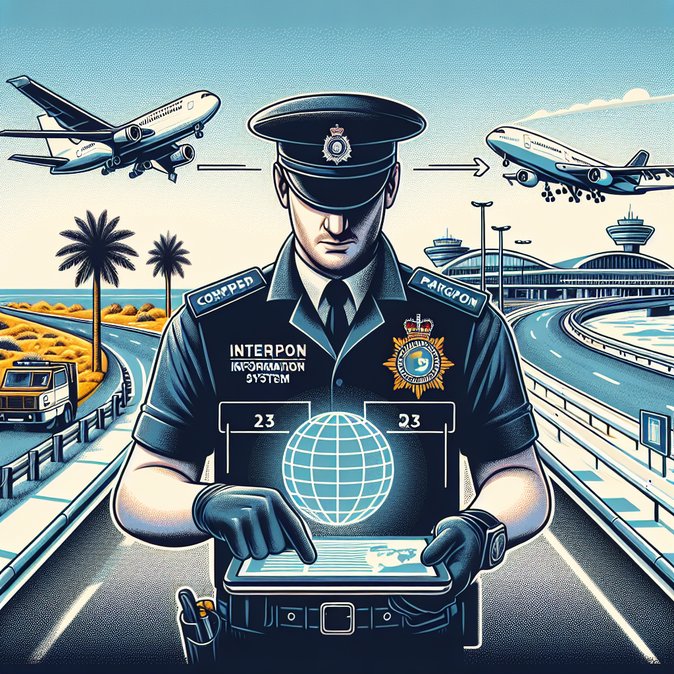
Cyprus took another concrete step toward Schengen accession this weekend by activating rugged Android tablets for every police patrol unit nationwide. Announced on 6 December and reported on 7 December, the “CY Patrol Check” devices give officers direct, real-time access to Interpol notices and the Schengen Information System (SIS) – something that previously required radioing a station operator and waiting several minutes for a reply.
The tablets are part of a €4 million Mobile Policing project that has been in pilot since July. Training at the Police Academy focused on data-protection rules and quick-search protocols so that field officers can run ID, vehicle-registration and lost-document queries while standing curb-side at Larnaca or Paphos airports, or at the island’s nine Green-Line crossing points. Supervisors must now file fortnightly usage reports, and the system will be audited by EU evaluators ahead of a key Schengen readiness mission in spring 2026.
![Cyprus equips frontline police with Schengen-linked mobile tablets]()
For business travellers and corporate assignees, the upgrade should translate into faster ad-hoc checks and shorter queues once Cyprus is fully connected to SIS II. Mobility managers, however, are being advised to brief staff that the number of on-the-spot document inspections is likely to rise temporarily while officers familiarise themselves with the new tech.
If you or your employees need clarity on how these Schengen-related shifts affect entry requirements, VisaHQ’s Cyprus portal (https://www.visahq.com/cyprus/) provides real-time updates, expert visa support, and streamlined application services—ideal for ensuring compliance while the new mobile policing measures roll out.
The investment complements recent procurements of Oracle licences for passport-control software and new network-security hardware at both international airports. Together, the programmes underscore Nicosia’s determination to clear the technical chapters of the Schengen acquis by the end of 2026 – a milestone that would allow visa-free movement from Cyprus to 27 EU/Schengen states and materially simplify EU-wide staff deployments for multinationals.
The tablets are part of a €4 million Mobile Policing project that has been in pilot since July. Training at the Police Academy focused on data-protection rules and quick-search protocols so that field officers can run ID, vehicle-registration and lost-document queries while standing curb-side at Larnaca or Paphos airports, or at the island’s nine Green-Line crossing points. Supervisors must now file fortnightly usage reports, and the system will be audited by EU evaluators ahead of a key Schengen readiness mission in spring 2026.

For business travellers and corporate assignees, the upgrade should translate into faster ad-hoc checks and shorter queues once Cyprus is fully connected to SIS II. Mobility managers, however, are being advised to brief staff that the number of on-the-spot document inspections is likely to rise temporarily while officers familiarise themselves with the new tech.
If you or your employees need clarity on how these Schengen-related shifts affect entry requirements, VisaHQ’s Cyprus portal (https://www.visahq.com/cyprus/) provides real-time updates, expert visa support, and streamlined application services—ideal for ensuring compliance while the new mobile policing measures roll out.
The investment complements recent procurements of Oracle licences for passport-control software and new network-security hardware at both international airports. Together, the programmes underscore Nicosia’s determination to clear the technical chapters of the Schengen acquis by the end of 2026 – a milestone that would allow visa-free movement from Cyprus to 27 EU/Schengen states and materially simplify EU-wide staff deployments for multinationals.