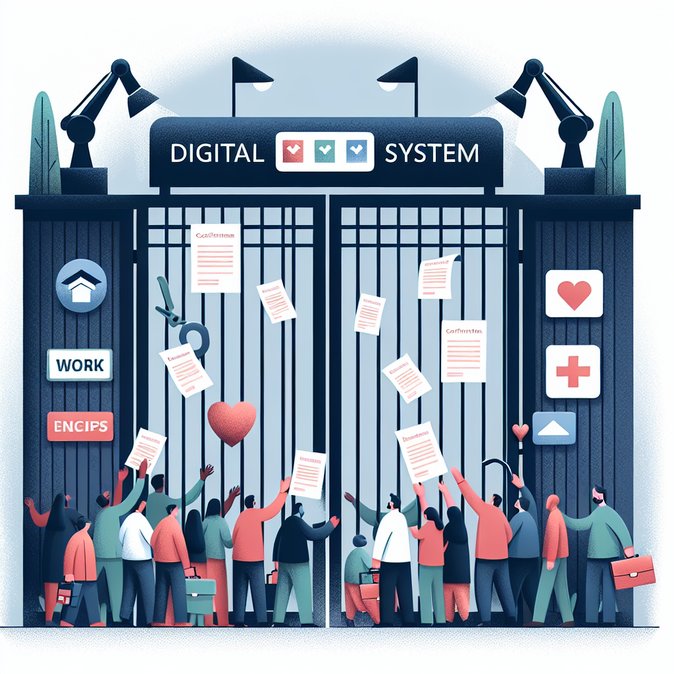
Cyprus’ Commissioner for Administration and Human Rights, Maria Stylianou-Lottides, has issued an urgent alert after discovering that asylum-seekers cannot enrol on the state’s CY-Login single-sign-on portal because the system refuses to recognise the documents they hold. CY-Login has quietly become mandatory for almost every public-sector transaction—from registering with the labour office to booking medical appointments—yet the identity-verification desks at Citizen Service Centres and Cyprus Post will only accept a Cypriot ID card, an EU registration certificate (yellow slip) or a valid residence permit. Asylum applicants possess none of these: they carry only the “confirmation letter” proving they have filed a claim for international protection.
The Ombudswoman’s investigation began after an NGO reported the case of a single mother who lost her job when she couldn’t renew her work permit online. Her team found minutes of a 2022 inter-ministerial meeting showing that officials were already aware of the loophole but had taken no remedial action. The Information Technology Services Department argues that asylum applicants’ identities are not yet firmly established and that names often change after interviews, therefore the group falls outside the CY-Login rules. Stylianou-Lottides rejects that logic, saying the state must provide an interim solution—such as in-person confirmation or delegated authorisation—until a secure digital fix is rolled out.
![Ombudswoman flags digital-ID gap that locks asylum seekers out of Cyprus e-services]()
For employers and global-mobility managers the warning is stark: foreign staff or dependants whose asylum claims are pending may suddenly be unable to access essential services, including renewal of their temporary work authorisations. Companies are advised to identify affected employees, accompany them to physical counters if necessary, and lobby the Deputy Ministry of Research, Innovation & Digital Policy for a fast workaround.
NGOs note that the problem risks breaching EU directives on reception conditions, while lawyers fear strategic litigation in Luxembourg if Cyprus does not act swiftly. The Deputy Ministry of Migration says it is "studying technical options" but has set no timetable. Until then, thousands of asylum seekers remain digitally invisible—and increasingly marginalised—in a country that prides itself on e-government progress.
The Ombudswoman’s investigation began after an NGO reported the case of a single mother who lost her job when she couldn’t renew her work permit online. Her team found minutes of a 2022 inter-ministerial meeting showing that officials were already aware of the loophole but had taken no remedial action. The Information Technology Services Department argues that asylum applicants’ identities are not yet firmly established and that names often change after interviews, therefore the group falls outside the CY-Login rules. Stylianou-Lottides rejects that logic, saying the state must provide an interim solution—such as in-person confirmation or delegated authorisation—until a secure digital fix is rolled out.

For employers and global-mobility managers the warning is stark: foreign staff or dependants whose asylum claims are pending may suddenly be unable to access essential services, including renewal of their temporary work authorisations. Companies are advised to identify affected employees, accompany them to physical counters if necessary, and lobby the Deputy Ministry of Research, Innovation & Digital Policy for a fast workaround.
NGOs note that the problem risks breaching EU directives on reception conditions, while lawyers fear strategic litigation in Luxembourg if Cyprus does not act swiftly. The Deputy Ministry of Migration says it is "studying technical options" but has set no timetable. Until then, thousands of asylum seekers remain digitally invisible—and increasingly marginalised—in a country that prides itself on e-government progress.