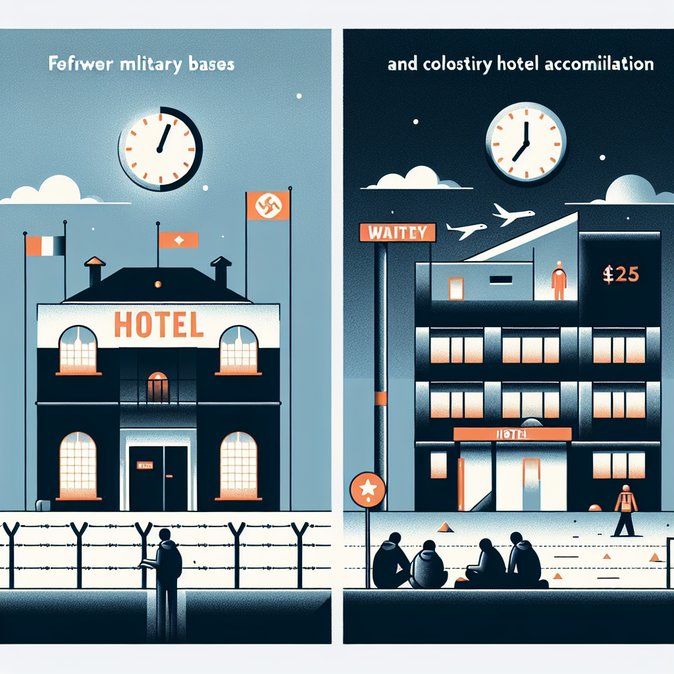
The UK Home Office has quietly delayed the transfer of more than 800 asylum seekers to two disused military sites—Crowborough Training Camp in East Sussex and Cameron Barracks in Inverness—citing operational and safety concerns. The relocations, scheduled to begin in late November, have been pushed back indefinitely, marking the latest setback in government efforts to cut the £3 billion annual hotel bill for asylum accommodation.
Unlike barges and repurposed ferries, the barracks strategy was designed to leverage existing accommodation blocks and avoid lengthy planning battles. However, local councils issued planning-contravention notices over fire-safety and sanitation standards, while refugee charities warned that isolated sites hinder legal and medical access.
![Home Office Postpones Plan to House Asylum Seekers in Former Military Barracks]()
For employers, the postponement sustains the status quo: thousands of asylum seekers will remain in hotels across commuter belts, prolonging community tensions and complicating local-authority resettlement schemes. Although most asylum seekers are not work-eligible, delays in status determinations indirectly affect labour-market supply—especially in sectors such as logistics and food processing that hope recent policy shifts will speed up permission-to-work decisions.
The Home Office insists the pause is temporary and that alternative large-site accommodation remains central to its Illegal Migration Act strategy. Yet MPs on the Public Accounts Committee say cost-benefit analyses comparing hotels, barges and barracks are overdue. Mobility-tax specialists also note that some employers reimburse hotel vouchers as part of refugee-support programmes, raising payroll-compliance questions.
Unlike barges and repurposed ferries, the barracks strategy was designed to leverage existing accommodation blocks and avoid lengthy planning battles. However, local councils issued planning-contravention notices over fire-safety and sanitation standards, while refugee charities warned that isolated sites hinder legal and medical access.

For employers, the postponement sustains the status quo: thousands of asylum seekers will remain in hotels across commuter belts, prolonging community tensions and complicating local-authority resettlement schemes. Although most asylum seekers are not work-eligible, delays in status determinations indirectly affect labour-market supply—especially in sectors such as logistics and food processing that hope recent policy shifts will speed up permission-to-work decisions.
The Home Office insists the pause is temporary and that alternative large-site accommodation remains central to its Illegal Migration Act strategy. Yet MPs on the Public Accounts Committee say cost-benefit analyses comparing hotels, barges and barracks are overdue. Mobility-tax specialists also note that some employers reimburse hotel vouchers as part of refugee-support programmes, raising payroll-compliance questions.