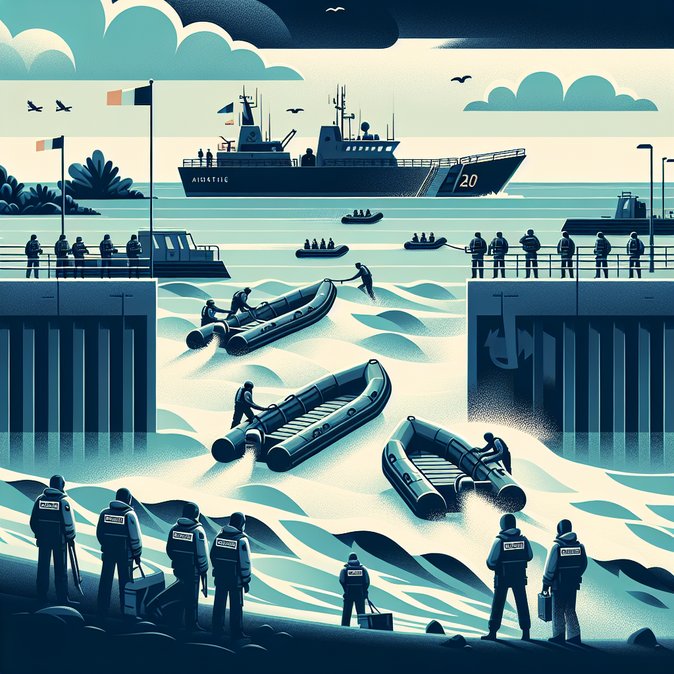
After weeks of diplomatic pressure from UK prime minister Keir Starmer, the French government is poised to authorise maritime interventions targeting empty inflatable craft—dubbed “taxi boats”—before they pick up migrants on northern beaches bound for Britain. The plan, reported on 28 November, would allow French security forces to tow or disable vessels within 300 metres of the shore, theoretically avoiding direct confrontations with passengers while disrupting smuggling networks.
Paris already deploys 800 gendarmes and police along the Calais-Dunkirk coastline, yet nearly 40,000 people have reached the UK in small boats so far in 2025. British funding—£480 million over three years—helps finance coastal patrols, aerial surveillance and reception centres. Starmer’s new Labour government has linked future payments to “concrete deterrence”, prompting French officials to explore more aggressive tactics.
![Paris Moves to Seize ‘Taxi Boats’ Before They Collect Channel Migrants]()
NGOs immediately criticised the proposal, warning that confiscating boats at sea could force migrants into even riskier night-crossings or push them toward longer routes via Belgium and the Netherlands. Legal groups are considering court challenges on the grounds that the strategy may violate the right to seek asylum.
For employers, the stakes are reputational as well as operational. Logistics firms moving goods through the Eurotunnel fear that crackdowns could trigger protest blockades reminiscent of 2016, when truck queues stretched 30 kilometres. Companies are advised to monitor traffic alerts and factor potential delays into just-in-time supply chains.
The measure still needs cabinet approval but could be implemented by executive order before the 2026 peak season. Observers note that France continues to renew its internal Schengen border checks every six months, citing the same migration pressures now influencing Channel policy.
Paris already deploys 800 gendarmes and police along the Calais-Dunkirk coastline, yet nearly 40,000 people have reached the UK in small boats so far in 2025. British funding—£480 million over three years—helps finance coastal patrols, aerial surveillance and reception centres. Starmer’s new Labour government has linked future payments to “concrete deterrence”, prompting French officials to explore more aggressive tactics.

NGOs immediately criticised the proposal, warning that confiscating boats at sea could force migrants into even riskier night-crossings or push them toward longer routes via Belgium and the Netherlands. Legal groups are considering court challenges on the grounds that the strategy may violate the right to seek asylum.
For employers, the stakes are reputational as well as operational. Logistics firms moving goods through the Eurotunnel fear that crackdowns could trigger protest blockades reminiscent of 2016, when truck queues stretched 30 kilometres. Companies are advised to monitor traffic alerts and factor potential delays into just-in-time supply chains.
The measure still needs cabinet approval but could be implemented by executive order before the 2026 peak season. Observers note that France continues to renew its internal Schengen border checks every six months, citing the same migration pressures now influencing Channel policy.