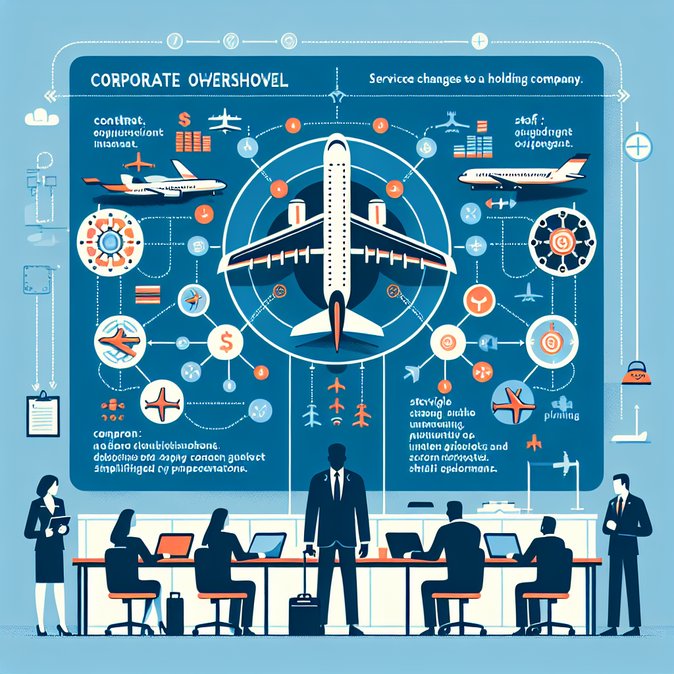
Dutch outlet NL Times revealed on 11 November 2025 that Air France-KLM has quietly restructured its corporate governance, formally assigning greater operational authority to the Paris-based holding company. The change, confirmed by internal documents and CEO Ben Smith’s recent remarks, gives Air France executives a louder voice in decisions on fleet mix, staffing levels and network planning across the group—including at French hub airports.
For French-based mobility programmes the shift has two immediate implications. First, route rationalisation is back on the table: analysts believe under-performing short-haul services from secondary French cities could be trimmed in favour of feeding long-haul traffic through Paris-Charles-de-Gaulle. Second, cost-saving targets raise the prospect of leaner ground-handling contracts that might affect fast-track and lounge facilities relied upon by corporate travellers.
![Air France-KLM Power-Shift Raises Concerns Over Future Route and Staffing Decisions]()
Employee groups in both France and the Netherlands have voiced concern. Dutch unions fear job cuts beyond the 250 indirect positions previously announced, while French cabin-crew representatives worry that a drive for harmonised contracts could erode existing benefits. Any industrial action on either side of the border would ripple through the group’s integrated flight schedule, so global-mobility managers should monitor contingency plans closely.
In the medium term, tighter group oversight could accelerate fleet commonality—shifting more French domestic flights to Airbus A220s and phasing out ageing Embraer jets. That would marginally reduce carbon emissions and lower operating costs, but also require revised payload and baggage guidelines for assignees travelling with outsized equipment.
For French-based mobility programmes the shift has two immediate implications. First, route rationalisation is back on the table: analysts believe under-performing short-haul services from secondary French cities could be trimmed in favour of feeding long-haul traffic through Paris-Charles-de-Gaulle. Second, cost-saving targets raise the prospect of leaner ground-handling contracts that might affect fast-track and lounge facilities relied upon by corporate travellers.

Employee groups in both France and the Netherlands have voiced concern. Dutch unions fear job cuts beyond the 250 indirect positions previously announced, while French cabin-crew representatives worry that a drive for harmonised contracts could erode existing benefits. Any industrial action on either side of the border would ripple through the group’s integrated flight schedule, so global-mobility managers should monitor contingency plans closely.
In the medium term, tighter group oversight could accelerate fleet commonality—shifting more French domestic flights to Airbus A220s and phasing out ageing Embraer jets. That would marginally reduce carbon emissions and lower operating costs, but also require revised payload and baggage guidelines for assignees travelling with outsized equipment.