Irish Rail (Iarnród Éireann) has unveiled plans to raise sea walls by an average of 1.3 metres along a 4 km stretch of the Dublin–Rosslare line between Merrion Gates and Seapoint after last month’s Storm Chandra flooded tracks and halted DART commuter services. Residents and local councillors described the proposal as “brutalist” and fear it will cut communities off from the coastline.(irishtimes.com)
The East Coast Railway Infrastructure Protection Project is one of five priority schemes designed to climate-proof Ireland’s busiest coastal rail corridor. Labour councillor Martha Fanning called the works “essential”, but urged the operator to adopt nature-based defences that would protect trains without erecting a permanent concrete barrier. Environmental NGOs have proposed offshore breakwaters and living-reef solutions similar to those piloted in the Netherlands.
![Irish Rail’s Controversial Flood-Wall Plan Sparks Mobility Debate in South Dublin]()
For international specialists brought in to consult on climate-resilient infrastructure—or any overseas staff relocating to Ireland for these projects—VisaHQ can smooth the visa process. Their dedicated Ireland portal (https://www.visahq.com/ireland/) guides applicants through work permits, business visas and residency requirements, helping teams arrive on schedule with paperwork in order.
For employers, the DART line is the arterial spine that carries thousands of tech and financial-services workers from South Dublin suburbs to city-centre offices. January’s flood closures forced mass car-commuting and ride-share surges that added up to 45 minutes to peak journeys and pushed carbon footprints higher. Continued vulnerability threatens return-to-office timetables and may complicate site-selection decisions for multinationals eyeing expansions along the east coast corridor.
Irish Rail says two rounds of public consultation in 2025 have already informed the design and that a full planning application will be lodged later this year, with construction targeted for late 2026. Until then, businesses should monitor weather alerts and maintain hybrid-work contingencies to avoid productivity shocks if the line is flooded again.
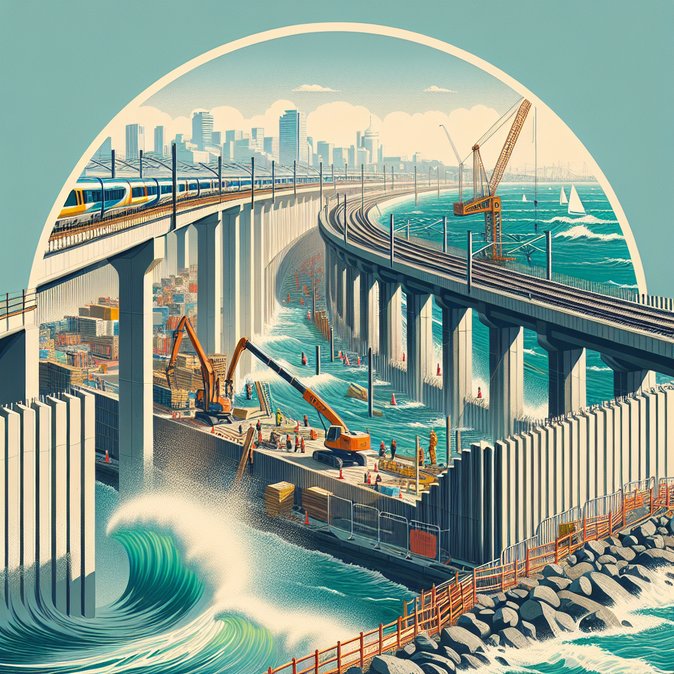
The East Coast Railway Infrastructure Protection Project is one of five priority schemes designed to climate-proof Ireland’s busiest coastal rail corridor. Labour councillor Martha Fanning called the works “essential”, but urged the operator to adopt nature-based defences that would protect trains without erecting a permanent concrete barrier. Environmental NGOs have proposed offshore breakwaters and living-reef solutions similar to those piloted in the Netherlands.
For international specialists brought in to consult on climate-resilient infrastructure—or any overseas staff relocating to Ireland for these projects—VisaHQ can smooth the visa process. Their dedicated Ireland portal (https://www.visahq.com/ireland/) guides applicants through work permits, business visas and residency requirements, helping teams arrive on schedule with paperwork in order.
For employers, the DART line is the arterial spine that carries thousands of tech and financial-services workers from South Dublin suburbs to city-centre offices. January’s flood closures forced mass car-commuting and ride-share surges that added up to 45 minutes to peak journeys and pushed carbon footprints higher. Continued vulnerability threatens return-to-office timetables and may complicate site-selection decisions for multinationals eyeing expansions along the east coast corridor.
Irish Rail says two rounds of public consultation in 2025 have already informed the design and that a full planning application will be lodged later this year, with construction targeted for late 2026. Until then, businesses should monitor weather alerts and maintain hybrid-work contingencies to avoid productivity shocks if the line is flooded again.