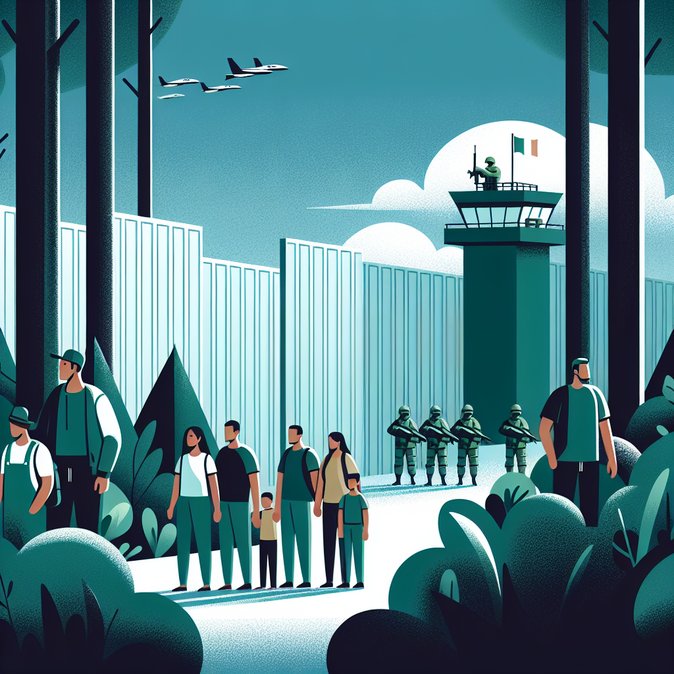
Poland’s north-eastern frontier is once again the stage for a high-stakes contest between desperate migrants and hardening border policy. A New Yorker investigation published on 23 February paints an unflinching picture of daily life in the Białowieża Forest, where thousands of people from Somalia, Cameroon, Syria and Yemen attempt to slip past Poland’s new 5.5-metre-high steel wall. Belarusian security forces reportedly funnel travellers to unmarked gaps, while Polish border guards deploy drones, infrared cameras and canine patrols to repel them.
The article notes that Poland’s 2022 emergency ordinance still allows so-called “push-backs,” enabling officers to expel anyone caught within 15 kilometres of the fence without registering an asylum claim. Lawyers argue the practice violates both EU law and the 1951 Refugee Convention, but Warsaw’s centrist coalition says the policy is essential to national security after Minsk “weaponised” migration in retaliation for EU sanctions.
Amid this fast-shifting regulatory environment, VisaHQ can serve as a practical ally. Its Poland portal (https://www.visahq.com/poland/) distils current visa requirements, offers document-preparation tools and coordinates expedited filings, enabling both individual travellers and corporate mobility managers to navigate Polish entry procedures with greater confidence.
![Humanitarian Crisis Deepens on Poland-Belarus Frontier as Migrants Brave New Steel Wall]()
Business implications are two-fold. Multinationals posting staff to Belarus or the Suwałki Gap must now factor in sporadic road closures, stricter freight inspections and potential reputational backlash if supply chains appear to profit from forced labour or people-smuggling. NGOs and corporate CSR teams face higher compliance costs: anyone providing food, blankets or medical care inside the restricted zone risks prosecution for “facilitating illegal stay.”
The episode also highlights an equity gap in Poland’s mobility regime. While citizens fleeing Ukraine enjoy visa-free entry and an open labour market, Africans and Middle-Easterners are met with razor wire and detention. Employers relying on diverse talent pools should anticipate growing pressure—from both investors and EU regulators—to demonstrate non-discriminatory recruitment and posting practices. Practical steps include reinforcing zero-fee recruitment policies and auditing Polish subcontractors for forced-labour risk.
Looking forward, the European Parliament votes in March on a “crisis derogation” that could formalise rapid expulsions at all EU external borders. If passed, Poland’s ad-hoc system could become the blueprint for a continent-wide shift toward securitised mobility management—raising the stakes for companies whose success depends on predictable cross-border flows.
The article notes that Poland’s 2022 emergency ordinance still allows so-called “push-backs,” enabling officers to expel anyone caught within 15 kilometres of the fence without registering an asylum claim. Lawyers argue the practice violates both EU law and the 1951 Refugee Convention, but Warsaw’s centrist coalition says the policy is essential to national security after Minsk “weaponised” migration in retaliation for EU sanctions.
Amid this fast-shifting regulatory environment, VisaHQ can serve as a practical ally. Its Poland portal (https://www.visahq.com/poland/) distils current visa requirements, offers document-preparation tools and coordinates expedited filings, enabling both individual travellers and corporate mobility managers to navigate Polish entry procedures with greater confidence.

Business implications are two-fold. Multinationals posting staff to Belarus or the Suwałki Gap must now factor in sporadic road closures, stricter freight inspections and potential reputational backlash if supply chains appear to profit from forced labour or people-smuggling. NGOs and corporate CSR teams face higher compliance costs: anyone providing food, blankets or medical care inside the restricted zone risks prosecution for “facilitating illegal stay.”
The episode also highlights an equity gap in Poland’s mobility regime. While citizens fleeing Ukraine enjoy visa-free entry and an open labour market, Africans and Middle-Easterners are met with razor wire and detention. Employers relying on diverse talent pools should anticipate growing pressure—from both investors and EU regulators—to demonstrate non-discriminatory recruitment and posting practices. Practical steps include reinforcing zero-fee recruitment policies and auditing Polish subcontractors for forced-labour risk.
Looking forward, the European Parliament votes in March on a “crisis derogation” that could formalise rapid expulsions at all EU external borders. If passed, Poland’s ad-hoc system could become the blueprint for a continent-wide shift toward securitised mobility management—raising the stakes for companies whose success depends on predictable cross-border flows.