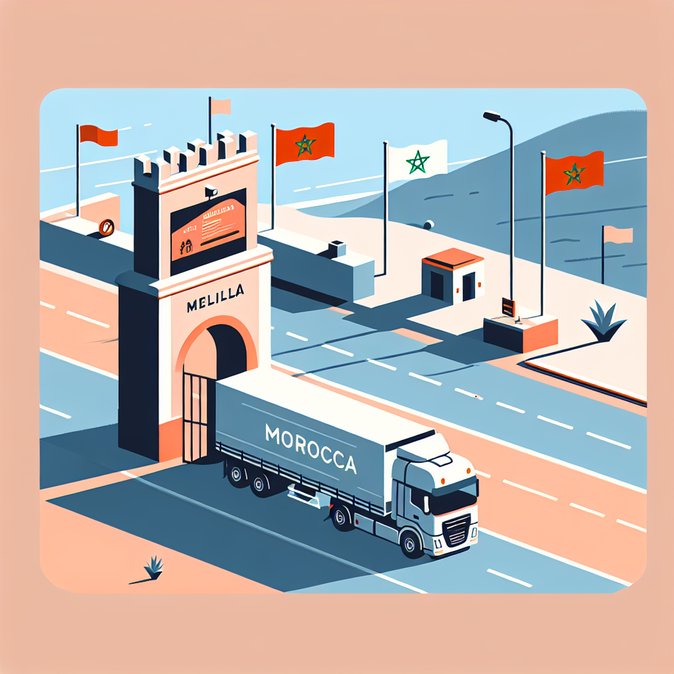
Spain’s Foreign Minister José Manuel Albares confirmed on 21 February that a freight truck crossed the Melilla border checkpoint into Morocco, marking the first official movement of goods since Rabat unilaterally shut the customs post in 2018. The operation, described as phase one of a "gradual normalisation", comes after months of technical talks and three pilot tests.
Re-opening customs in Melilla – and creating one for Ceuta, where none previously existed – was a core promise of the 2022 bilateral "road-map" that thawed relations following Spain’s endorsement of Morocco’s autonomy plan for Western Sahara. Business chambers in both enclaves estimate that full restoration could revive €500 million in annual cross-border trade and reduce informal portering that once employed thousands of women known as porteadoras.
For corporate supply-chains the milestone signals new, legal overland routes into northern Morocco’s Tanger-Tetouan-Al Hoceima region, potentially shortening delivery times compared with maritime links via Algeciras. Logistics managers should, however, expect limited capacity during the "initial stage": only single lorry movements are being cleared while IT systems are stress-tested and Moroccan customs officers receive Schengen-compliant training.
![Melilla Customs Posts First Formal Cargo to Morocco, Opening Path to Full Border Normalisation]()
If your teams need to move personnel or contractors across the Schengen-Morocco frontier as these procedures bed in, VisaHQ can simplify the visa process. Their Spain portal (https://www.visahq.com/spain/) provides real-time guidance on both Spanish and Moroccan entry requirements, online appointment booking and document courier options—saving logistics departments valuable time while regulations remain in flux.
The Foreign Ministry declined to set dates for scaling up volumes or launching the Ceuta facility, saying announcements will follow "once steps consolidate". Companies planning just-in-time operations are advised to maintain alternative routings until both sides publish consistent opening hours and service levels.
Politically, the success of the Melilla crossing reduces one irritant in Spain-Morocco relations and may ease pressure on migration flows: Madrid argues that formal trade lessens the incentive for informal crossers who sometimes attempt dangerous sea routes to the Spanish mainland.
Re-opening customs in Melilla – and creating one for Ceuta, where none previously existed – was a core promise of the 2022 bilateral "road-map" that thawed relations following Spain’s endorsement of Morocco’s autonomy plan for Western Sahara. Business chambers in both enclaves estimate that full restoration could revive €500 million in annual cross-border trade and reduce informal portering that once employed thousands of women known as porteadoras.
For corporate supply-chains the milestone signals new, legal overland routes into northern Morocco’s Tanger-Tetouan-Al Hoceima region, potentially shortening delivery times compared with maritime links via Algeciras. Logistics managers should, however, expect limited capacity during the "initial stage": only single lorry movements are being cleared while IT systems are stress-tested and Moroccan customs officers receive Schengen-compliant training.

If your teams need to move personnel or contractors across the Schengen-Morocco frontier as these procedures bed in, VisaHQ can simplify the visa process. Their Spain portal (https://www.visahq.com/spain/) provides real-time guidance on both Spanish and Moroccan entry requirements, online appointment booking and document courier options—saving logistics departments valuable time while regulations remain in flux.
The Foreign Ministry declined to set dates for scaling up volumes or launching the Ceuta facility, saying announcements will follow "once steps consolidate". Companies planning just-in-time operations are advised to maintain alternative routings until both sides publish consistent opening hours and service levels.
Politically, the success of the Melilla crossing reduces one irritant in Spain-Morocco relations and may ease pressure on migration flows: Madrid argues that formal trade lessens the incentive for informal crossers who sometimes attempt dangerous sea routes to the Spanish mainland.