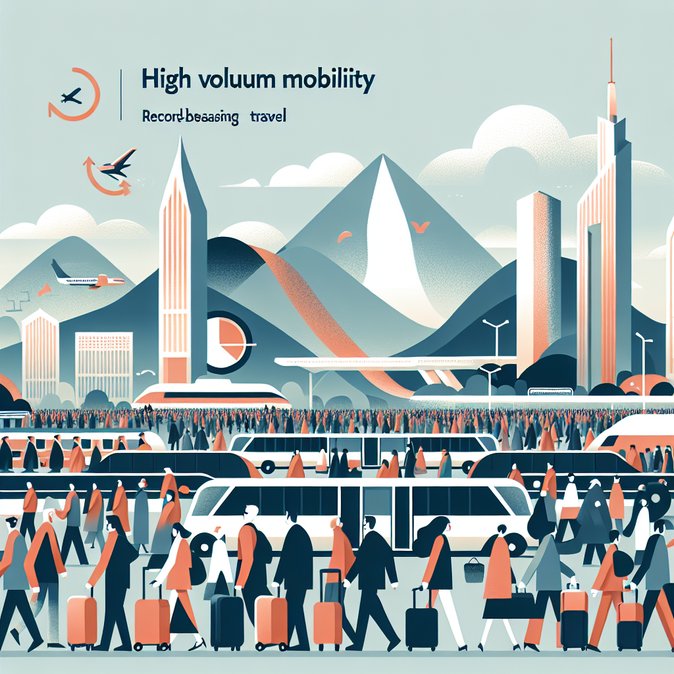
China’s Ministry of Transport has confirmed that 352.999 million cross-regional passenger trips were recorded on 20 February, the 19th day of the Spring Festival travel season (known locally as “chunyun”). The figure represents a 12.3 percent year-on-year increase and is the highest one-day movement of people ever documented in the country. (english.www.gov.cn)
Chunyun is often branded the world’s largest annual migration, but 2026 is exceptional even by Chinese standards. A longer nine-day statutory New-Year break (15–23 February) and the first full year without domestic health-control restrictions have unleashed pent-up demand for both leisure and business travel. Transport capacity was expanded across rail, air, road and inland-waterway networks, with the ministry scheduling thousands of extra trains and flights. (english.www.gov.cn)
Whether you’re one of the millions returning home for family reunions or a business traveler reconnecting with partners across multiple Chinese cities, sorting out visa paperwork early can save time and stress. VisaHQ’s China portal (https://www.visahq.com/china/) allows individuals and corporate travel teams to review current entry requirements, complete applications online, and track approvals in real time—streamlining one of the trickiest parts of cross-border mobility during this record-setting season.
![China sets single-day mobility record with 352.9 million passenger trips during Spring Festival rush]()
Corporate mobility is also back at scale. HR teams at multinationals report that executive itineraries—which were compressed into virtual meetings during the pandemic—have reverted to multi-city, in-person roadshows to reconnect with suppliers and regional teams. Domestic carriers deployed wide-body aircraft on trunk routes between Beijing, Shanghai, Guangzhou and Shenzhen to accommodate a noticeable uptick in premium-cabin bookings by business travellers.
For employers, the surge creates both opportunity and operational challenges. Larger customer-facing workforces are needed to keep retail outlets, hotels and logistics hubs running, while travel-policy managers must factor in higher fares, fuller flights and potential schedule volatility. Many companies activated split-shift and remote-work contingencies to maintain continuity when staff could not secure tickets back to work sites on the first attempt.
The record-breaking day is an early indicator that 2026 could be the year China’s mobility market finally exceeds pre-pandemic volumes on a sustained basis. Firms with China exposure should expect congested transport nodes through at least mid-March, when the 40-day travel window closes, and review contingency plans for critical travel.
Chunyun is often branded the world’s largest annual migration, but 2026 is exceptional even by Chinese standards. A longer nine-day statutory New-Year break (15–23 February) and the first full year without domestic health-control restrictions have unleashed pent-up demand for both leisure and business travel. Transport capacity was expanded across rail, air, road and inland-waterway networks, with the ministry scheduling thousands of extra trains and flights. (english.www.gov.cn)
Whether you’re one of the millions returning home for family reunions or a business traveler reconnecting with partners across multiple Chinese cities, sorting out visa paperwork early can save time and stress. VisaHQ’s China portal (https://www.visahq.com/china/) allows individuals and corporate travel teams to review current entry requirements, complete applications online, and track approvals in real time—streamlining one of the trickiest parts of cross-border mobility during this record-setting season.

Corporate mobility is also back at scale. HR teams at multinationals report that executive itineraries—which were compressed into virtual meetings during the pandemic—have reverted to multi-city, in-person roadshows to reconnect with suppliers and regional teams. Domestic carriers deployed wide-body aircraft on trunk routes between Beijing, Shanghai, Guangzhou and Shenzhen to accommodate a noticeable uptick in premium-cabin bookings by business travellers.
For employers, the surge creates both opportunity and operational challenges. Larger customer-facing workforces are needed to keep retail outlets, hotels and logistics hubs running, while travel-policy managers must factor in higher fares, fuller flights and potential schedule volatility. Many companies activated split-shift and remote-work contingencies to maintain continuity when staff could not secure tickets back to work sites on the first attempt.
The record-breaking day is an early indicator that 2026 could be the year China’s mobility market finally exceeds pre-pandemic volumes on a sustained basis. Firms with China exposure should expect congested transport nodes through at least mid-March, when the 40-day travel window closes, and review contingency plans for critical travel.