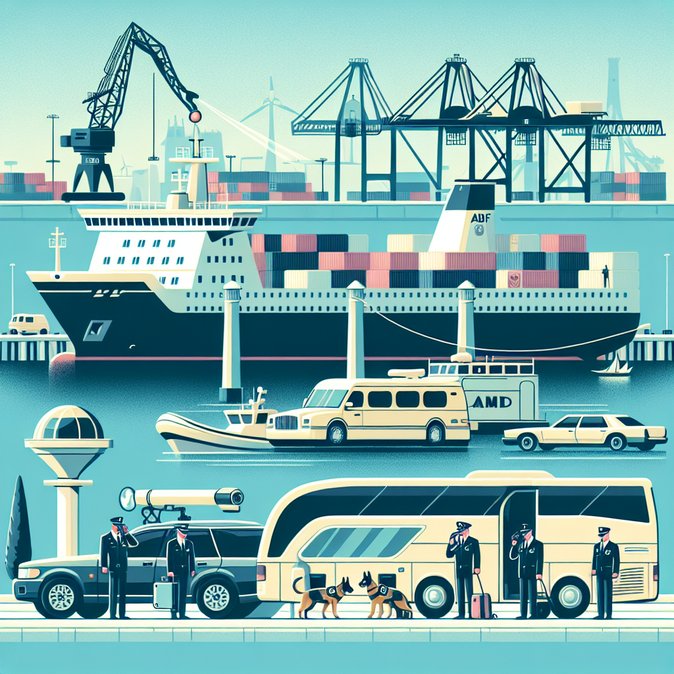
Australian Border Force (ABF) officers have intercepted a roll-on/roll-off vessel at Outer Harbor, Adelaide, uncovering 28 one-kilogram bricks of cocaine concealed behind a television set inside a luxury coach. The discovery on 16 February led to a formal seizure and joint investigation announced publicly this morning (22 February 2026) by the ABF and the Australian Federal Police (AFP).
The find underscores Australia’s use of intelligence-led targeting and advanced detection technology, including videoscopes and detector dogs, to police its busy seaports. While no arrests have yet been made, the AFP says the drugs—worth an estimated AUD 11 million—were likely destined for domestic distribution networks. Detectives are working with international counterparts to trace the shipment’s origin and identify any links to maritime trafficking syndicates operating across the Pacific.
![Border Force and AFP seize 28 kg of cocaine hidden in luxury bus at Adelaide wharf]()
For global mobility and supply-chain managers the incident is a reminder that legitimate commercial cargo movements face heightened scrutiny. Importers of vehicles, buses and heavy machinery can expect delays as authorities intensify examinations of high-risk commodities arriving on RORO vessels. Companies should ensure customs brokers hold complete manifests and are prepared for potential inspection costs.
Amid this stricter enforcement environment, organisations dispatching staff to Australian ports may also need to streamline visa and travel-document arrangements. VisaHQ’s Australia portal (https://www.visahq.com/australia/) offers a fast, user-friendly way to secure Electronic Travel Authorities, business visas and passport renewals, helping teams arrive on schedule and comply with evolving border requirements.
The seizure also highlights the ABF’s wider mandate to protect borders while facilitating trade. Modern global-mobility programmes that include corporate relocations of specialised vehicles or exhibition equipment should build extra lead-time into shipping schedules and maintain transparent compliance records to avoid disruptions.
The find underscores Australia’s use of intelligence-led targeting and advanced detection technology, including videoscopes and detector dogs, to police its busy seaports. While no arrests have yet been made, the AFP says the drugs—worth an estimated AUD 11 million—were likely destined for domestic distribution networks. Detectives are working with international counterparts to trace the shipment’s origin and identify any links to maritime trafficking syndicates operating across the Pacific.

For global mobility and supply-chain managers the incident is a reminder that legitimate commercial cargo movements face heightened scrutiny. Importers of vehicles, buses and heavy machinery can expect delays as authorities intensify examinations of high-risk commodities arriving on RORO vessels. Companies should ensure customs brokers hold complete manifests and are prepared for potential inspection costs.
Amid this stricter enforcement environment, organisations dispatching staff to Australian ports may also need to streamline visa and travel-document arrangements. VisaHQ’s Australia portal (https://www.visahq.com/australia/) offers a fast, user-friendly way to secure Electronic Travel Authorities, business visas and passport renewals, helping teams arrive on schedule and comply with evolving border requirements.
The seizure also highlights the ABF’s wider mandate to protect borders while facilitating trade. Modern global-mobility programmes that include corporate relocations of specialised vehicles or exhibition equipment should build extra lead-time into shipping schedules and maintain transparent compliance records to avoid disruptions.