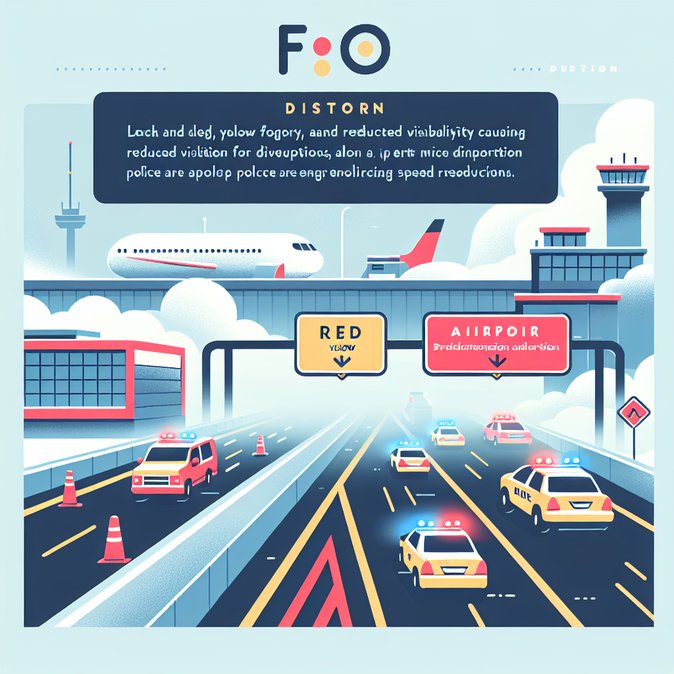
The UAE’s National Centre of Meteorology (NCM) has issued consecutive red and yellow alerts for dense fog stretching from 22 to 26 February, with visibility expected to plunge below 200 metres during pre-dawn hours in Abu Dhabi, Dubai and Al Ain. Authorities re-activated variable-message signs enforcing mandatory 80 km/h speed caps on Sheikh Zayed Road after several pile-ups earlier this month.(thenationalnews.com)
Aviation operations are again on edge: Etihad diverted three inbound narrow-body flights to Fujairah on Saturday morning, while Dubai International (DXB) reported stand holds averaging 45 minutes as ground movement slowed. The February fog cycle is an annual phenomenon, but 2026 has already recorded two of the densest events in a decade, forcing dozens of flight cancellations on 10–11 February.
Travellers dealing with potential schedule changes should also make sure their paperwork is in order. VisaHQ’s online platform (https://www.visahq.com/united-arab-emirates/) simplifies UAE tourist and business visa applications for hundreds of nationalities, offering door-to-door document courier services and real-time tracking—convenient extras when flights and connections are susceptible to last-minute weather disruptions.
![Red-Alert Fog Returns: UAE Issues Week-Long Travel Warning for Drivers and Airports]()
For commuters, the economic impact is tangible. Consultancy KPMG estimates each two-hour traffic delay costs Dubai firms roughly AED 22 million in lost productivity. Logistics operators serving Jebel Ali report delivery windows slipping by up to six hours, triggering SLA penalties in FMCG supply chains.
Officials urge motorists to use low-beam headlights, avoid hazard-light driving—a common but illegal practice—and download the Abu Dhabi Police “Safe Driving” app for live road closures. Frequent flyers should leave extra buffer time, pre-select seats on later connecting flights, and book flexible hotel rates when arriving during the 04:00-08:00 “fog band.”
In the medium term, Dubai Airports is accelerating installation of Category IIIb Instrument Landing System upgrades on DXB’s northern runway, citing a potential 20 % cut in fog-related diversions once fully operational in Q4 2027.
Aviation operations are again on edge: Etihad diverted three inbound narrow-body flights to Fujairah on Saturday morning, while Dubai International (DXB) reported stand holds averaging 45 minutes as ground movement slowed. The February fog cycle is an annual phenomenon, but 2026 has already recorded two of the densest events in a decade, forcing dozens of flight cancellations on 10–11 February.
Travellers dealing with potential schedule changes should also make sure their paperwork is in order. VisaHQ’s online platform (https://www.visahq.com/united-arab-emirates/) simplifies UAE tourist and business visa applications for hundreds of nationalities, offering door-to-door document courier services and real-time tracking—convenient extras when flights and connections are susceptible to last-minute weather disruptions.

For commuters, the economic impact is tangible. Consultancy KPMG estimates each two-hour traffic delay costs Dubai firms roughly AED 22 million in lost productivity. Logistics operators serving Jebel Ali report delivery windows slipping by up to six hours, triggering SLA penalties in FMCG supply chains.
Officials urge motorists to use low-beam headlights, avoid hazard-light driving—a common but illegal practice—and download the Abu Dhabi Police “Safe Driving” app for live road closures. Frequent flyers should leave extra buffer time, pre-select seats on later connecting flights, and book flexible hotel rates when arriving during the 04:00-08:00 “fog band.”
In the medium term, Dubai Airports is accelerating installation of Category IIIb Instrument Landing System upgrades on DXB’s northern runway, citing a potential 20 % cut in fog-related diversions once fully operational in Q4 2027.