Australian companies sending staff to Europe received a reality check this week after FCM Travel released an urgent advisory that pulls together everything employers need to know about the European Union’s new border-management systems.
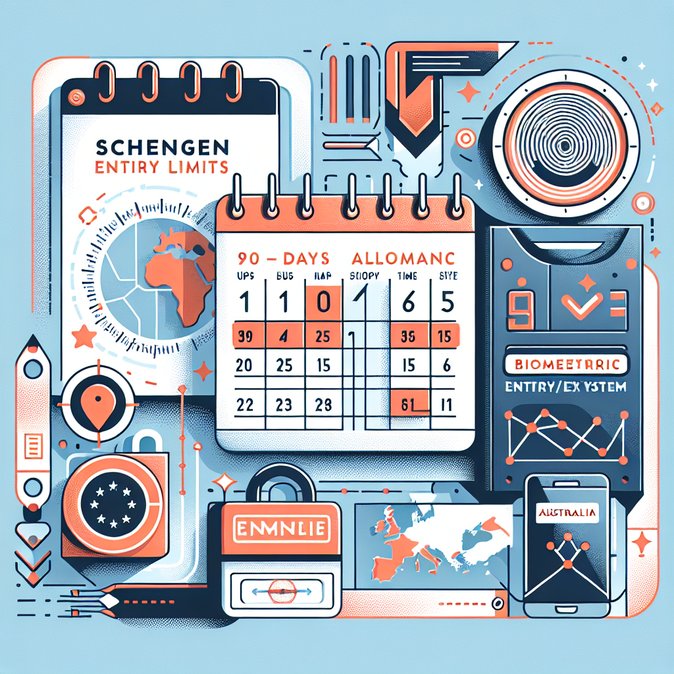
The note, published on 20 February 2026, confirms three separate—but often confused—requirements. First, Australians remain visa-exempt for business or leisure visits of up to 90 days in any 180-day period under the long-standing Schengen short-stay rule. Second, the EU’s Entry/Exit System (EES)—already in ‘soft’ operation—will become fully mandatory in April 2026, meaning that the first time an Australian passport holder crosses an external Schengen border, fingerprints and a facial image will be captured and an electronic entry record opened. Third, the much-talked-about ETIAS travel authorisation will not start until late 2026; travellers should therefore ignore third-party application websites for now.
Renos Rologas, general manager Australia & New Zealand at FCM, says the biggest pain-point for business travellers is the 90/180-day calculation. “Executives on multi-country itineraries are still getting caught out. We’re telling travel managers to use the European Commission’s calculator and to factor in the extra time EES biometric capture will take at the first border,” he said.
![Australian corporates warned on new EU border tech as FCM Travel issues Schengen-ETIAS advisory]()
Companies that would rather not navigate these shifting rules alone can tap VisaHQ for support. Via its Australia portal (https://www.visahq.com/australia/), VisaHQ tracks Schengen, ETIAS and UK ETA developments in real time and offers application assistance, calculators and compliance reminders—helping travel managers stay ahead of potential disruptions.
The advisory also reminds employers that the United Kingdom will introduce its own Electronic Travel Authorisation (ETA) for most visa-exempt visitors from 25 February 2026—just days away. Dual British or Irish-Australian citizens will need to carry the correct passport to avoid being bounced at e-gates.
For corporate mobility teams, the message is clear: audit all Schengen travel, run 90/180-day simulations, warn staff about biometric queues in Q2, and postpone any ETIAS system builds until Brussels confirms the launch window.
The note, published on 20 February 2026, confirms three separate—but often confused—requirements. First, Australians remain visa-exempt for business or leisure visits of up to 90 days in any 180-day period under the long-standing Schengen short-stay rule. Second, the EU’s Entry/Exit System (EES)—already in ‘soft’ operation—will become fully mandatory in April 2026, meaning that the first time an Australian passport holder crosses an external Schengen border, fingerprints and a facial image will be captured and an electronic entry record opened. Third, the much-talked-about ETIAS travel authorisation will not start until late 2026; travellers should therefore ignore third-party application websites for now.
Renos Rologas, general manager Australia & New Zealand at FCM, says the biggest pain-point for business travellers is the 90/180-day calculation. “Executives on multi-country itineraries are still getting caught out. We’re telling travel managers to use the European Commission’s calculator and to factor in the extra time EES biometric capture will take at the first border,” he said.

Companies that would rather not navigate these shifting rules alone can tap VisaHQ for support. Via its Australia portal (https://www.visahq.com/australia/), VisaHQ tracks Schengen, ETIAS and UK ETA developments in real time and offers application assistance, calculators and compliance reminders—helping travel managers stay ahead of potential disruptions.
The advisory also reminds employers that the United Kingdom will introduce its own Electronic Travel Authorisation (ETA) for most visa-exempt visitors from 25 February 2026—just days away. Dual British or Irish-Australian citizens will need to carry the correct passport to avoid being bounced at e-gates.
For corporate mobility teams, the message is clear: audit all Schengen travel, run 90/180-day simulations, warn staff about biometric queues in Q2, and postpone any ETIAS system builds until Brussels confirms the launch window.