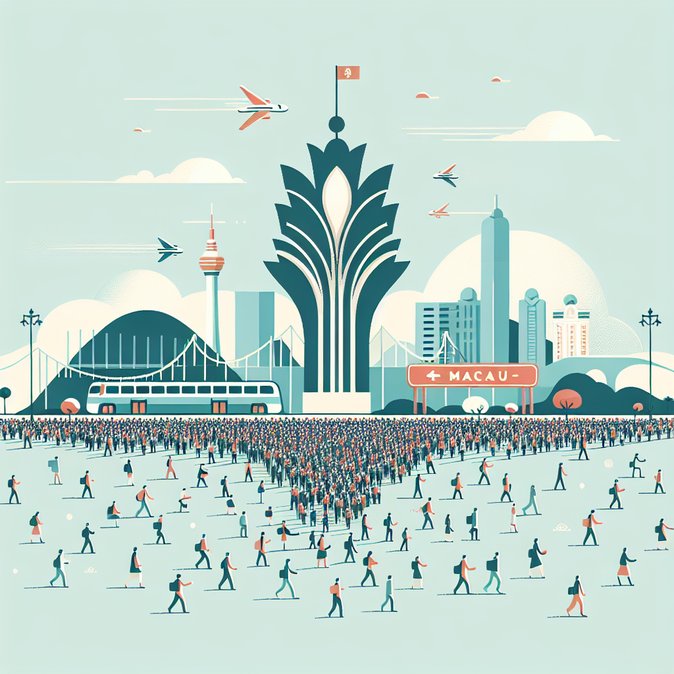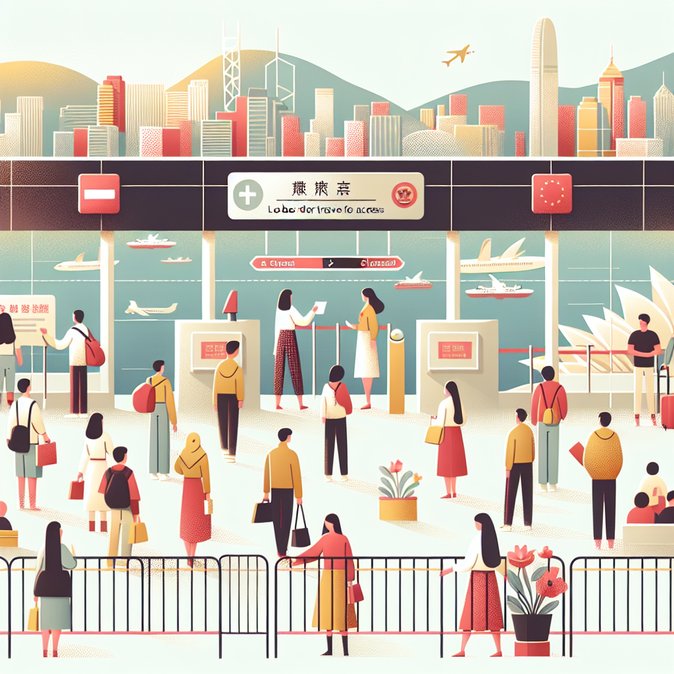
Hong Kong’s Immigration Department reported 153,383 visitor entries on 18 February, the first day of the Lunar-New-Year public holiday. More than 120,000—roughly 78 percent—came from mainland China, underlining the city’s dependence on the cross-boundary leisure market two years after quarantine restrictions were scrapped.
Inbound flows for the first two holiday days totalled 265,140, up 7.8 percent compared with 2025. Authorities expect 1.43 million mainland visitors by the time the nine-day holiday ends on 23 February. The busiest checkpoints were Lo Wu and the Hong Kong–Zhuhai–Macau Bridge, both of which processed over 35,000 mainland tourists on day one.
For global-mobility stakeholders the data answer two questions. First, Hong Kong’s capacity to absorb mainland leisure traffic has bounced back to 90 percent of pre-pandemic levels, suggesting that corporate travellers can again rely on the territory as a regional hub without facing the chronic congestion seen in 2018-19. Second, new e-Channel arrangements for frequent mainland visitors—rolled out quietly in January—are working: average clearance time at Lo Wu dropped to eight minutes at peak, down from 20 minutes last year.
![Hong Kong sees 153,383 visitor arrivals on Lunar-New-Year Day, 10 % higher year on year]()
Companies arranging cross-border travel for employees may wish to streamline documentation. VisaHQ’s China team (https://www.visahq.com/china/) can coordinate Hong Kong visas, mainland permits and multiple-entry passes in a single online workflow, keeping mobility managers updated on each application as policies evolve.
The inbound surge also coincides with the city’s campaign to lure international conventions. Event organisers should plan around the remaining festival peak on 22–23 February, when hotel occupancy is projected to exceed 92 percent in Tsim Sha Tsui and Wan Chai.
From a compliance perspective, employers should remind staff that Hong Kong’s 24-hour negative-covid-declaration requirement for arrivals from mainland China expired on 1 February, but electronic health-declaration QR codes are still randomly checked at land ports.
Inbound flows for the first two holiday days totalled 265,140, up 7.8 percent compared with 2025. Authorities expect 1.43 million mainland visitors by the time the nine-day holiday ends on 23 February. The busiest checkpoints were Lo Wu and the Hong Kong–Zhuhai–Macau Bridge, both of which processed over 35,000 mainland tourists on day one.
For global-mobility stakeholders the data answer two questions. First, Hong Kong’s capacity to absorb mainland leisure traffic has bounced back to 90 percent of pre-pandemic levels, suggesting that corporate travellers can again rely on the territory as a regional hub without facing the chronic congestion seen in 2018-19. Second, new e-Channel arrangements for frequent mainland visitors—rolled out quietly in January—are working: average clearance time at Lo Wu dropped to eight minutes at peak, down from 20 minutes last year.

Companies arranging cross-border travel for employees may wish to streamline documentation. VisaHQ’s China team (https://www.visahq.com/china/) can coordinate Hong Kong visas, mainland permits and multiple-entry passes in a single online workflow, keeping mobility managers updated on each application as policies evolve.
The inbound surge also coincides with the city’s campaign to lure international conventions. Event organisers should plan around the remaining festival peak on 22–23 February, when hotel occupancy is projected to exceed 92 percent in Tsim Sha Tsui and Wan Chai.
From a compliance perspective, employers should remind staff that Hong Kong’s 24-hour negative-covid-declaration requirement for arrivals from mainland China expired on 1 February, but electronic health-declaration QR codes are still randomly checked at land ports.