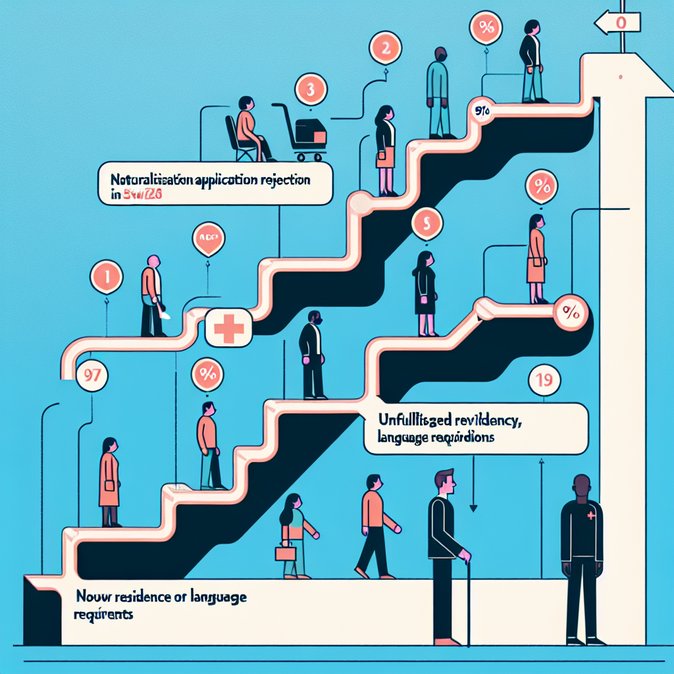
Fresh statistics released by Geneva’s Cantonal Migration Office (OCPM) reveal that 345 of 3,723 foreigners who applied for ordinary naturalisation in 2025 were turned down—a refusal rate of just over 9 percent. The Local’s 19 February report underscores that Geneva continues to post Switzerland’s highest citizenship-granting numbers, yet still enforces strict integration standards.
Applicants must hold a C permit, have lived in the country for ten years (two of them in the canton), prove French-language proficiency and pass a two-part civics exam delivered on an iPad. Most rejections stemmed from criminal convictions or insufficient residency; language deficiencies and unpaid fines were other red flags.
![Geneva data show 1 in 10 naturalisation bids rejected despite canton’s high success rate]()
Before even reaching the stage of applying for naturalisation, many foreign professionals rely on specialist agencies such as VisaHQ to secure the right entry and residence documents. VisaHQ’s Swiss portal (https://www.visahq.com/switzerland/) offers step-by-step visa and permit guidance, document checklists and online tracking, smoothing the paperwork so applicants can concentrate on language study and integration milestones required later by the canton.
For HR and relocation managers, the figures are a reminder that the path from long-term residence to citizenship is anything but automatic—especially for executives seeking a Swiss passport to simplify EU travel or career mobility. Companies should budget time and resources for language training and integration coaching if naturalisation is part of a talent-retention strategy.
The data also feed into the broader national debate ahead of June’s immigration-cap referendum, illustrating that cantons already exert meaningful control over who becomes Swiss.
Applicants must hold a C permit, have lived in the country for ten years (two of them in the canton), prove French-language proficiency and pass a two-part civics exam delivered on an iPad. Most rejections stemmed from criminal convictions or insufficient residency; language deficiencies and unpaid fines were other red flags.

Before even reaching the stage of applying for naturalisation, many foreign professionals rely on specialist agencies such as VisaHQ to secure the right entry and residence documents. VisaHQ’s Swiss portal (https://www.visahq.com/switzerland/) offers step-by-step visa and permit guidance, document checklists and online tracking, smoothing the paperwork so applicants can concentrate on language study and integration milestones required later by the canton.
For HR and relocation managers, the figures are a reminder that the path from long-term residence to citizenship is anything but automatic—especially for executives seeking a Swiss passport to simplify EU travel or career mobility. Companies should budget time and resources for language training and integration coaching if naturalisation is part of a talent-retention strategy.
The data also feed into the broader national debate ahead of June’s immigration-cap referendum, illustrating that cantons already exert meaningful control over who becomes Swiss.