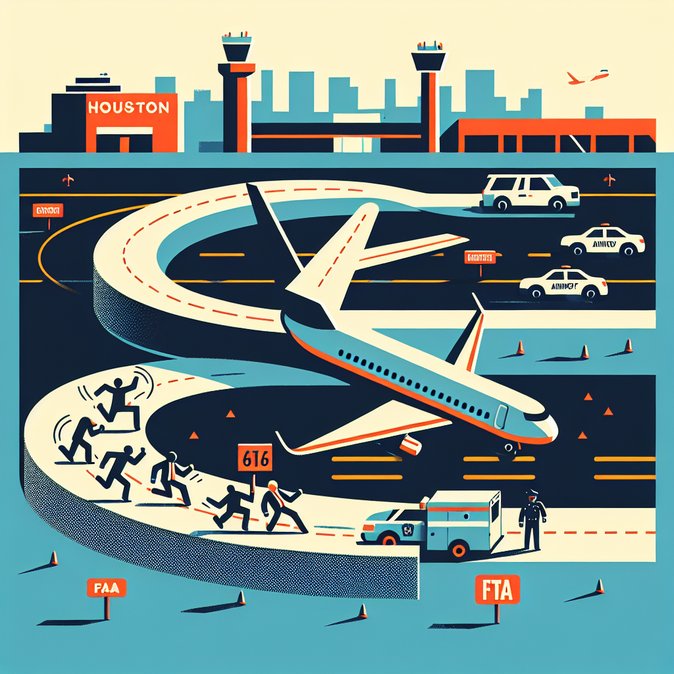
Delta Air Lines Flight 2557, a Boeing 717 operating the early-morning Houston (HOU) – Atlanta (ATL) hop, declared an emergency and returned to William P. Hobby Airport just 15 minutes after take-off on February 18. According to statements from Delta and the Federal Aviation Administration, a male passenger exhibited “unruly and unlawful behavior toward other customers.” Initial radio calls suggested an attempted cockpit breach, but the airline later clarified that the flight deck was never threatened.
Law-enforcement response
Houston Police boarded the aircraft on arrival and removed the passenger without incident. No injuries were reported, and the plane departed again roughly 90 minutes later, arriving in Atlanta only slightly behind schedule. The FAA has opened an investigation, standard procedure after an in-flight disturbance triggers an emergency declaration.
For mobility teams that also manage cross-border travel, documentation hiccups can compound the kind of operational stress seen in this incident. VisaHQ’s platform (https://www.visahq.com/united-states/) lets coordinators handle visas, passports, and transit permits for more than 200 destinations in one dashboard, with real-time tracking and 24/7 support—helping keep itineraries on track when unexpected events disrupt the day’s schedule.
![Unruly Passenger Forces Delta Flight 2557 Back to Houston, Raising In-Flight Security Concerns]()
Why it matters for mobility managers
Although the safety of crew and passengers was maintained, the diversion is a reminder of rising air-rage incidents—13,800 reported since 2021, according to Transportation Secretary Sean Duffy’s office. Diversions create knock-on delays and equipment repositioning that can cascade through tightly banked hub schedules, affecting thousands of downstream itineraries.
Corporate travel programs should:
• Reiterate codes-of-conduct to employees on client sites where alcohol is served prior to flights;
• Encourage enrollment in carrier traveler-contact programs so diversion notifications reach both the traveler and the travel manager simultaneously; and
• Build slack into same-day itineraries when mission-critical meetings depend on a single, short-haul segment.
The incident also revives debate over a federal no-fly list for passengers fined by the FAA. Congress has yet to agree on privacy safeguards, but today’s events will likely intensify pressure for action.
Law-enforcement response
Houston Police boarded the aircraft on arrival and removed the passenger without incident. No injuries were reported, and the plane departed again roughly 90 minutes later, arriving in Atlanta only slightly behind schedule. The FAA has opened an investigation, standard procedure after an in-flight disturbance triggers an emergency declaration.
For mobility teams that also manage cross-border travel, documentation hiccups can compound the kind of operational stress seen in this incident. VisaHQ’s platform (https://www.visahq.com/united-states/) lets coordinators handle visas, passports, and transit permits for more than 200 destinations in one dashboard, with real-time tracking and 24/7 support—helping keep itineraries on track when unexpected events disrupt the day’s schedule.

Why it matters for mobility managers
Although the safety of crew and passengers was maintained, the diversion is a reminder of rising air-rage incidents—13,800 reported since 2021, according to Transportation Secretary Sean Duffy’s office. Diversions create knock-on delays and equipment repositioning that can cascade through tightly banked hub schedules, affecting thousands of downstream itineraries.
Corporate travel programs should:
• Reiterate codes-of-conduct to employees on client sites where alcohol is served prior to flights;
• Encourage enrollment in carrier traveler-contact programs so diversion notifications reach both the traveler and the travel manager simultaneously; and
• Build slack into same-day itineraries when mission-critical meetings depend on a single, short-haul segment.
The incident also revives debate over a federal no-fly list for passengers fined by the FAA. Congress has yet to agree on privacy safeguards, but today’s events will likely intensify pressure for action.