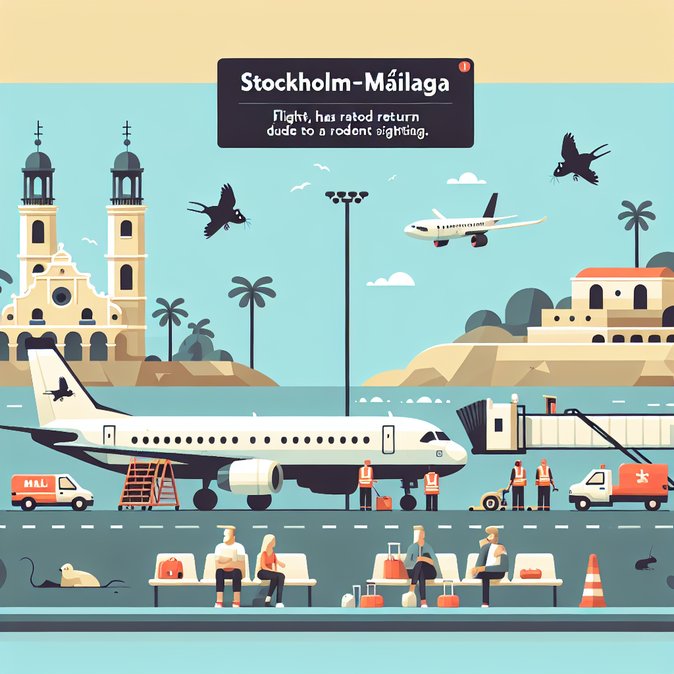
Business travellers heading to Spain’s Costa del Sol faced an unexpected setback on 17 February when Scandinavian Airlines (SAS) flight 1583 from Stockholm to Málaga performed a U-turn over Belgium. Crew reported a possible rodent sighting in the cabin, and—following standard safety protocols—diverted back to Arlanda for a full aircraft inspection. Passengers were re-accommodated on a replacement Airbus A320neo that landed in Málaga roughly five hours behind schedule.
While no injuries occurred, aviation experts note that loose animals can gnaw wiring or contaminate food stores, creating fire and hygiene risks that regulators take seriously. The incident highlights a broader issue for winter corporate travel to Spain: Málaga-Costa del Sol airport recorded a 14 percent year-on-year jump in off-season traffic, pushing airlines to squeeze utilisation and turn-times. When irregular operations strike, spare aircraft can be scarce, magnifying delays.
For mobility managers the practical lesson is contingency planning. Tight connections through Madrid or Barcelona may unravel if an incoming feeder flight is delayed. Travellers should keep at least a two-hour buffer or book through-tickets on carriers with robust interline arrangements. Companies with critical same-day meetings can mitigate risk by scheduling arrival a day early or using alternative hubs such as Seville or Granada where possible.
![‘Flight to nowhere’ adds five-hour delay to Málaga arrivals after mid-air mouse scare]()
Whether or not flight plans change at the last minute, securing the right travel documents shouldn’t add to the stress. VisaHQ’s online platform keeps corporate itineraries on track with fast, reliable visa and ETIAS support for Spain, all accessible at https://www.visahq.com/spain/ Mobility managers can monitor multiple applications in one dashboard and request rush processing when sudden schedule shifts demand rapid turnaround.
Insurance implications are limited: EC 261 compensation is unlikely because safety-related diversions are considered extraordinary circumstances. However, out-of-pocket expenses for meals or missed ground transport may be recoverable under most corporate travel policies.
Although rodent-related diversions are rare, SAS experienced a similar incident in 2024, and TAP Air Portugal once grounded a flight after 132 hamsters escaped in the hold. Airlines operating to Spain’s high-volume leisure airports may review catering and cleaning suppliers to reduce the risk of future wildlife surprises.
While no injuries occurred, aviation experts note that loose animals can gnaw wiring or contaminate food stores, creating fire and hygiene risks that regulators take seriously. The incident highlights a broader issue for winter corporate travel to Spain: Málaga-Costa del Sol airport recorded a 14 percent year-on-year jump in off-season traffic, pushing airlines to squeeze utilisation and turn-times. When irregular operations strike, spare aircraft can be scarce, magnifying delays.
For mobility managers the practical lesson is contingency planning. Tight connections through Madrid or Barcelona may unravel if an incoming feeder flight is delayed. Travellers should keep at least a two-hour buffer or book through-tickets on carriers with robust interline arrangements. Companies with critical same-day meetings can mitigate risk by scheduling arrival a day early or using alternative hubs such as Seville or Granada where possible.

Whether or not flight plans change at the last minute, securing the right travel documents shouldn’t add to the stress. VisaHQ’s online platform keeps corporate itineraries on track with fast, reliable visa and ETIAS support for Spain, all accessible at https://www.visahq.com/spain/ Mobility managers can monitor multiple applications in one dashboard and request rush processing when sudden schedule shifts demand rapid turnaround.
Insurance implications are limited: EC 261 compensation is unlikely because safety-related diversions are considered extraordinary circumstances. However, out-of-pocket expenses for meals or missed ground transport may be recoverable under most corporate travel policies.
Although rodent-related diversions are rare, SAS experienced a similar incident in 2024, and TAP Air Portugal once grounded a flight after 132 hamsters escaped in the hold. Airlines operating to Spain’s high-volume leisure airports may review catering and cleaning suppliers to reduce the risk of future wildlife surprises.