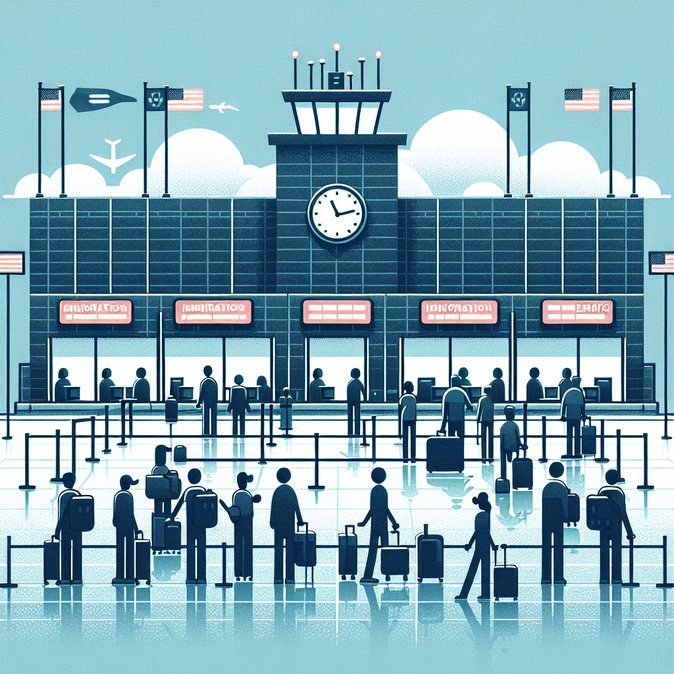
A partial U.S. government shutdown that began at midnight on 15 February continues to bite, with Transportation Security Administration (TSA) officers, Customs and Border Protection inspectors and other Department of Homeland Security employees working without pay. Regional media from Birmingham, Alabama, to Chicago report that security lanes remain open but **staffing is thin and wait times are creeping up**, especially at peak hours.(wbrc.com)
Travel-industry bodies—including Airlines for America and the U.S. Travel Association—warn that unscheduled absences could multiply if paychecks are delayed for more than a week, echoing the 43-day shutdown of 2024 when sick-outs caused cascading flight delays. Business-travel stakeholders are particularly concerned because the stoppage coincides with the start of the spring-conference season; missed connections and crew-time-limit issues could generate millions in lost productivity.
![Government Shutdown Over DHS Funding Triggers Airport Staffing Strain]()
Amid this uncertainty, travelers who still need to obtain or renew documents can lean on VisaHQ’s digital filing tools and concierge support. The company’s dedicated United States portal (https://www.visahq.com/united-states/) offers real-time updates and end-to-end processing assistance, helping employees stay compliant even when government help desks or Global Entry centers are shuttered.
Unlike previous shutdowns, Immigration and Customs Enforcement (ICE) operations continue largely uninterrupted thanks to dedicated funding enacted in 2025, but most discretionary customer-service functions—such as in-person appointments at CBP’s Global Entry enrollment centers—have been halted. Mobility managers should advise assignees to **arrive at airports at least two hours early and avoid tight domestic connections** until funding is restored.
Congress is not due back in session until 23 February, leaving little prospect for a quick resolution. Employers with onboarding timelines tied to premium processing or visa interviews should prepare contingency plans, including remote starts or deferred assignment dates.
Travel-industry bodies—including Airlines for America and the U.S. Travel Association—warn that unscheduled absences could multiply if paychecks are delayed for more than a week, echoing the 43-day shutdown of 2024 when sick-outs caused cascading flight delays. Business-travel stakeholders are particularly concerned because the stoppage coincides with the start of the spring-conference season; missed connections and crew-time-limit issues could generate millions in lost productivity.
Amid this uncertainty, travelers who still need to obtain or renew documents can lean on VisaHQ’s digital filing tools and concierge support. The company’s dedicated United States portal (https://www.visahq.com/united-states/) offers real-time updates and end-to-end processing assistance, helping employees stay compliant even when government help desks or Global Entry centers are shuttered.
Unlike previous shutdowns, Immigration and Customs Enforcement (ICE) operations continue largely uninterrupted thanks to dedicated funding enacted in 2025, but most discretionary customer-service functions—such as in-person appointments at CBP’s Global Entry enrollment centers—have been halted. Mobility managers should advise assignees to **arrive at airports at least two hours early and avoid tight domestic connections** until funding is restored.
Congress is not due back in session until 23 February, leaving little prospect for a quick resolution. Employers with onboarding timelines tied to premium processing or visa interviews should prepare contingency plans, including remote starts or deferred assignment dates.