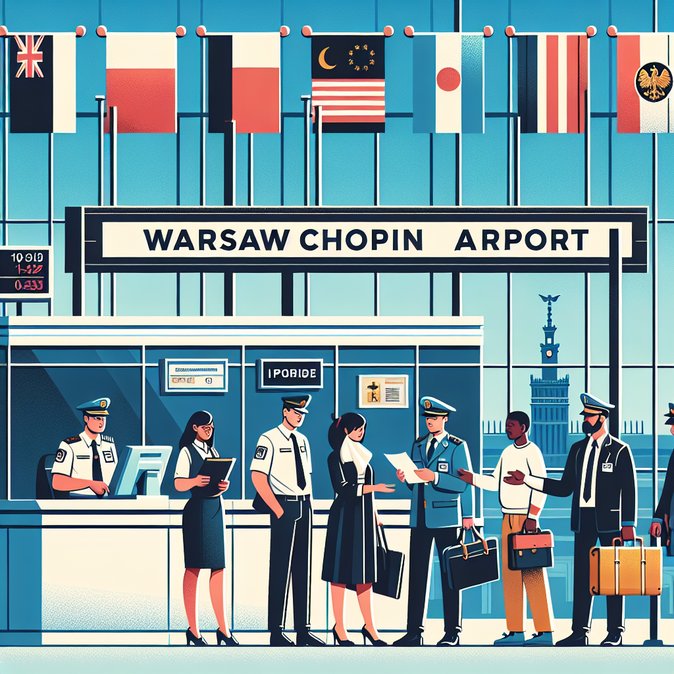
Warsaw-Okęcie border officers reported on 17 February that they denied entry to six travellers – three Georgians, one Egyptian, one Russian and one Uzbek – who arrived in Poland on 16 February without meeting Schengen entry conditions. Three of the individuals were flagged in the Schengen Information System as undesirable, while the others could not prove the purpose and conditions of their stay. All were placed on return flights to their points of origin the same day.
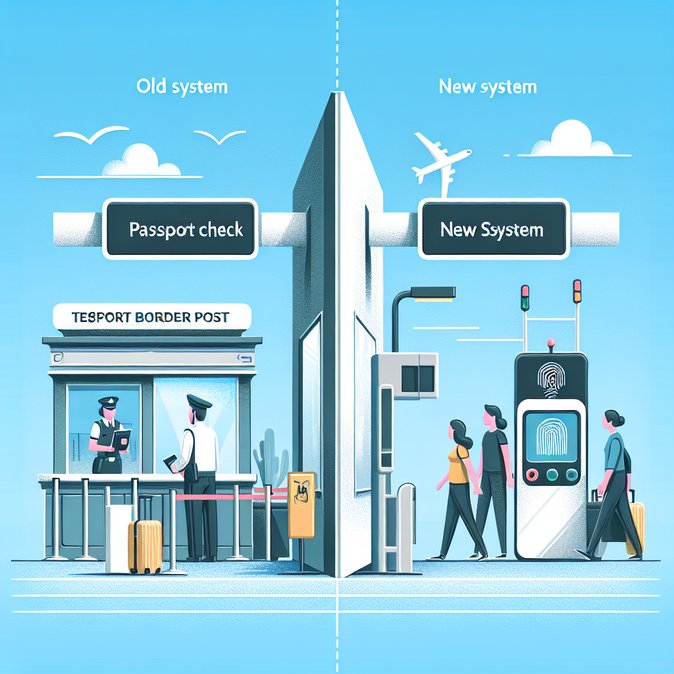
Although the numbers are small, the incident illustrates Poland’s zero-tolerance stance at its busiest airport following the January launch of the EU’s Entry/Exit System (EES) tests and the country’s migration-policy tightening. Airlines operating into Warsaw have been reminded that they are liable for the cost of returning inadmissible passengers. Carriers are therefore stepping up document screening at check-in, which may lengthen airport queues for legitimate travellers.
At this juncture, travellers and corporate mobility teams may benefit from the support of specialised visa facilitators. VisaHQ, for instance, offers up-to-date guidance on Poland’s shifting entry requirements, provides tailored documentation checklists, and can arrange invitation letters or health-insurance policies as needed—streamlining compliance before passengers even reach the airport. More information is available at https://www.visahq.com/poland/
![Warsaw Chopin Airport: six passengers refused entry for failing Schengen criteria]()
For mobility managers the take-away is that passengers destined for Poland – even on short business trips – must carry proof of accommodation, sufficient funds and, where applicable, invitation letters or work contracts. Georgian nationals in particular should note that their visa-free status does not override the need to justify the trip at the border, especially after Poland withdrew special work-permit privileges for Georgia in late 2025.
The Border Guard has processed almost 150 refusals of entry nationwide since 1 January, signalling that the learning curve for the new digital and fee regimes is still steep. Companies should review their travel-support templates, ensuring that employees have a clearly worded business-purpose letter and can show return tickets and health insurance. Failure to do so could result not only in denied entry but also in future flags in the Schengen database, complicating onward travel within Europe.
With Chopin Airport handling more than 40 percent of Poland’s international traffic, the stricter checks are likely to remain in place as Warsaw gears up for the full roll-out of EES and ETIAS later this year.
Although the numbers are small, the incident illustrates Poland’s zero-tolerance stance at its busiest airport following the January launch of the EU’s Entry/Exit System (EES) tests and the country’s migration-policy tightening. Airlines operating into Warsaw have been reminded that they are liable for the cost of returning inadmissible passengers. Carriers are therefore stepping up document screening at check-in, which may lengthen airport queues for legitimate travellers.
At this juncture, travellers and corporate mobility teams may benefit from the support of specialised visa facilitators. VisaHQ, for instance, offers up-to-date guidance on Poland’s shifting entry requirements, provides tailored documentation checklists, and can arrange invitation letters or health-insurance policies as needed—streamlining compliance before passengers even reach the airport. More information is available at https://www.visahq.com/poland/

For mobility managers the take-away is that passengers destined for Poland – even on short business trips – must carry proof of accommodation, sufficient funds and, where applicable, invitation letters or work contracts. Georgian nationals in particular should note that their visa-free status does not override the need to justify the trip at the border, especially after Poland withdrew special work-permit privileges for Georgia in late 2025.
The Border Guard has processed almost 150 refusals of entry nationwide since 1 January, signalling that the learning curve for the new digital and fee regimes is still steep. Companies should review their travel-support templates, ensuring that employees have a clearly worded business-purpose letter and can show return tickets and health insurance. Failure to do so could result not only in denied entry but also in future flags in the Schengen database, complicating onward travel within Europe.
With Chopin Airport handling more than 40 percent of Poland’s international traffic, the stricter checks are likely to remain in place as Warsaw gears up for the full roll-out of EES and ETIAS later this year.