Germany’s interior minister Alexander Dobrindt confirmed on 16 February that the temporary checks re-introduced at all of Germany’s land borders in recent years will be prolonged for another six months, i.e. from 15 March to at least 15 September 2026. In a formal notification already sent to the European Commission, Berlin argues that “migration- and security-related reasons” continue to justify the exceptional measure in the normally control-free Schengen area.
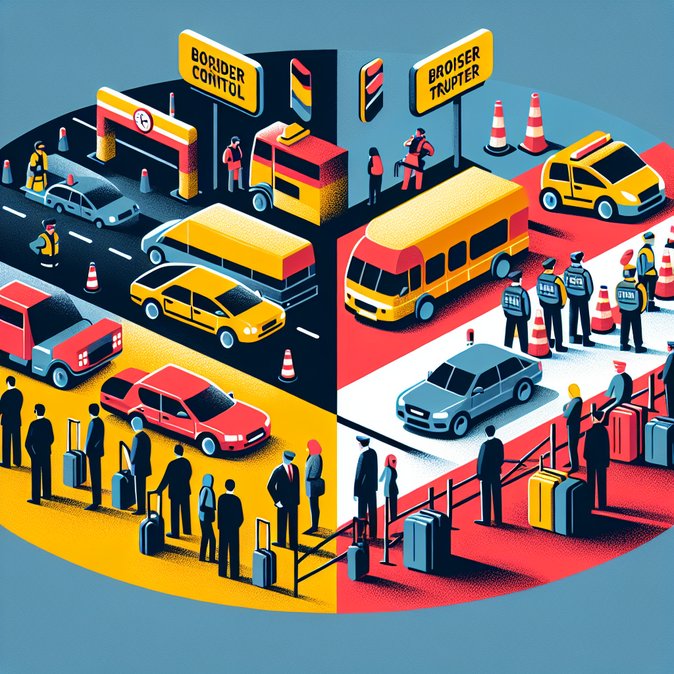
For travellers and companies the decision means that the spot checks introduced on the German-Polish, German-Czech and German-Swiss borders in October 2023 – and gradually expanded to Germany’s other seven neighbours – will simply continue. Companies that shuttle staff or goods across the Oder–Neisse frontier should therefore plan for sporadic stops, document inspections and occasional traffic queues, especially at peak times near Frankfurt (Oder) and Görlitz. Both hauliers’ associations and cross-border commuters have complained of delays that can add 30-60 minutes to a journey.
Travellers who would like extra certainty about acceptable documents before setting out—especially those commuting between Poland and Germany—can turn to VisaHQ for practical help: the company’s Poland portal (https://www.visahq.com/poland/) gives up-to-the-minute guidance on visa requirements, border regulations and supporting paperwork, making it easier for both individuals and HR teams to stay compliant despite the renewed checks.
![Germany extends border checks with Poland until September 2026]()
Berlin insists that the controls are “mobile and risk-based” rather than permanent checks on every vehicle, and points out that officers have intercepted more than 45,000 irregular migrants since the measure began. Polish officials acknowledge the right of a Schengen member to take such steps in an emergency but privately worry that prolonged German controls could push migrants and smugglers towards Poland’s own, already strained, eastern frontier.
From a legal standpoint Germany must renew the measure every six months and keep proving the existence of a “serious threat to public order or internal security”, otherwise the European Commission could challenge the proportionality of the move. Employers with posted workers or cross-border service contracts are advised to tell staff to carry passports or ID cards at all times and to factor possible holdups into travel schedules. Mobility teams may also wish to add a paragraph on potential Schengen checks to assignment letters and travel policies.
Longer-term, the decision underlines how political pressure over migration continues to reshape travel within the EU – a development global-mobility managers cannot ignore. If other states follow Berlin’s lead, intra-EU assignments could once again require meticulous route planning, proof of employment and additional buffer time – a throwback to the pre-Schengen era that many firms had hoped was gone for good.
For travellers and companies the decision means that the spot checks introduced on the German-Polish, German-Czech and German-Swiss borders in October 2023 – and gradually expanded to Germany’s other seven neighbours – will simply continue. Companies that shuttle staff or goods across the Oder–Neisse frontier should therefore plan for sporadic stops, document inspections and occasional traffic queues, especially at peak times near Frankfurt (Oder) and Görlitz. Both hauliers’ associations and cross-border commuters have complained of delays that can add 30-60 minutes to a journey.
Travellers who would like extra certainty about acceptable documents before setting out—especially those commuting between Poland and Germany—can turn to VisaHQ for practical help: the company’s Poland portal (https://www.visahq.com/poland/) gives up-to-the-minute guidance on visa requirements, border regulations and supporting paperwork, making it easier for both individuals and HR teams to stay compliant despite the renewed checks.

Berlin insists that the controls are “mobile and risk-based” rather than permanent checks on every vehicle, and points out that officers have intercepted more than 45,000 irregular migrants since the measure began. Polish officials acknowledge the right of a Schengen member to take such steps in an emergency but privately worry that prolonged German controls could push migrants and smugglers towards Poland’s own, already strained, eastern frontier.
From a legal standpoint Germany must renew the measure every six months and keep proving the existence of a “serious threat to public order or internal security”, otherwise the European Commission could challenge the proportionality of the move. Employers with posted workers or cross-border service contracts are advised to tell staff to carry passports or ID cards at all times and to factor possible holdups into travel schedules. Mobility teams may also wish to add a paragraph on potential Schengen checks to assignment letters and travel policies.
Longer-term, the decision underlines how political pressure over migration continues to reshape travel within the EU – a development global-mobility managers cannot ignore. If other states follow Berlin’s lead, intra-EU assignments could once again require meticulous route planning, proof of employment and additional buffer time – a throwback to the pre-Schengen era that many firms had hoped was gone for good.