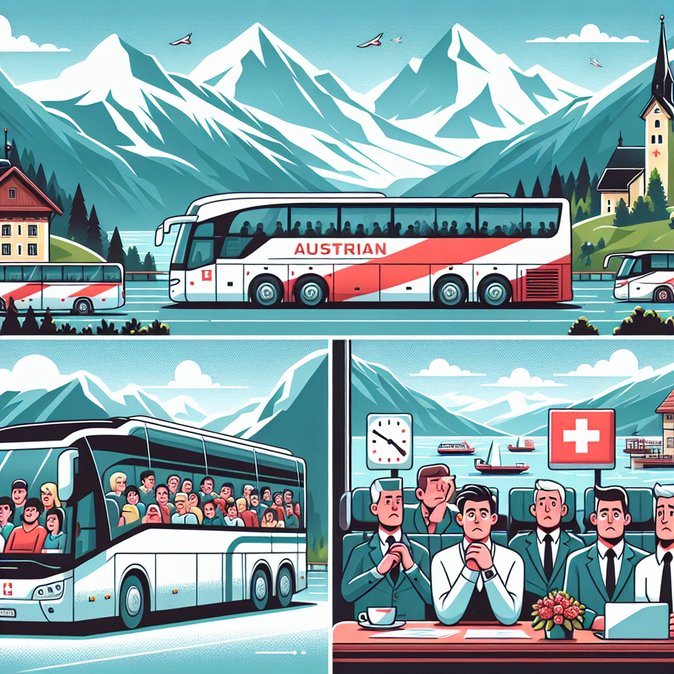
A working document circulated to the Council’s Land-Transport Working Party ahead of its 17 February meeting proposes to empower Austria to modify its 1997 bilateral road-transport agreement with Switzerland so that Austrian coach operators can carry domestic passengers on Swiss territory during cross-border routes in alpine border regions.(consilium.europa.eu)
Under current rules, Austrian companies running tourist or commuter services between Tyrol and the Grisons may board passengers only for cross-border journeys; picking up and setting down within Switzerland — so-called cabotage — is prohibited. The presidency compromise (file 5618/26) would allow limited cabotage for a four-year trial, provided operators comply with Swiss safety and labour standards and register in a joint audit database.
![EU Draft Decision Would Let Austrian Buses Perform Cabotage in Swiss Border Regions]()
For operators, passengers, and even municipal officials who might suddenly need to deal with visa or entry-permit questions for drivers and tour staff, VisaHQ can simplify the formalities. The service aggregates the latest Swiss entry requirements and can secure the necessary paperwork online—saving time when deploying buses or planning excursions across the Arlberg–Engadin corridor. Details are available at https://www.visahq.com/switzerland/
Swiss bus federations worry that opening the market without reciprocal rights could undercut local SMEs already facing driver shortages. Yet mountain municipalities along the Arlberg–Engadin corridor welcome additional capacity, arguing that seasonal visitor surges overwhelm existing PostBus services.
If endorsed by ministers and the European Parliament, the decision could take effect for the 2027 summer timetable. Mobility managers running ski shuttles or employee transports should monitor the final text: mixed-loading of domestic and cross-border passengers can enhance route efficiency but may require Swiss VAT registration and a re-calculation of posted-worker obligations for drivers.(consilium.europa.eu)
Under current rules, Austrian companies running tourist or commuter services between Tyrol and the Grisons may board passengers only for cross-border journeys; picking up and setting down within Switzerland — so-called cabotage — is prohibited. The presidency compromise (file 5618/26) would allow limited cabotage for a four-year trial, provided operators comply with Swiss safety and labour standards and register in a joint audit database.
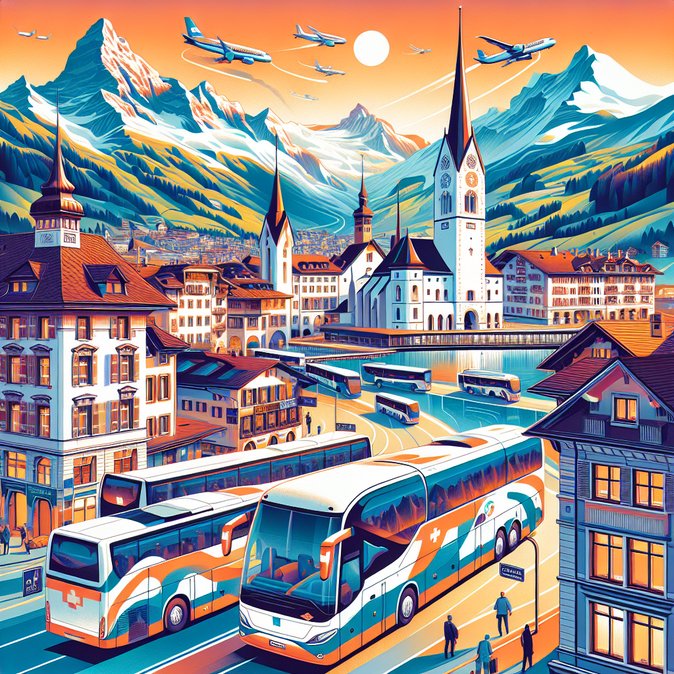
For operators, passengers, and even municipal officials who might suddenly need to deal with visa or entry-permit questions for drivers and tour staff, VisaHQ can simplify the formalities. The service aggregates the latest Swiss entry requirements and can secure the necessary paperwork online—saving time when deploying buses or planning excursions across the Arlberg–Engadin corridor. Details are available at https://www.visahq.com/switzerland/
Swiss bus federations worry that opening the market without reciprocal rights could undercut local SMEs already facing driver shortages. Yet mountain municipalities along the Arlberg–Engadin corridor welcome additional capacity, arguing that seasonal visitor surges overwhelm existing PostBus services.
If endorsed by ministers and the European Parliament, the decision could take effect for the 2027 summer timetable. Mobility managers running ski shuttles or employee transports should monitor the final text: mixed-loading of domestic and cross-border passengers can enhance route efficiency but may require Swiss VAT registration and a re-calculation of posted-worker obligations for drivers.(consilium.europa.eu)