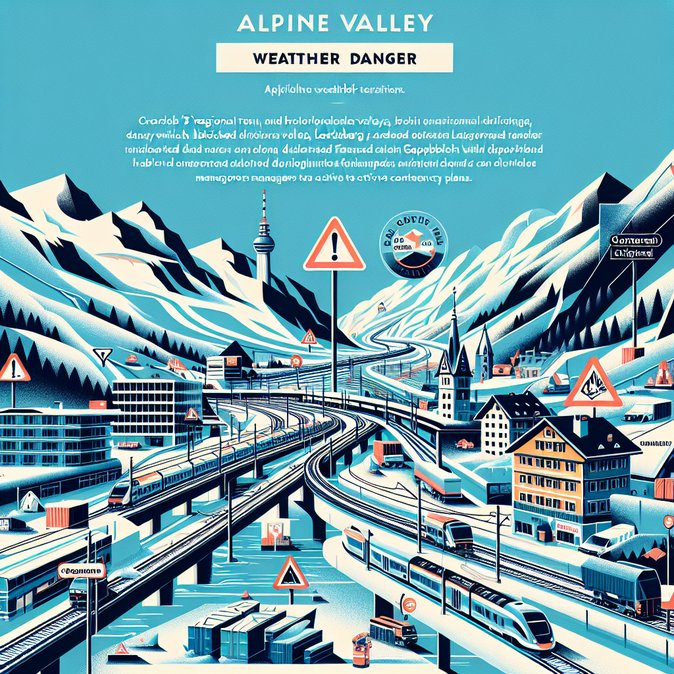
Heavy snowfall and gale-force winds over the past 48 hours have paralysed large parts of the Swiss Alps. The Federal Institute for Snow and Avalanche Research (SLF) raised the danger level to 5 — the maximum — in parts of Valais late on Monday before downgrading it slightly to level 4 on Tuesday afternoon. Entire valleys, including the Lötschental and parts of the Mattertal, were cut off after authorities shut all access roads and suspended the Matterhorn-Gotthard Railway (MGB) and the Furka car-shuttle service.(srf.ch)
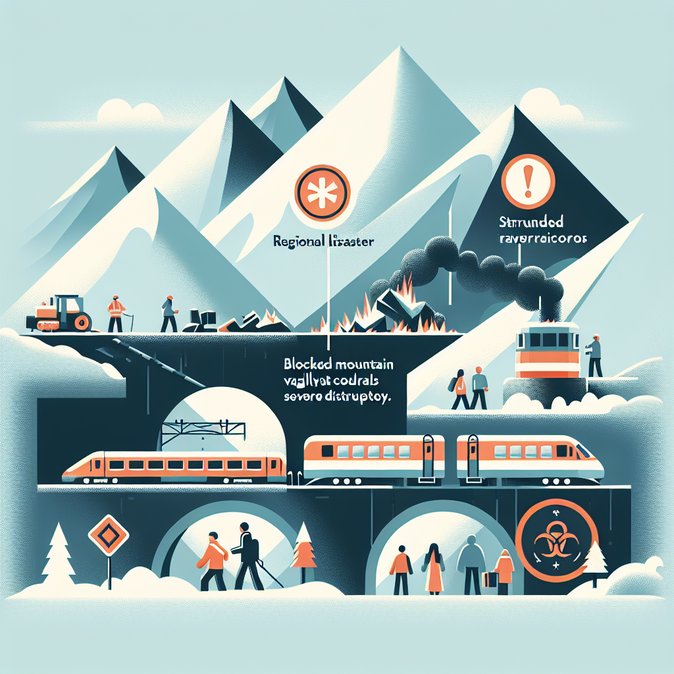
At 08:30 CET on Monday a regional train travelling between Goppenstein and Brig was hit by a snow slide as it exited the Stockgalerie tunnel; five of the 29 passengers sustained minor injuries and the lead carriage derailed. Investigators believe an avalanche had already covered the tracks when the train arrived. Services on the Lötschberg axis — a critical north-south freight and passenger corridor — remain suspended until at least Thursday while crews clear debris and inspect infrastructure.(euronews.com)
![Avalanche Danger Forces Closure of Swiss Alpine Roads and Rail; Regional Train Derailed]()
If your staff or suppliers need to extend their stay in Switzerland or obtain transit permits because of the transport shutdowns, VisaHQ can simplify the process. Through its online portal (https://www.visahq.com/switzerland/) mobility managers can request visa extensions, secure multi-entry Schengen documents, and track all applications in one dashboard—minimising red tape when unexpected events like these avalanches disrupt travel plans.
Public-transport operators scrambled to set up bus replacements, but ploughs were themselves blocked by further slides. The closures have stranded thousands of skiers at car-free resorts such as Zermatt and Saas-Fee and forced hotels to extend stays free of charge. Logistics companies report detours of up to 250 km via the San Bernardino and Simplon routes, adding a full day to delivery schedules.
For mobility managers the episode underlines the fragility of winter supply chains and the importance of diversified routing. Companies with posted workers in high-risk valleys are advised to review emergency-evacuation plans, ensure staff registers are up to date, and remind travellers that standard corporate travel insurance rarely covers helicopter evacuation in avalanche zones. The SLF expects spontaneous slides to decrease after Wednesday, but warns that weak layers in the snowpack will remain highly sensitive to additional loads for several days.(srf.ch)
At 08:30 CET on Monday a regional train travelling between Goppenstein and Brig was hit by a snow slide as it exited the Stockgalerie tunnel; five of the 29 passengers sustained minor injuries and the lead carriage derailed. Investigators believe an avalanche had already covered the tracks when the train arrived. Services on the Lötschberg axis — a critical north-south freight and passenger corridor — remain suspended until at least Thursday while crews clear debris and inspect infrastructure.(euronews.com)
If your staff or suppliers need to extend their stay in Switzerland or obtain transit permits because of the transport shutdowns, VisaHQ can simplify the process. Through its online portal (https://www.visahq.com/switzerland/) mobility managers can request visa extensions, secure multi-entry Schengen documents, and track all applications in one dashboard—minimising red tape when unexpected events like these avalanches disrupt travel plans.
Public-transport operators scrambled to set up bus replacements, but ploughs were themselves blocked by further slides. The closures have stranded thousands of skiers at car-free resorts such as Zermatt and Saas-Fee and forced hotels to extend stays free of charge. Logistics companies report detours of up to 250 km via the San Bernardino and Simplon routes, adding a full day to delivery schedules.
For mobility managers the episode underlines the fragility of winter supply chains and the importance of diversified routing. Companies with posted workers in high-risk valleys are advised to review emergency-evacuation plans, ensure staff registers are up to date, and remind travellers that standard corporate travel insurance rarely covers helicopter evacuation in avalanche zones. The SLF expects spontaneous slides to decrease after Wednesday, but warns that weak layers in the snowpack will remain highly sensitive to additional loads for several days.(srf.ch)