Poland has taken the final step in the European Union’s digital-border overhaul by switching on the Entry/Exit System (EES) at every land, air and rail checkpoint as of 00:01 on 15 February 2026.
What changed overnight?
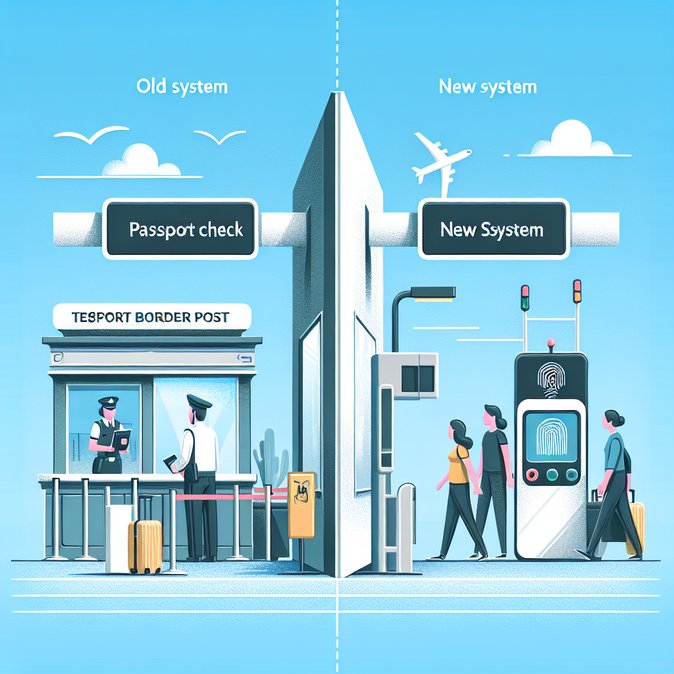
• All non-EU travellers—including the hundreds of thousands of Ukrainians who commute for work every month—now register biometrics at a self-service kiosk instead of receiving a passport stamp.
• First-time entrants have a photograph and four fingerprints captured; data remain valid for three years, so subsequent crossings require only a quick facial scan.
• The system automatically calculates the 90-in-180-day Schengen allowance, alerting guards to potential overstays in real time.
Background and roll-out
The EU launched EES in October 2025, but member states were allowed up to six months to reach 100 percent coverage. Poland—EU’s busiest external land frontier thanks to the Ukraine conflict and robust business ties—completed the roll-out two months ahead of the April deadline. According to the Polish Border Guard, more than 600 000 third-country nationals were preregistered during pilot operations, 40 percent of them Ukrainian citizens.
Operational impact
Early reports from Medyka and Korczowa road crossings show that first-time registrations add two–three minutes per traveller, but follow-up trips are 40 percent faster than the old manual process. Airlines and long-distance bus operators have been instructed to channel EES-novice passengers to manual lanes to avoid bottlenecks. Warsaw-Chopin Airport has also re-assigned staff to assist elderly and low-mobility travellers unfamiliar with the kiosks.
![Poland Activates Full EU Entry/Exit System at All Border Crossings]()
Business-mobility implications
1. Stricter compliance: executives and project staff who regularly shuttle between Ukraine and Polish plants must track days in Schengen more carefully—automatic alerts now trigger immediate refusal of entry for overstayers.
2. Carrier liability: Polish carriers face fines up to €5 000 for boarding third-country nationals whose biometrics are not in the EES database; many have updated check-in software accordingly.
3. Data leverage: companies relocating non-EU staff can pre-enrol fingerprints during visa processing, shaving minutes off first entry and reducing queue-time risk on critical travel days.
Travellers and corporate mobility managers seeking hands-on assistance with EES registration or pre-enrolment of staff can turn to VisaHQ’s Poland portal (https://www.visahq.com/poland/). The firm offers step-by-step guidance, document checks and appointment scheduling, ensuring employees’ biometrics are captured correctly the first time and future crossings remain hassle-free.
Practical tips
• Allow extra time (30–45 min) when crossing by bus during peak commuter hours until the first-time-user wave subsides.
• Save the EES registration receipt; it accelerates secondary crossings if kiosks go offline.
• Remind employees under temporary protection (PESEL UKR holders) that they, too, must complete registration once every three years.
With the digital border now live, Poland positions itself as a test-bed for the EU’s next milestone—the ETIAS pre-travel authorisation due later this year.
What changed overnight?
• All non-EU travellers—including the hundreds of thousands of Ukrainians who commute for work every month—now register biometrics at a self-service kiosk instead of receiving a passport stamp.
• First-time entrants have a photograph and four fingerprints captured; data remain valid for three years, so subsequent crossings require only a quick facial scan.
• The system automatically calculates the 90-in-180-day Schengen allowance, alerting guards to potential overstays in real time.
Background and roll-out
The EU launched EES in October 2025, but member states were allowed up to six months to reach 100 percent coverage. Poland—EU’s busiest external land frontier thanks to the Ukraine conflict and robust business ties—completed the roll-out two months ahead of the April deadline. According to the Polish Border Guard, more than 600 000 third-country nationals were preregistered during pilot operations, 40 percent of them Ukrainian citizens.
Operational impact
Early reports from Medyka and Korczowa road crossings show that first-time registrations add two–three minutes per traveller, but follow-up trips are 40 percent faster than the old manual process. Airlines and long-distance bus operators have been instructed to channel EES-novice passengers to manual lanes to avoid bottlenecks. Warsaw-Chopin Airport has also re-assigned staff to assist elderly and low-mobility travellers unfamiliar with the kiosks.

Business-mobility implications
1. Stricter compliance: executives and project staff who regularly shuttle between Ukraine and Polish plants must track days in Schengen more carefully—automatic alerts now trigger immediate refusal of entry for overstayers.
2. Carrier liability: Polish carriers face fines up to €5 000 for boarding third-country nationals whose biometrics are not in the EES database; many have updated check-in software accordingly.
3. Data leverage: companies relocating non-EU staff can pre-enrol fingerprints during visa processing, shaving minutes off first entry and reducing queue-time risk on critical travel days.
Travellers and corporate mobility managers seeking hands-on assistance with EES registration or pre-enrolment of staff can turn to VisaHQ’s Poland portal (https://www.visahq.com/poland/). The firm offers step-by-step guidance, document checks and appointment scheduling, ensuring employees’ biometrics are captured correctly the first time and future crossings remain hassle-free.
Practical tips
• Allow extra time (30–45 min) when crossing by bus during peak commuter hours until the first-time-user wave subsides.
• Save the EES registration receipt; it accelerates secondary crossings if kiosks go offline.
• Remind employees under temporary protection (PESEL UKR holders) that they, too, must complete registration once every three years.
With the digital border now live, Poland positions itself as a test-bed for the EU’s next milestone—the ETIAS pre-travel authorisation due later this year.