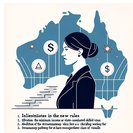
A leaked 27-page discussion paper obtained by Guardian Australia reveals that the Liberal Party, while under the leadership of Sussan Ley, had drafted the most hard-line immigration overhaul seen from a mainstream Australian party in more than two decades.
The proposal—nick-named “Operation Gatekeeper” inside party circles—would amend the Migration Act 1958 so that applicants “from or having resided in a Declared Terrorist Area” could be refused automatically, without merits review, on national-security grounds. Thirty-seven sub-national regions across 13 countries, including Gaza, parts of Afghanistan, Somalia, Yemen and the southern Philippines, were listed. Officials would be directed to scrutinise social-media histories and “public statements” for extremist sympathies before a visa decision is made.
Beyond the regional bans, the paper sets an explicit target to slash net-overseas migration to 170,000 a year (down from the government’s forecast 260,000) and to cut international-student numbers by up to 25 per cent. Up to 100,000 asylum seekers and students whose appeals have been exhausted would be prioritised for removal, while the right to further tribunal or judicial review would be curtailed.
![Leaked Liberal draft would ban migrants from Gaza, Somalia and 11 other ‘terror-prone’ regions]()
For travellers, students and employers trying to make sense of such potential changes, VisaHQ can step in as a one-stop resource. Its Australia portal (https://www.visahq.com/australia/) tracks new policy settings in real time and provides streamlined application, document-checking and courier services—helping applicants stay compliant and giving HR teams the confidence that shifting rules won’t derail recruitment plans.
Internal emails cited in the leak show Ley had planned to release the policy on 16 February, but last Friday’s leadership spill toppled her before she could do so. Incoming Opposition Leader Angus Taylor has since called the document “invalid”, yet senior Liberal figures say many of its ideas—particularly tougher character tests and lower visa caps—will remain live in the Coalition’s policy review.
For employers and mobility managers the draft is a flashing warning light: if adopted, companies sourcing talent from the Middle East, Africa or the Philippines would face far higher refusal risks, longer vetting times and potential social-media audits of candidates. Universities and pathway colleges could see recruitment numbers fall sharply just as they emerge from the pandemic-era downturn, jeopardising campus finances and local rental markets.
The proposal—nick-named “Operation Gatekeeper” inside party circles—would amend the Migration Act 1958 so that applicants “from or having resided in a Declared Terrorist Area” could be refused automatically, without merits review, on national-security grounds. Thirty-seven sub-national regions across 13 countries, including Gaza, parts of Afghanistan, Somalia, Yemen and the southern Philippines, were listed. Officials would be directed to scrutinise social-media histories and “public statements” for extremist sympathies before a visa decision is made.
Beyond the regional bans, the paper sets an explicit target to slash net-overseas migration to 170,000 a year (down from the government’s forecast 260,000) and to cut international-student numbers by up to 25 per cent. Up to 100,000 asylum seekers and students whose appeals have been exhausted would be prioritised for removal, while the right to further tribunal or judicial review would be curtailed.

For travellers, students and employers trying to make sense of such potential changes, VisaHQ can step in as a one-stop resource. Its Australia portal (https://www.visahq.com/australia/) tracks new policy settings in real time and provides streamlined application, document-checking and courier services—helping applicants stay compliant and giving HR teams the confidence that shifting rules won’t derail recruitment plans.
Internal emails cited in the leak show Ley had planned to release the policy on 16 February, but last Friday’s leadership spill toppled her before she could do so. Incoming Opposition Leader Angus Taylor has since called the document “invalid”, yet senior Liberal figures say many of its ideas—particularly tougher character tests and lower visa caps—will remain live in the Coalition’s policy review.
For employers and mobility managers the draft is a flashing warning light: if adopted, companies sourcing talent from the Middle East, Africa or the Philippines would face far higher refusal risks, longer vetting times and potential social-media audits of candidates. Universities and pathway colleges could see recruitment numbers fall sharply just as they emerge from the pandemic-era downturn, jeopardising campus finances and local rental markets.