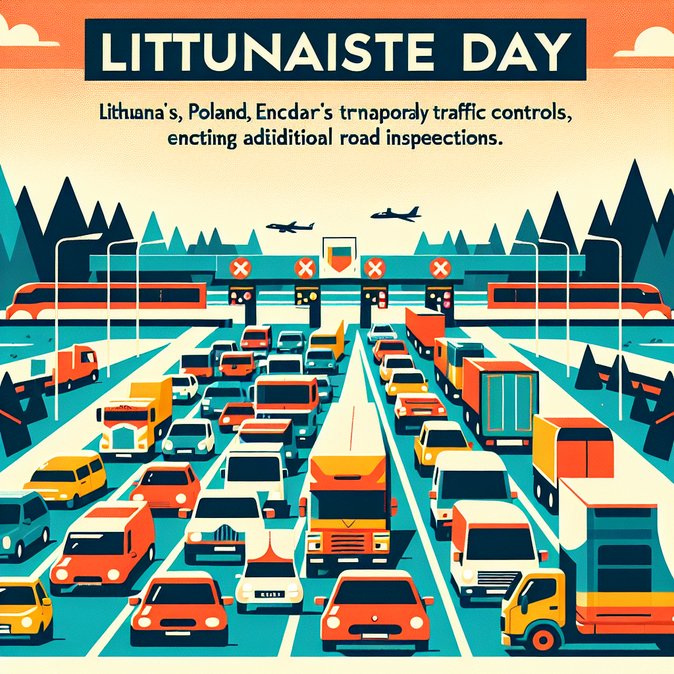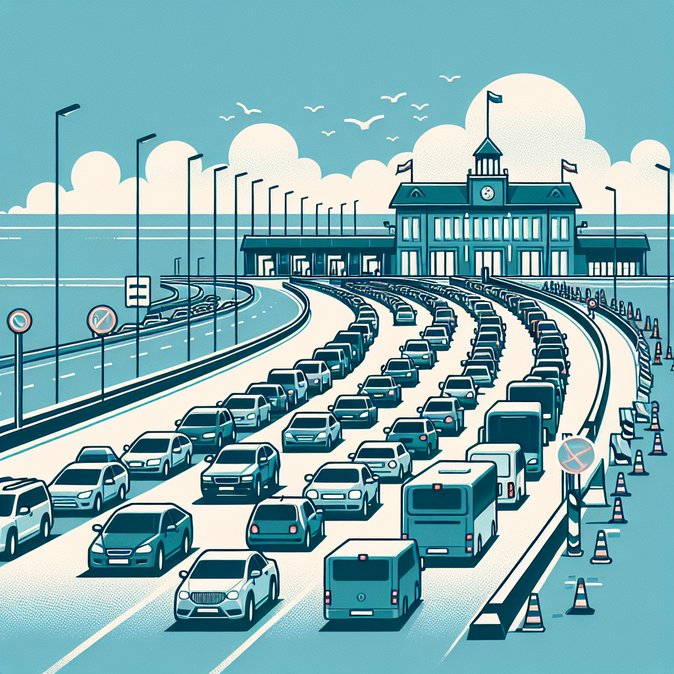
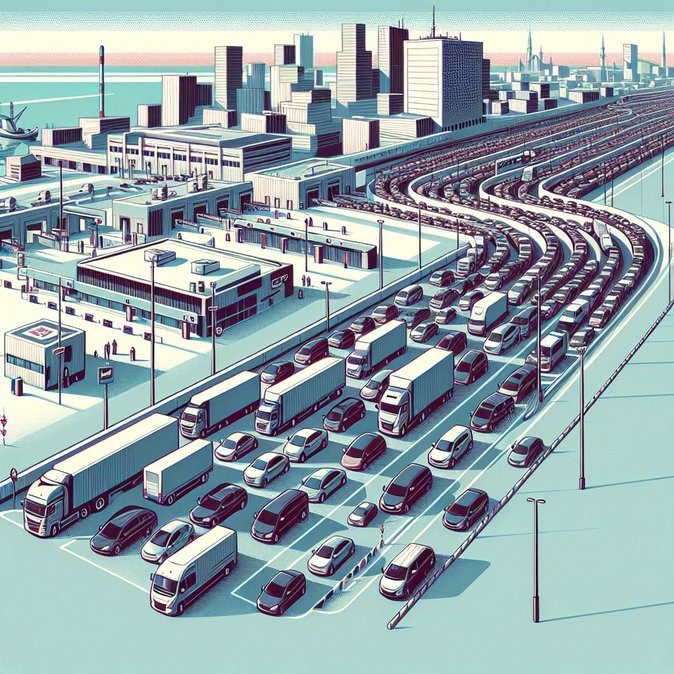
Holiday traffic and Poland’s continued temporary border controls created a perfect bottleneck on 14 February, when cars heading south from Lithuania stretched almost two kilometres before the Budzisko–Kalvarija crossing. Lithuania’s State Border Guard Service (VSAT) told PAP that the jam formed around midday as thousands of motorists began long-weekend trips linked to the country’s State Restoration Day on 16 February. At the same time, Polish officers intensified spot-checks that have been in place since July 2025 to curb so-called ‘secondary movements’ of migrants entering the EU via Belarus and re-routing west through Lithuania and Poland.(onet.pl)
While vehicle flow was never completely halted, VSAT spokesman Giedrius Mišutis said every bus required additional documentation checks, adding several minutes per passenger and compounding delays. Freight traffic was lighter than average—thanks to hauliers avoiding the holiday window—but private cars queued for up to 90 minutes, with waiting times pushed higher by fresh snowfall on the Lithuanian side. Polish authorities denied any tightening of procedures, stressing that controls remain risk-based and are applied only to randomly selected vehicles.(onet.pl)
The episode is an early test of traveller resilience ahead of the Easter peak, when traffic routinely doubles on the Via Baltica corridor. Tourism boards on both sides of the border urged motorists to consult the EU’s ‘Road Traffic PL-LT’ app, which now integrates live camera feeds from the Polish Border Guard and Lithuanian national road agency. Mobility managers moving technicians between Kaunas and Białystok were advised to reroute via the Ogrodniki–Lazdijai crossing, where no significant queues were reported.(onet.pl)
![Two-Kilometre Tailbacks at Budzisko as Poland’s Spot-Checks Meet Lithuania’s National Holiday Rush]()
If you’re unsure what documents you might need when crossing or transiting Poland during these fluctuating controls, VisaHQ can simplify the process. Their Poland page (https://www.visahq.com/poland/) provides up-to-date guidance on passports, visas and other entry requirements and even lets travellers apply online for any necessary paperwork—useful peace of mind before joining a potentially lengthy queue.
For companies relying on just-in-time deliveries, the incident reinforces the operational impact of Poland’s decision last month to prolong temporary controls with Germany and Lithuania until at least 4 April 2026. Logistics associations estimate that every 15-minute delay at Budzisko costs express carriers roughly €40 in driver time and fuel. Multinationals with regional distribution hubs in Suwałki are therefore revisiting buffer-stock policies and driver rostering to mitigate further weekend surges.(onet.pl)
From a policy perspective, Warsaw shows no sign of lifting the checks until the EU’s external borders with Belarus stabilise. Interior-ministry officials point out that secondary-movement detections fell 18 % in January compared with October’s pre-control baseline, supporting the argument that random inspections are an effective—if inconvenient—tool. For travellers, the message is simpler: avoid the Saturday lunch-time window, carry passports even on intra-Schengen trips, and monitor queue apps before committing to the Via Baltica route.
While vehicle flow was never completely halted, VSAT spokesman Giedrius Mišutis said every bus required additional documentation checks, adding several minutes per passenger and compounding delays. Freight traffic was lighter than average—thanks to hauliers avoiding the holiday window—but private cars queued for up to 90 minutes, with waiting times pushed higher by fresh snowfall on the Lithuanian side. Polish authorities denied any tightening of procedures, stressing that controls remain risk-based and are applied only to randomly selected vehicles.(onet.pl)
The episode is an early test of traveller resilience ahead of the Easter peak, when traffic routinely doubles on the Via Baltica corridor. Tourism boards on both sides of the border urged motorists to consult the EU’s ‘Road Traffic PL-LT’ app, which now integrates live camera feeds from the Polish Border Guard and Lithuanian national road agency. Mobility managers moving technicians between Kaunas and Białystok were advised to reroute via the Ogrodniki–Lazdijai crossing, where no significant queues were reported.(onet.pl)
If you’re unsure what documents you might need when crossing or transiting Poland during these fluctuating controls, VisaHQ can simplify the process. Their Poland page (https://www.visahq.com/poland/) provides up-to-date guidance on passports, visas and other entry requirements and even lets travellers apply online for any necessary paperwork—useful peace of mind before joining a potentially lengthy queue.
For companies relying on just-in-time deliveries, the incident reinforces the operational impact of Poland’s decision last month to prolong temporary controls with Germany and Lithuania until at least 4 April 2026. Logistics associations estimate that every 15-minute delay at Budzisko costs express carriers roughly €40 in driver time and fuel. Multinationals with regional distribution hubs in Suwałki are therefore revisiting buffer-stock policies and driver rostering to mitigate further weekend surges.(onet.pl)
From a policy perspective, Warsaw shows no sign of lifting the checks until the EU’s external borders with Belarus stabilise. Interior-ministry officials point out that secondary-movement detections fell 18 % in January compared with October’s pre-control baseline, supporting the argument that random inspections are an effective—if inconvenient—tool. For travellers, the message is simpler: avoid the Saturday lunch-time window, carry passports even on intra-Schengen trips, and monitor queue apps before committing to the Via Baltica route.