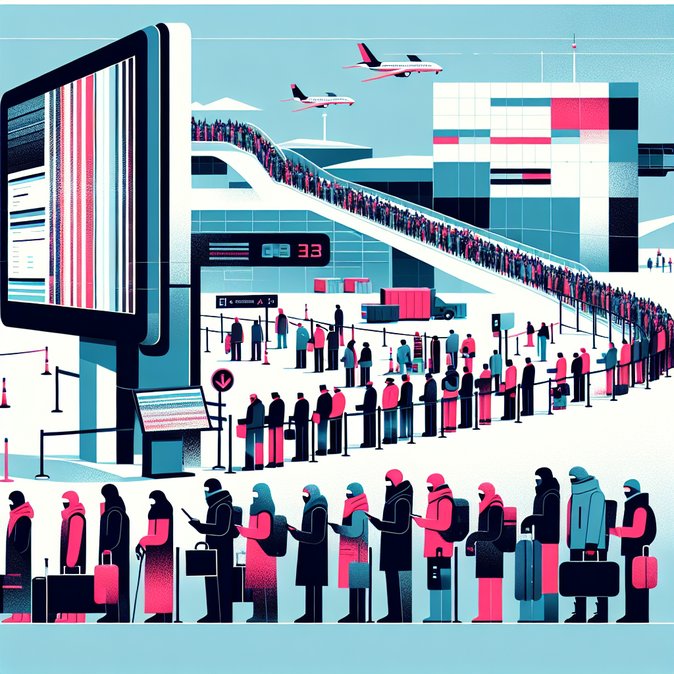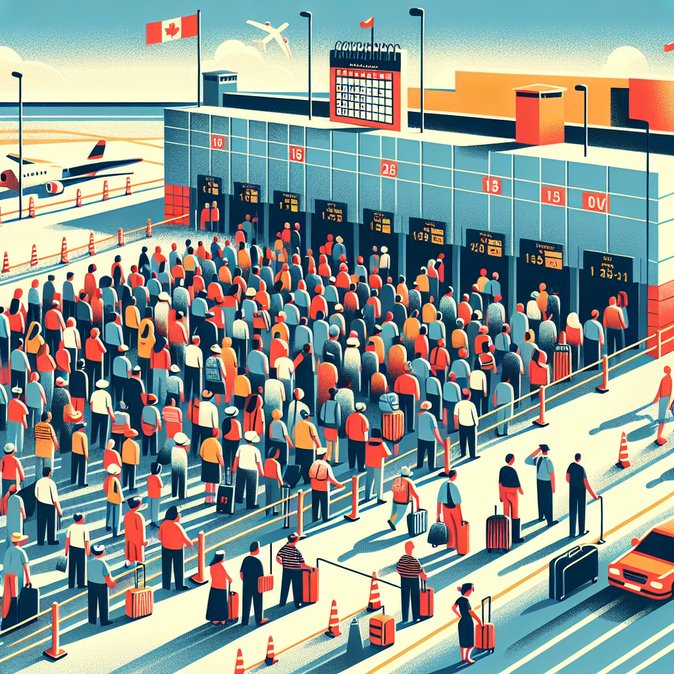
Airports Council International Europe (ACI EUROPE), Airlines for Europe (A4E) and the International Air Transport Association (IATA) have issued a joint letter warning that continued teething problems with the new Schengen Entry/Exit System (EES) are producing queues of up to two hours for non-EU passengers—delays that could swell to four hours during July and August unless the European Commission authorises greater flexibility. The plea, released on 11 February but circulated to national authorities throughout the weekend, is particularly relevant to Switzerland, whose airports at Zurich, Geneva and Basel have already registered spikes in wait times since biometric enrolment became mandatory for 35 % of third-country arrivals.
Travellers looking to minimise disruption can at least make sure their documentation is in perfect order before reaching the airport. VisaHQ’s Switzerland portal (https://www.visahq.com/switzerland/) lets individuals and corporate mobility teams verify visa requirements, complete digital applications and arrange courier submission in one place, which can shave precious minutes off the overall border process and reduce the risk that a missing document compounds EES delays.
The aviation bodies identify three pressure points: chronic understaffing at border posts, glitches in some member states’ e-gate software and slow adoption of the Frontex pre-registration app that was supposed to smooth first-time enrolment. Switzerland, which began phased EES implementation in October 2025, is meeting the 35 % target only by diverting staff from customs and security to immigration booths during peak bank-holiday periods—a stop-gap the cantonal police unions say is unsustainable for the summer schedule.
![Aviation Industry Urges Brussels to Relax Schengen Entry/Exit System Before Summer Peak]()
If Brussels rejects the request for a partial suspension of EES quotas, carriers fear they will have to pad timetables, re-bank connection waves and possibly cap inbound tour-operator allotments on key holiday dates. Swiss International Air Lines has already told corporate clients it may introduce “Schengen buffer times” of 20–30 minutes on high-load days, a change that would ripple through tight Zurich hub connections used by global mobility teams routing talent to Asia and North America.
The industry proposal asks the Commission to let states pause compulsory biometric capture on particular days when border-force staffing falls below agreed ratios, or when e-gate outages exceed 30 minutes. It also calls for an information blitz so travellers know they must remove masks, gloves and hats and can pre-download the Frontex app. Bern’s Federal Office for Customs and Border Security says it supports the request and is working with neighbouring France and Germany on common contingency plans for Geneva and Basel EuroAirport—which straddle national frontiers.
For mobility managers the message is clear: summer travel to, from and through Switzerland will require longer connection buffers, proactive traveller education and perhaps rerouting high-value assignees onto intra-Schengen flights where EES checks do not apply. Companies running short-term rotation programmes should review start-date lead times to avoid missed onboarding windows if border queues surge.
Travellers looking to minimise disruption can at least make sure their documentation is in perfect order before reaching the airport. VisaHQ’s Switzerland portal (https://www.visahq.com/switzerland/) lets individuals and corporate mobility teams verify visa requirements, complete digital applications and arrange courier submission in one place, which can shave precious minutes off the overall border process and reduce the risk that a missing document compounds EES delays.
The aviation bodies identify three pressure points: chronic understaffing at border posts, glitches in some member states’ e-gate software and slow adoption of the Frontex pre-registration app that was supposed to smooth first-time enrolment. Switzerland, which began phased EES implementation in October 2025, is meeting the 35 % target only by diverting staff from customs and security to immigration booths during peak bank-holiday periods—a stop-gap the cantonal police unions say is unsustainable for the summer schedule.

If Brussels rejects the request for a partial suspension of EES quotas, carriers fear they will have to pad timetables, re-bank connection waves and possibly cap inbound tour-operator allotments on key holiday dates. Swiss International Air Lines has already told corporate clients it may introduce “Schengen buffer times” of 20–30 minutes on high-load days, a change that would ripple through tight Zurich hub connections used by global mobility teams routing talent to Asia and North America.
The industry proposal asks the Commission to let states pause compulsory biometric capture on particular days when border-force staffing falls below agreed ratios, or when e-gate outages exceed 30 minutes. It also calls for an information blitz so travellers know they must remove masks, gloves and hats and can pre-download the Frontex app. Bern’s Federal Office for Customs and Border Security says it supports the request and is working with neighbouring France and Germany on common contingency plans for Geneva and Basel EuroAirport—which straddle national frontiers.
For mobility managers the message is clear: summer travel to, from and through Switzerland will require longer connection buffers, proactive traveller education and perhaps rerouting high-value assignees onto intra-Schengen flights where EES checks do not apply. Companies running short-term rotation programmes should review start-date lead times to avoid missed onboarding windows if border queues surge.