U.S. airports awoke on February 14 to a worrying sense of déjà vu: for the second time in as many weeks the Department of Homeland Security (DHS) is partially shut down after Congress failed to approve a new appropriations bill. While CBP, ICE and USCIS can keep the lights on through fee income and multi-year funding, the Transportation Security Administration relies almost entirely on annual appropriations. Roughly 55,000 frontline screeners – 95 percent of the workforce – have been told they are “essential” and must report for duty even though paychecks are on hold.
Industry groups say the timing could not be worse. Spring-break traffic is already building and domestic capacity is 7 percent higher than last year. Experience from the record 35-day shutdown in 2019 shows that once unpaid status stretches beyond seven to ten days, unscheduled absences climb sharply as officers look for outside work or simply cannot afford the commute. If that happens, security-line wait times at major hubs such as Atlanta, Denver and Dallas/Fort Worth could easily exceed 90 minutes, triggering knock-on delays for airlines and missed connections for business travelers.
Airports are scrambling to keep throughput up. Many are bringing managers with former screening credentials back onto the line and offering free meals or parking to TSA staff. Airlines have begun to waive same-day change fees for passengers who run late because of checkpoint lines. Travel managers are advising corporate travelers to arrive at least three hours ahead of departure and to keep itineraries flexible.
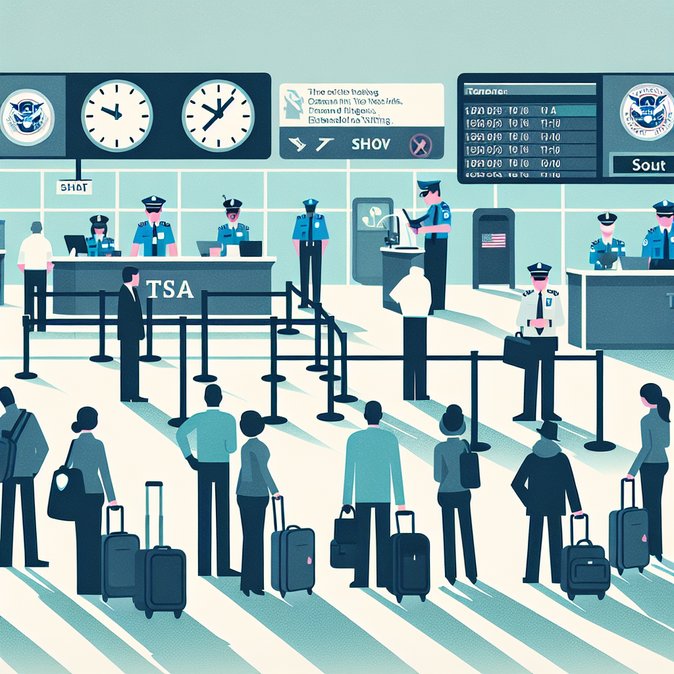
![TSA staff work unpaid as Homeland Security funding lapses, raising prospect of airport delays]()
A quick reminder: keeping your travel documents in order is just as critical as budgeting extra time at security. VisaHQ’s online platform (https://www.visahq.com/united-states/) can help travelers and mobility teams secure visas, passports, and other mandatory paperwork efficiently, so the only surprise en route is a longer TSA queue—not an unexpected documentation snag.
Behind the political drama lies a policy dispute. Senate Democrats are insisting that any DHS funding bill include new guardrails on ICE and CBP operations after controversial shootings in Minneapolis. Republicans counter that operational reforms belong in authorizing legislation, not a stopgap spending bill. With lawmakers now on a ten-day Presidents’ Day recess, the shutdown – and the uncertainty for travelers – is likely to last at least until February 24.
For global-mobility teams the immediate task is contingency planning: advise mobile employees to enroll in TSA PreCheck or CLEAR if they have not already, book earlier flights in the day to allow re-accommodation options, and build larger buffers into international connections. If the impasse drags on and security lines snarl, companies may need to shift some meetings back to virtual formats or reroute trips through smaller secondary airports that historically feel staffing gaps less acutely.
Industry groups say the timing could not be worse. Spring-break traffic is already building and domestic capacity is 7 percent higher than last year. Experience from the record 35-day shutdown in 2019 shows that once unpaid status stretches beyond seven to ten days, unscheduled absences climb sharply as officers look for outside work or simply cannot afford the commute. If that happens, security-line wait times at major hubs such as Atlanta, Denver and Dallas/Fort Worth could easily exceed 90 minutes, triggering knock-on delays for airlines and missed connections for business travelers.
Airports are scrambling to keep throughput up. Many are bringing managers with former screening credentials back onto the line and offering free meals or parking to TSA staff. Airlines have begun to waive same-day change fees for passengers who run late because of checkpoint lines. Travel managers are advising corporate travelers to arrive at least three hours ahead of departure and to keep itineraries flexible.

A quick reminder: keeping your travel documents in order is just as critical as budgeting extra time at security. VisaHQ’s online platform (https://www.visahq.com/united-states/) can help travelers and mobility teams secure visas, passports, and other mandatory paperwork efficiently, so the only surprise en route is a longer TSA queue—not an unexpected documentation snag.
Behind the political drama lies a policy dispute. Senate Democrats are insisting that any DHS funding bill include new guardrails on ICE and CBP operations after controversial shootings in Minneapolis. Republicans counter that operational reforms belong in authorizing legislation, not a stopgap spending bill. With lawmakers now on a ten-day Presidents’ Day recess, the shutdown – and the uncertainty for travelers – is likely to last at least until February 24.
For global-mobility teams the immediate task is contingency planning: advise mobile employees to enroll in TSA PreCheck or CLEAR if they have not already, book earlier flights in the day to allow re-accommodation options, and build larger buffers into international connections. If the impasse drags on and security lines snarl, companies may need to shift some meetings back to virtual formats or reroute trips through smaller secondary airports that historically feel staffing gaps less acutely.