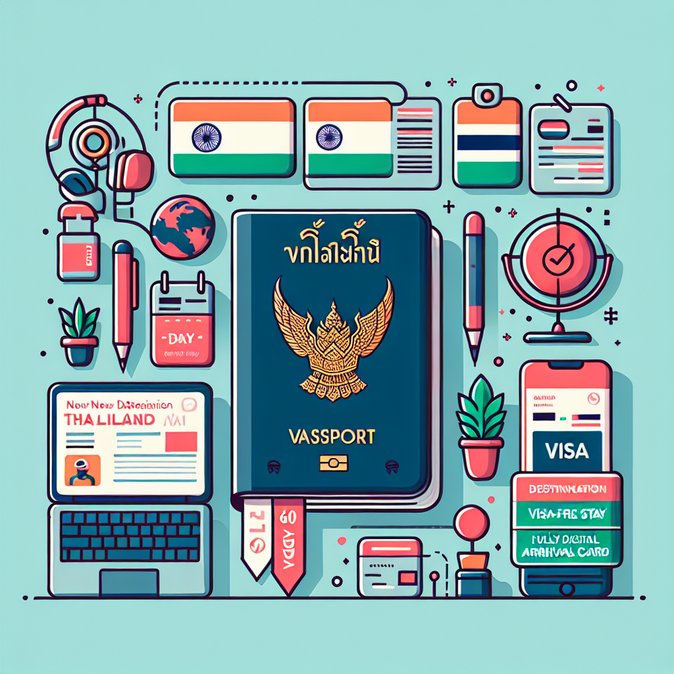
Thailand’s Cabinet has endorsed a sweeping visa-reform package that immediately benefits Indian visitors. Effective 13 February, Indian passport holders move from a 30-day visa-on-arrival to a 60-day visa-exempt stay under a new ‘Form 60’ list covering 93 nationalities. At the same time, Bangkok rolled out its much-trailed Destination Thailand Visa (DTV), a one-year, multi-entry permit designed for remote workers, freelancers and long-stay tourists—segments where India is one of the fastest-growing source markets.
The reforms go further. The Ministry of Foreign Affairs has slashed non-immigrant visa codes from 17 to just 7, expanded global e-visa issuance to all 94 embassies and consulates, and confirmed that the Thailand Digital Arrival Card (TDAC) QR system will replace paper TM6 forms at airports by May. For Indian corporate mobility managers, the headline is clear: fewer forms, longer stays and fully digital entry procedures.
For Indian applicants who still prefer expert help rather than DIY submissions, VisaHQ’s India portal (https://www.visahq.com/india/) can handle the updated Thai e-visa process end-to-end and advise on the new DTV, while also covering dozens of other destinations—useful for companies coordinating multi-country assignments.
![Thailand approves 60-day visa-free stays for Indians and unveils ‘Destination Thailand Visa’ for digital nomads]()
Tourism Authority of Thailand (TAT) data show nearly 1.9 million Indians visited in 2025, many on group incentives or MICE trips that rarely last more than five nights. Doubling the visa-free window opens the door to combining business events with extended leisure across multiple Thai cities, bolstering ‘bleisure’ budgets. Airlines are already reacting: IndiGo has announced capacity additions on Bengaluru–Phuket and Mumbai–Bangkok for the summer schedule.
The new DTV, meanwhile, allows stays of up to 180 days in a single visit and permits limited remote work, provided income is earned outside Thailand. Legal advisors caution that Indian residents must still declare foreign income to the Indian tax authorities, but the visa removes the need to do ‘visa runs’ to Cambodia or Laos every 30 days, a common headache for tech freelancers.
Companies with Thailand-based project teams should revisit assignment letters: under the re-coded Non-Immigrant categories, the old ‘B’ business visa now sits within a broader work subgroup that may require updated documentation. A task force within Thailand’s Visa Policy Committee will publish harmonised guidance by April, but early adopters—especially in IT services and film production—can begin shifting staff to the simpler regimes immediately.
The reforms go further. The Ministry of Foreign Affairs has slashed non-immigrant visa codes from 17 to just 7, expanded global e-visa issuance to all 94 embassies and consulates, and confirmed that the Thailand Digital Arrival Card (TDAC) QR system will replace paper TM6 forms at airports by May. For Indian corporate mobility managers, the headline is clear: fewer forms, longer stays and fully digital entry procedures.
For Indian applicants who still prefer expert help rather than DIY submissions, VisaHQ’s India portal (https://www.visahq.com/india/) can handle the updated Thai e-visa process end-to-end and advise on the new DTV, while also covering dozens of other destinations—useful for companies coordinating multi-country assignments.

Tourism Authority of Thailand (TAT) data show nearly 1.9 million Indians visited in 2025, many on group incentives or MICE trips that rarely last more than five nights. Doubling the visa-free window opens the door to combining business events with extended leisure across multiple Thai cities, bolstering ‘bleisure’ budgets. Airlines are already reacting: IndiGo has announced capacity additions on Bengaluru–Phuket and Mumbai–Bangkok for the summer schedule.
The new DTV, meanwhile, allows stays of up to 180 days in a single visit and permits limited remote work, provided income is earned outside Thailand. Legal advisors caution that Indian residents must still declare foreign income to the Indian tax authorities, but the visa removes the need to do ‘visa runs’ to Cambodia or Laos every 30 days, a common headache for tech freelancers.
Companies with Thailand-based project teams should revisit assignment letters: under the re-coded Non-Immigrant categories, the old ‘B’ business visa now sits within a broader work subgroup that may require updated documentation. A task force within Thailand’s Visa Policy Committee will publish harmonised guidance by April, but early adopters—especially in IT services and film production—can begin shifting staff to the simpler regimes immediately.