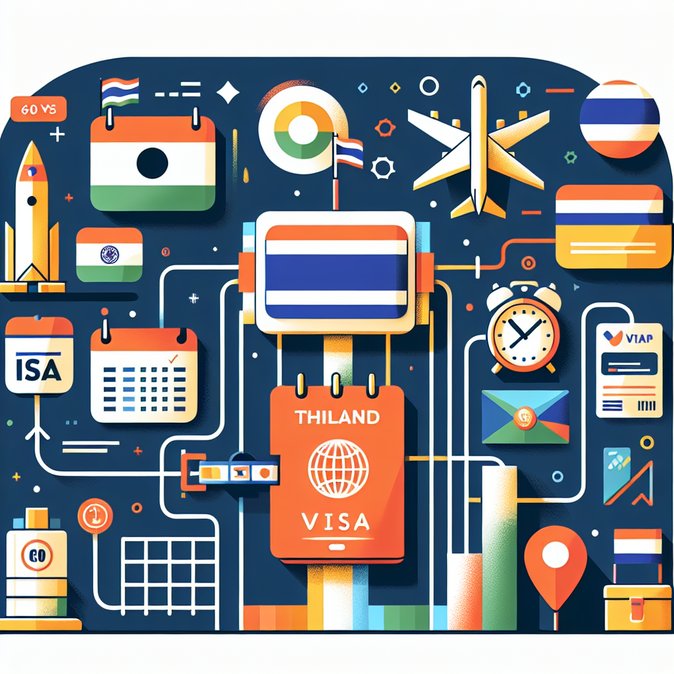
Thailand’s Cabinet, acting on proposals from the Ministry of Foreign Affairs, approved a sweeping rewrite of the kingdom’s visa rule-book on 13 February 2026. Key among the reforms is a 60-day visa-exemption scheme covering 93 nationalities—including India—for tourism, short-term work trips and meetings. The new ceiling doubles the previous 30-day allowance and positions Thailand to compete head-on with Singapore and Malaysia for the lucrative Indian outbound segment. (timesofindia.indiatimes.com)
Bangkok is also rolling out the “Destination Thailand Visa” (DTV), granting up to five-year validity and multiple entries for remote workers, digital nomads and ‘work-from-Thailand’ entrepreneurs. Indian tech freelancers and startup founders—many of whom already use Thailand as a low-tax base—will be able to stay 180 days per visit with simplified online renewal. An upgraded “ED Plus” visa aims to lure Indian students into hybrid study-and-internship programmes, a direct response to falling Chinese enrolments.
Structural changes matter as much as headline perks. Thailand has slashed non-immigrant visa codes from 17 to seven and expanded its e-Visa platform to every embassy worldwide, ending long queues at Bangkok’s VFS centres in Delhi and Mumbai. A digital arrival card (TDAC) now replaces manual immigration forms, and facial-recognition e-gates are slated for rollout at Phuket, Chiang Mai and the new Suvarnabhumi satellite terminal before the 2026 Diwali travel rush.
![Thailand overhauls visa regime: 60-day visa-free entry and new ‘Destination Thailand Visa’ to court Indian visitors]()
Indian travellers wondering how to tackle the new visa matrix can offload the legwork to VisaHQ. Via its India portal (https://www.visahq.com/india/), the company already processes Thai e-Visas and will add the 60-day waiver, DTV and ED Plus categories as soon as they go live, bundling document checks, real-time tracking and courier pickup into one streamlined service.
For Indian corporates, the implications are immediate: project teams can rotate more frequently without juggling multiple single-entry visas; MICE planners gain a 60-day window to stage conferences; and HR can explore long-stay options for staff relocating to Thai branch offices. Finance departments, however, should note that DTV carries a THB 10,000 (≈ ₹24,000) issuance fee and proof of US $10,000 health insurance. Compliance teams must ensure digital-nomad employees observe Thailand’s still-strict work-permit laws when engaging in on-shore economic activity.
Tourism analysts predict India—already Thailand’s second-largest source market—could send 2.3 million visitors in FY 2026-27, surpassing pre-COVID highs and injecting an extra US $2 billion into Thai hospitality. The easier rules also dovetail with Air India and IndiGo capacity upgrades on the Delhi–Bangkok and Bengaluru–Phuket sectors announced for the summer schedule, promising a virtuous cycle of seats and demand.
Bangkok is also rolling out the “Destination Thailand Visa” (DTV), granting up to five-year validity and multiple entries for remote workers, digital nomads and ‘work-from-Thailand’ entrepreneurs. Indian tech freelancers and startup founders—many of whom already use Thailand as a low-tax base—will be able to stay 180 days per visit with simplified online renewal. An upgraded “ED Plus” visa aims to lure Indian students into hybrid study-and-internship programmes, a direct response to falling Chinese enrolments.
Structural changes matter as much as headline perks. Thailand has slashed non-immigrant visa codes from 17 to seven and expanded its e-Visa platform to every embassy worldwide, ending long queues at Bangkok’s VFS centres in Delhi and Mumbai. A digital arrival card (TDAC) now replaces manual immigration forms, and facial-recognition e-gates are slated for rollout at Phuket, Chiang Mai and the new Suvarnabhumi satellite terminal before the 2026 Diwali travel rush.

Indian travellers wondering how to tackle the new visa matrix can offload the legwork to VisaHQ. Via its India portal (https://www.visahq.com/india/), the company already processes Thai e-Visas and will add the 60-day waiver, DTV and ED Plus categories as soon as they go live, bundling document checks, real-time tracking and courier pickup into one streamlined service.
For Indian corporates, the implications are immediate: project teams can rotate more frequently without juggling multiple single-entry visas; MICE planners gain a 60-day window to stage conferences; and HR can explore long-stay options for staff relocating to Thai branch offices. Finance departments, however, should note that DTV carries a THB 10,000 (≈ ₹24,000) issuance fee and proof of US $10,000 health insurance. Compliance teams must ensure digital-nomad employees observe Thailand’s still-strict work-permit laws when engaging in on-shore economic activity.
Tourism analysts predict India—already Thailand’s second-largest source market—could send 2.3 million visitors in FY 2026-27, surpassing pre-COVID highs and injecting an extra US $2 billion into Thai hospitality. The easier rules also dovetail with Air India and IndiGo capacity upgrades on the Delhi–Bangkok and Bengaluru–Phuket sectors announced for the summer schedule, promising a virtuous cycle of seats and demand.