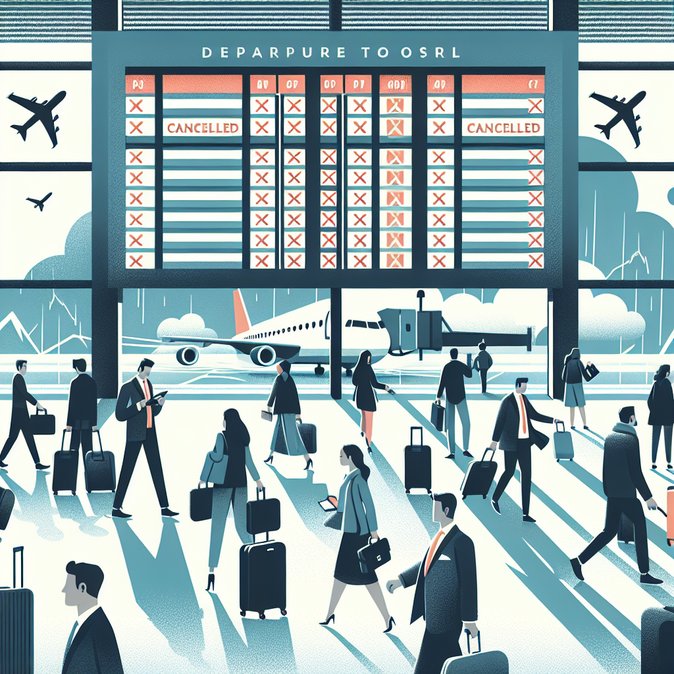
Just hours before Carnival’s peak travel weekend, Brazil’s three largest domestic carriers—TAM, GOL and Azul—scrubbed 22 flights across São Paulo, Rio de Janeiro, Campinas and Curitiba. According to airport movement logs reviewed on 13 February, the bulk of the cancellations affected the shuttle corridor between São Paulo/Congonhas and Rio’s Santos Dumont, as well as key business routes to Brasília, Belo Horizonte and Foz do Iguaçu. Airlines blamed crew-roster imbalances, thunderstorms over the southeast and aircraft rotation issues.
For corporate travellers the timing could not be worse: Friday is traditionally the last working day before Brazil’s five-day Carnival shutdown, and many executives were booked to fly home or to project sites before offices close until Wednesday afternoon. At Congonhas, check-in queues doubled as agents attempted to re-accommodate passengers on already full departures. Hotel prices around the airport surged 35 % by mid-afternoon, according to metabookings site Trivago.
International employees who find themselves stranded between meetings may also need to adjust entry paperwork at short notice. VisaHQ can fast-track Brazilian visas, extend existing permits and even arrange emergency passport renewals through its online portal, easing the administrative burden while airlines sort out their schedules: https://www.visahq.com/brazil/
![Wave of Last-Minute Cancellations Hits TAM, GOL and Azul Ahead of Carnival]()
Operational analysts point to chronic over-scheduling at slot-constrained Congonhas and a shortage of spare Airbus A320 pilots after rapid network growth. Azul’s cancellations out of Viracopos highlight the fragility of Brazil’s secondary-hub model when cascading delays hit. ANAC says it is monitoring on-time-performance metrics and could require remedial action if the disruption spills into next week.
Mobility managers should advise travellers to reconfirm flights, allow longer connection windows and keep virtual-meeting options open. Under Brazil’s passenger-rights resolution 400/2016, airlines must provide meals after a one-hour delay, re-routing or accommodation after four hours, and refund after five. Travellers can file complaints via the ‘Consumidor.gov.br’ portal if carriers fall short.
Longer term, the episode underscores the need for corporate travel policies to include contingency budgets during Brazil’s holiday periods, when a single thunderstorm or roster glitch can paralyse multiple airports.
For corporate travellers the timing could not be worse: Friday is traditionally the last working day before Brazil’s five-day Carnival shutdown, and many executives were booked to fly home or to project sites before offices close until Wednesday afternoon. At Congonhas, check-in queues doubled as agents attempted to re-accommodate passengers on already full departures. Hotel prices around the airport surged 35 % by mid-afternoon, according to metabookings site Trivago.
International employees who find themselves stranded between meetings may also need to adjust entry paperwork at short notice. VisaHQ can fast-track Brazilian visas, extend existing permits and even arrange emergency passport renewals through its online portal, easing the administrative burden while airlines sort out their schedules: https://www.visahq.com/brazil/

Operational analysts point to chronic over-scheduling at slot-constrained Congonhas and a shortage of spare Airbus A320 pilots after rapid network growth. Azul’s cancellations out of Viracopos highlight the fragility of Brazil’s secondary-hub model when cascading delays hit. ANAC says it is monitoring on-time-performance metrics and could require remedial action if the disruption spills into next week.
Mobility managers should advise travellers to reconfirm flights, allow longer connection windows and keep virtual-meeting options open. Under Brazil’s passenger-rights resolution 400/2016, airlines must provide meals after a one-hour delay, re-routing or accommodation after four hours, and refund after five. Travellers can file complaints via the ‘Consumidor.gov.br’ portal if carriers fall short.
Longer term, the episode underscores the need for corporate travel policies to include contingency budgets during Brazil’s holiday periods, when a single thunderstorm or roster glitch can paralyse multiple airports.