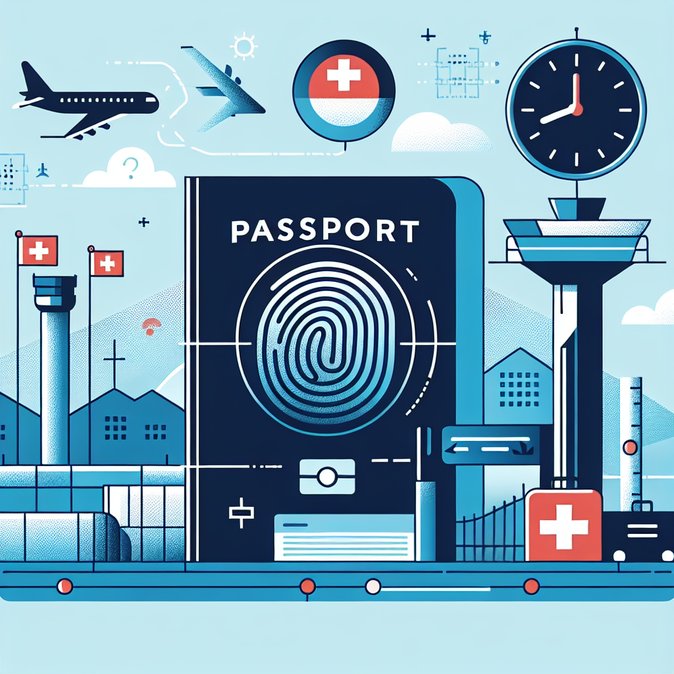
With Europe’s biometric Entry/Exit System (EES) entering its mandatory phase on 10 April 2026, Zurich, Basel and Geneva airports sounded the alarm on 12 February about potential processing backlogs. A four-month soft launch saw only one-third of third-country nationals complete enrolment; from April every non-EU traveller must register fingerprints and a facial image at self-service kiosks.
Industry estimates cited by Swiss airport operators suggest that clearing a fully-booked long-haul aircraft could add 50–70 minutes when most passengers are first-timers. Zurich Airport fears knock-on effects across transfer banks, risking missed connections on Swiss International Air Lines’ hub-and-spoke network. Ground-handling firms warn of extra overtime costs and ripple effects on turnaround times.
Airports, airlines and travel-trade bodies are lobbying Brussels for “stand-down” flexibility—allowing border police to suspend kiosk enrolment during peak waves and revert to manual stamping. They also call for a unified communications campaign so that travellers pre-enrol via smartphone apps now being piloted by the EU Agency for Large-Scale IT Systems (eu-LISA).
![Swiss Airports Brace for EU Biometric Entry/Exit System Bottlenecks]()
Travellers looking for clear, up-to-date guidance on these evolving Schengen procedures can turn to VisaHQ. Through its Switzerland portal (https://www.visahq.com/switzerland/), the firm aggregates current visa requirements, biometric enrolment tips and appointment options, giving mobility managers a single dashboard to prepare staff and mitigate airport delays.
For corporate mobility teams the advice is two-fold: build longer minimum-connection-time buffers into itineraries after 10 April and instruct travellers to arrive at least three hours ahead of departure on first Schengen entry. Frequent flyers whose fingerprints scan poorly—common among lab workers and tradespeople—should carry proof of multiple prior Schengen stays to facilitate secondary inspection.
In the medium term, Swiss authorities see benefits: EES will automate over-stay detection and ultimately shorten exit queues once the enrolment bulge subsides. Until then, however, mobility managers should expect sporadic disruption through the summer peak.
Industry estimates cited by Swiss airport operators suggest that clearing a fully-booked long-haul aircraft could add 50–70 minutes when most passengers are first-timers. Zurich Airport fears knock-on effects across transfer banks, risking missed connections on Swiss International Air Lines’ hub-and-spoke network. Ground-handling firms warn of extra overtime costs and ripple effects on turnaround times.
Airports, airlines and travel-trade bodies are lobbying Brussels for “stand-down” flexibility—allowing border police to suspend kiosk enrolment during peak waves and revert to manual stamping. They also call for a unified communications campaign so that travellers pre-enrol via smartphone apps now being piloted by the EU Agency for Large-Scale IT Systems (eu-LISA).
Travellers looking for clear, up-to-date guidance on these evolving Schengen procedures can turn to VisaHQ. Through its Switzerland portal (https://www.visahq.com/switzerland/), the firm aggregates current visa requirements, biometric enrolment tips and appointment options, giving mobility managers a single dashboard to prepare staff and mitigate airport delays.
For corporate mobility teams the advice is two-fold: build longer minimum-connection-time buffers into itineraries after 10 April and instruct travellers to arrive at least three hours ahead of departure on first Schengen entry. Frequent flyers whose fingerprints scan poorly—common among lab workers and tradespeople—should carry proof of multiple prior Schengen stays to facilitate secondary inspection.
In the medium term, Swiss authorities see benefits: EES will automate over-stay detection and ultimately shorten exit queues once the enrolment bulge subsides. Until then, however, mobility managers should expect sporadic disruption through the summer peak.