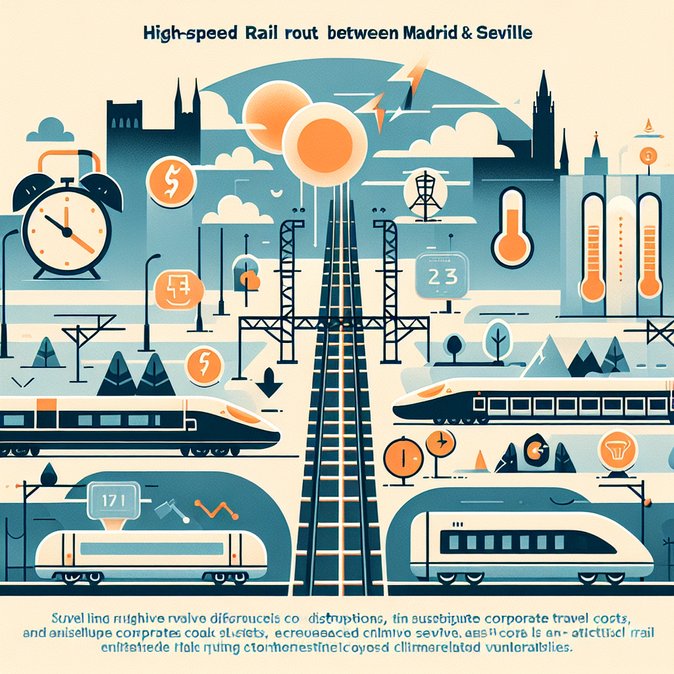
Spain’s flagship high-speed corridor between Madrid and Seville will continue to operate with a bus-and-train overlay until at least 16 February, Renfe confirmed this morning. Services have been disrupted since 18 January, when a derailment near Adamuz (Córdoba) killed 46 people and tore up several kilometres of track. Passengers on Ave trains must transfer by coach between Córdoba and Villanueva de Córdoba, adding roughly 45 minutes to journeys.
Tickets purchased before 18 January can be exchanged free of charge, and full refunds remain available. Engineering teams say persistent heavy rain linked to Storm Marta has slowed welding and ballast replacement, raising doubts that the line can reopen before the February half-term holiday.
The prolonged partial closure complicates mobility budgets for multinationals that rely on day-trip rail links between Madrid headquarters and Andalusian plants. Some firms are chartering vans or booking group flights on Iberia’s shuttle to maintain schedules, adding cost and carbon emissions.
![Renfe prolongs alternative Madrid–Andalusia transport plan to 16 February after fatal Adamuz crash]()
If disrupted rail service means staff or contractors must adjust visas or secure additional documentation for altered itineraries, VisaHQ can streamline the process in as little as 24 hours. The platform’s Spain portal (https://www.visahq.com/spain/) lets travellers and mobility managers review requirements, upload paperwork, and track approvals in real time, reducing administrative headaches during an already complicated travel period.
Safety regulators are finalising an interim report expected next week. Sources indicate investigators are probing whether flash-flood early-warning systems installed after the 2023 Bejís accident were functioning correctly. A negative finding could force Renfe and infrastructure manager Adif to accelerate climate-resilience spending across the network.
Until the line fully reopens, travel managers should advise assignees to build in a one-hour buffer when connecting to flights at Madrid-Barajas or Seville airports and to book flexible fares wherever possible.
Tickets purchased before 18 January can be exchanged free of charge, and full refunds remain available. Engineering teams say persistent heavy rain linked to Storm Marta has slowed welding and ballast replacement, raising doubts that the line can reopen before the February half-term holiday.
The prolonged partial closure complicates mobility budgets for multinationals that rely on day-trip rail links between Madrid headquarters and Andalusian plants. Some firms are chartering vans or booking group flights on Iberia’s shuttle to maintain schedules, adding cost and carbon emissions.

If disrupted rail service means staff or contractors must adjust visas or secure additional documentation for altered itineraries, VisaHQ can streamline the process in as little as 24 hours. The platform’s Spain portal (https://www.visahq.com/spain/) lets travellers and mobility managers review requirements, upload paperwork, and track approvals in real time, reducing administrative headaches during an already complicated travel period.
Safety regulators are finalising an interim report expected next week. Sources indicate investigators are probing whether flash-flood early-warning systems installed after the 2023 Bejís accident were functioning correctly. A negative finding could force Renfe and infrastructure manager Adif to accelerate climate-resilience spending across the network.
Until the line fully reopens, travel managers should advise assignees to build in a one-hour buffer when connecting to flights at Madrid-Barajas or Seville airports and to book flexible fares wherever possible.