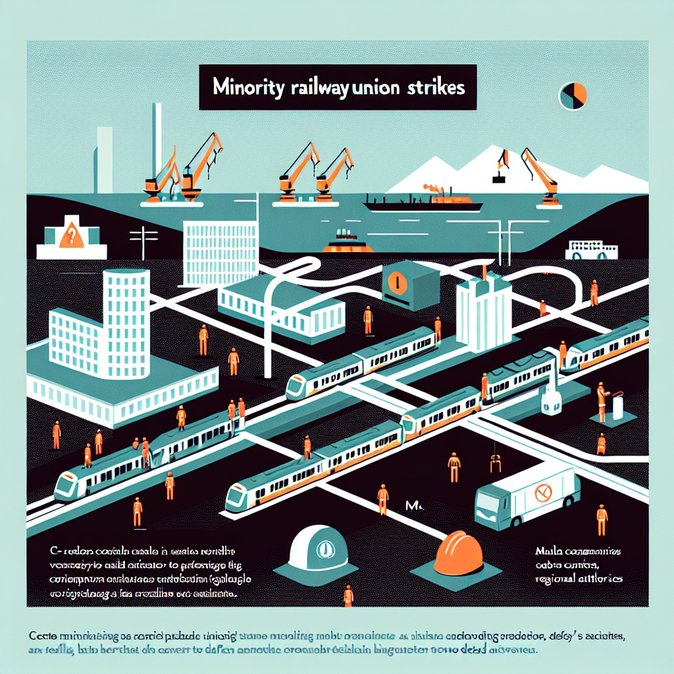
Thousands of commuters faced another morning of cancellations on 11 February as minority unions CGT and Sindicato Ferroviario pressed ahead with a 72-hour walk-out on Renfe’s Cercanías C-1 (Málaga–Fuengirola) and C-2 (Málaga–Álora) lines. Only around 60 of the 130 scheduled trains were expected to run, according to union spokespeople, forcing passengers onto overcrowded buses and taxis along Spain’s main tourist strip.
The action continues despite larger unions CCOO, UGT and Semaf having reached a safety-improvement agreement with the Transport Ministry late on 9 February. Drivers say the deal does not go far enough after two fatal rail accidents in January exposed what they call “years of under-investment” in signalling and track maintenance. Renfe has been issuing WhatsApp alerts and organising replacement coaches but admits that seat availability is limited at peak times.
If you are an international visitor navigating these disruptions, take a moment to ensure your travel paperwork is up to date. VisaHQ’s easy-to-use platform (https://www.visahq.com/spain/) lets you check Spanish visa requirements, obtain extensions or transit permits, and handle documentation for nearby countries in case you need to re-route your journey—saving valuable time when transport plans change at short notice.
![Malaga commuter rail strike enters third day, paralysing Costa del Sol travel]()
For businesses, the stoppage hits hotel and retail staff who rely on the Cercanías network for shift work, as well as international travellers connecting through Málaga-Costa del Sol Airport. Mobility managers are rebooking employees onto car-hire or stay-over options and advising visitors to allow at least two extra hours for airport transfers.
Local chambers of commerce estimate the strike is costing the province €4 million a day in lost productivity. Tourism boards fear reputational damage just as advance bookings for Easter pick up. Negotiations are unlikely before the strike’s scheduled end at 23:00 tonight, raising the prospect of further sporadic action if safety audits stall.
Longer term, the dispute underscores a systemic challenge for Spain’s regional rail: multiple operators, ageing infrastructure and fragmented unions make it harder to deliver the punctual, high-frequency services upon which resort economies depend. Employers with large expatriate workforces on the coast may need to revisit housing allowances or provide shuttle services if reliability does not improve.
The action continues despite larger unions CCOO, UGT and Semaf having reached a safety-improvement agreement with the Transport Ministry late on 9 February. Drivers say the deal does not go far enough after two fatal rail accidents in January exposed what they call “years of under-investment” in signalling and track maintenance. Renfe has been issuing WhatsApp alerts and organising replacement coaches but admits that seat availability is limited at peak times.
If you are an international visitor navigating these disruptions, take a moment to ensure your travel paperwork is up to date. VisaHQ’s easy-to-use platform (https://www.visahq.com/spain/) lets you check Spanish visa requirements, obtain extensions or transit permits, and handle documentation for nearby countries in case you need to re-route your journey—saving valuable time when transport plans change at short notice.

For businesses, the stoppage hits hotel and retail staff who rely on the Cercanías network for shift work, as well as international travellers connecting through Málaga-Costa del Sol Airport. Mobility managers are rebooking employees onto car-hire or stay-over options and advising visitors to allow at least two extra hours for airport transfers.
Local chambers of commerce estimate the strike is costing the province €4 million a day in lost productivity. Tourism boards fear reputational damage just as advance bookings for Easter pick up. Negotiations are unlikely before the strike’s scheduled end at 23:00 tonight, raising the prospect of further sporadic action if safety audits stall.
Longer term, the dispute underscores a systemic challenge for Spain’s regional rail: multiple operators, ageing infrastructure and fragmented unions make it harder to deliver the punctual, high-frequency services upon which resort economies depend. Employers with large expatriate workforces on the coast may need to revisit housing allowances or provide shuttle services if reliability does not improve.