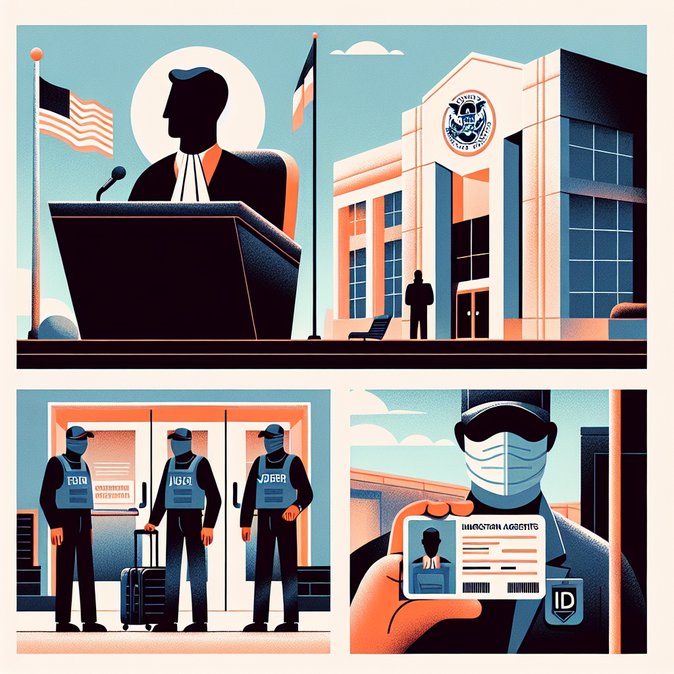
Los Angeles—Federal District Judge Christina Snyder on February 9 halted California’s first-in-the-nation law that would have prohibited most federal immigration officers from covering their faces during operations. Signed by Governor Gavin Newsom last September after a series of masked ICE raids in Los Angeles, the statute was to take effect January 1 but was stayed pending litigation brought by the Trump administration.
In Monday’s order Snyder found the ban unconstitutionally singled out the federal government because it exempted state and local police. California “may not regulate the instrumentalities the United States uses to carry out its immigration responsibilities unless it applies the same rule to its own officers,” she wrote. However, the judge upheld a separate provision requiring all law-enforcement agents—federal, state or local—to wear visible identification showing agency and badge number.
For international employees and travelers trying to understand how these enforcement nuances might affect their own status, VisaHQ can be a useful ally. Its online portal (https://www.visahq.com/united-states/) aggregates the latest visa requirements, identification standards, and procedural updates, pairing them with live expert assistance—making it easier for companies and individuals alike to stay compliant amid shifting rules.
![Judge blocks California’s mask ban for federal immigration agents but keeps ID-badge rule]()
The ruling, effective February 19, carries immediate compliance implications. Federal teams operating in California may continue to use balaclavas or gaiters during workplace sweeps, but they must display clear ID tags or risk civil penalties. For employers hosting ICE or CBP audits this means easier confirmation of officer credentials—and a stronger basis for refusing entry to personnel who hide both face and badge.
State Senator Scott Wiener vowed to re-draft the bill to include state police so a comprehensive mask ban can withstand judicial review. Civil-rights groups hailed the partial victory, noting that visible ID will help deter impersonation scams that surged 38 percent last year, according to the Better Business Bureau. The Department of Justice hinted at an appeal, arguing masks are vital after doxing attacks on agents.
Global-mobility practitioners should update California site-security protocols: insist on badge visibility, document officer identities and report any non-compliance to counsel. Although the face-covering ban is on hold, the badge-display mandate remains and could spread to other states watching the case.
In Monday’s order Snyder found the ban unconstitutionally singled out the federal government because it exempted state and local police. California “may not regulate the instrumentalities the United States uses to carry out its immigration responsibilities unless it applies the same rule to its own officers,” she wrote. However, the judge upheld a separate provision requiring all law-enforcement agents—federal, state or local—to wear visible identification showing agency and badge number.
For international employees and travelers trying to understand how these enforcement nuances might affect their own status, VisaHQ can be a useful ally. Its online portal (https://www.visahq.com/united-states/) aggregates the latest visa requirements, identification standards, and procedural updates, pairing them with live expert assistance—making it easier for companies and individuals alike to stay compliant amid shifting rules.
The ruling, effective February 19, carries immediate compliance implications. Federal teams operating in California may continue to use balaclavas or gaiters during workplace sweeps, but they must display clear ID tags or risk civil penalties. For employers hosting ICE or CBP audits this means easier confirmation of officer credentials—and a stronger basis for refusing entry to personnel who hide both face and badge.
State Senator Scott Wiener vowed to re-draft the bill to include state police so a comprehensive mask ban can withstand judicial review. Civil-rights groups hailed the partial victory, noting that visible ID will help deter impersonation scams that surged 38 percent last year, according to the Better Business Bureau. The Department of Justice hinted at an appeal, arguing masks are vital after doxing attacks on agents.
Global-mobility practitioners should update California site-security protocols: insist on badge visibility, document officer identities and report any non-compliance to counsel. Although the face-covering ban is on hold, the badge-display mandate remains and could spread to other states watching the case.