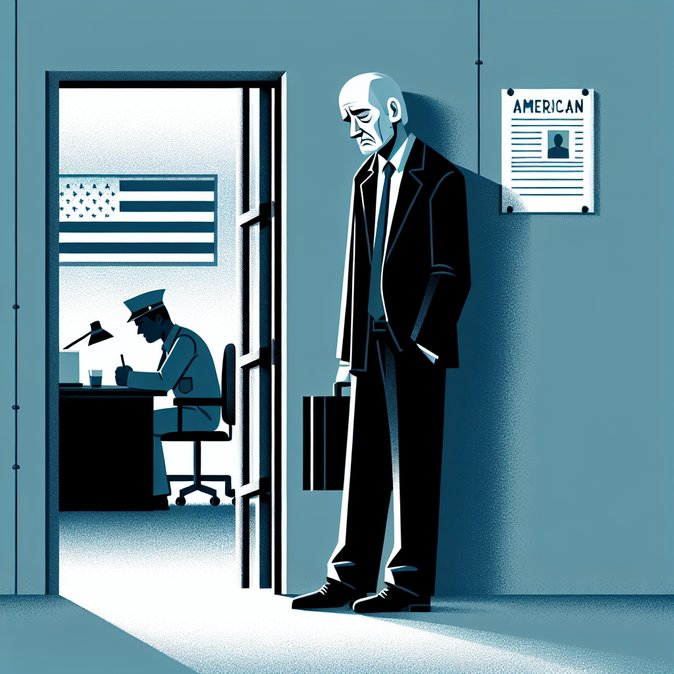
Seamus Culleton, a 42-year-old Wexford-born construction entrepreneur based in Boston, has publicly appealed for help from the Irish Government after spending five months in U.S. Immigration and Customs Enforcement (ICE) detention despite holding a valid work permit and having no criminal record. Culleton, who overstayed a visa waiver in 2009 but subsequently married a U.S. citizen, was awaiting his final green-card interview when agents arrested him during a routine traffic stop. (theguardian.com)
Speaking by phone from the El Paso Processing Center, Culleton told RTÉ Radio that conditions were “psychological and physical torture”, citing overcrowded, unsanitary facilities and limited outdoor time. He said he fears “staff more than inmates” and begged Taoiseach Micheál Martin to raise the case with President Donald Trump during next month’s St Patrick’s Day visit to Washington.
The Department of Foreign Affairs confirmed it is providing consular assistance and that the Irish embassy has contacted U.S. officials. Under long-standing protocol, Ireland can request a welfare check and ensure legal representation, but cannot intervene in judicial proceedings. Lawyers warn that ICE could execute a removal order at any time unless a judge grants parole or a stay.
![Irish entrepreneur’s ICE detention in Texas sparks calls for diplomatic action]()
In this context, corporate mobility managers and individual travellers alike can streamline compliance by partnering with VisaHQ, whose online platform (https://www.visahq.com/ireland/) offers real-time visa requirement checks, document concierge services and deadline reminders for the United States and more than 200 other destinations. By centralising applications and flagging potential overstay risks before they arise, VisaHQ can help prevent the kind of administrative lapses that left Culleton vulnerable in the first place.
For Irish companies with personnel on U.S. assignments, the case is a stark reminder that even minor historical immigration breaches can trigger detention under America’s strict enforcement regime. Mobility teams should audit employees’ I-94 departure records, ensure pending adjustment-of-status applicants carry documentary proof and consider enrolling staff in the State Department’s Smart Traveler Enrollment Program (STEP) for rapid consular contact.
Employers may also face reputational risk if detained staff appear in local media; crisis-management plans should include liaison channels with Irish diplomatic missions. Finally, the episode illustrates how bilateral political engagement around St Patrick’s week can influence individual immigration outcomes—sending a signal that high-profile diplomacy still matters in global mobility cases.
Speaking by phone from the El Paso Processing Center, Culleton told RTÉ Radio that conditions were “psychological and physical torture”, citing overcrowded, unsanitary facilities and limited outdoor time. He said he fears “staff more than inmates” and begged Taoiseach Micheál Martin to raise the case with President Donald Trump during next month’s St Patrick’s Day visit to Washington.
The Department of Foreign Affairs confirmed it is providing consular assistance and that the Irish embassy has contacted U.S. officials. Under long-standing protocol, Ireland can request a welfare check and ensure legal representation, but cannot intervene in judicial proceedings. Lawyers warn that ICE could execute a removal order at any time unless a judge grants parole or a stay.

In this context, corporate mobility managers and individual travellers alike can streamline compliance by partnering with VisaHQ, whose online platform (https://www.visahq.com/ireland/) offers real-time visa requirement checks, document concierge services and deadline reminders for the United States and more than 200 other destinations. By centralising applications and flagging potential overstay risks before they arise, VisaHQ can help prevent the kind of administrative lapses that left Culleton vulnerable in the first place.
For Irish companies with personnel on U.S. assignments, the case is a stark reminder that even minor historical immigration breaches can trigger detention under America’s strict enforcement regime. Mobility teams should audit employees’ I-94 departure records, ensure pending adjustment-of-status applicants carry documentary proof and consider enrolling staff in the State Department’s Smart Traveler Enrollment Program (STEP) for rapid consular contact.
Employers may also face reputational risk if detained staff appear in local media; crisis-management plans should include liaison channels with Irish diplomatic missions. Finally, the episode illustrates how bilateral political engagement around St Patrick’s week can influence individual immigration outcomes—sending a signal that high-profile diplomacy still matters in global mobility cases.