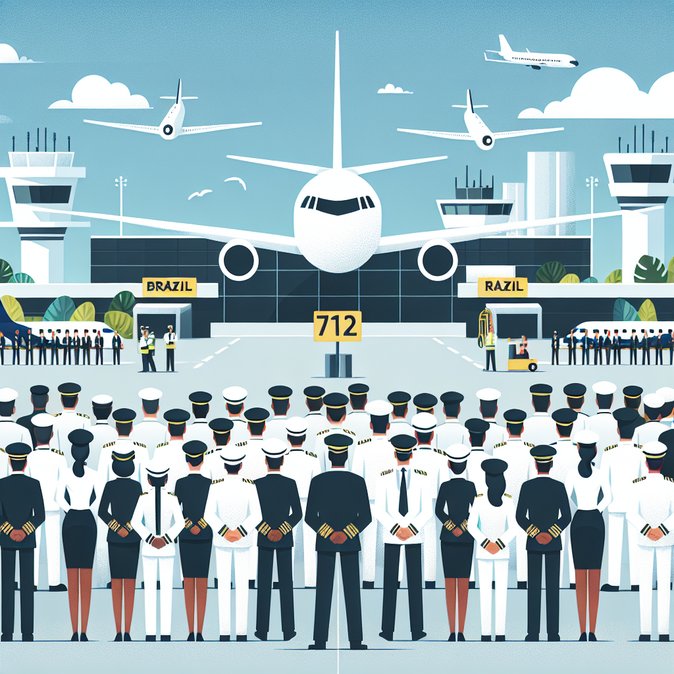
Brazilian travellers woke up to airport queues on 10 February after members of the National Airline Pilots and Flight Attendants Union (SNA) staged a two-hour strike in the early morning peak. At Brasília International Airport 25 flights were delayed and two were cancelled; Porto Alegre (POA) and Fortaleza (FOR) reported similar disruptions. The job action is part of the union’s escalating campaign for inflation-indexed pay rises and stricter limits on roster changes. (ajn1.com.br)
Although the stoppage was brief, its knock-on effects rippled through airline networks for most of the day, forcing re-booking of connecting passengers and missed crew rotations. LATAM and GOL offered fee-free re-accommodation, while Azul advised passengers to arrive at least two hours before departure. Cargo operators reported minor delays in belly-hold shipments, a reminder that even short labour actions can upset just-in-time supply chains.
If the disruption forces travellers to reroute internationally at short notice, platforms like VisaHQ can smooth the process: its Brazil page (https://www.visahq.com/brazil/) lets users check entry rules, file visa applications online and track approvals in real time—handy when flight schedules are changing by the hour.
![Pilots’ Two-Hour Walkout Delays Flights in Brasília, Porto Alegre and Fortaleza]()
The walkout follows stalled wage negotiations between the SNA and the National Airline Employers’ Association (SNEA). Pilots are seeking full inflation catch-up plus a 5 % real-wage gain, citing record load factors and rising ticket prices. Employers counter that fuel and leasing costs remain high and caution that excessive increases could undermine the sector’s fragile post-pandemic recovery.
Why it matters: Brazil’s domestic network is a lifeline for regional business centres that lack rail alternatives. Even short delays can disrupt sales calls, site visits and oil-and-gas crew changes. Corporate travel teams should build contingency time into itineraries this month and monitor SNA bulletins: under Brazilian labour law, the union must give 72-hour notice before any extended strike.
Outlook: A new mediation round is scheduled for 11 February. If talks fail, the SNA may call rolling 24-hour stoppages, potentially overlapping with Carnival, one of the busiest travel periods of the year.
Although the stoppage was brief, its knock-on effects rippled through airline networks for most of the day, forcing re-booking of connecting passengers and missed crew rotations. LATAM and GOL offered fee-free re-accommodation, while Azul advised passengers to arrive at least two hours before departure. Cargo operators reported minor delays in belly-hold shipments, a reminder that even short labour actions can upset just-in-time supply chains.
If the disruption forces travellers to reroute internationally at short notice, platforms like VisaHQ can smooth the process: its Brazil page (https://www.visahq.com/brazil/) lets users check entry rules, file visa applications online and track approvals in real time—handy when flight schedules are changing by the hour.

The walkout follows stalled wage negotiations between the SNA and the National Airline Employers’ Association (SNEA). Pilots are seeking full inflation catch-up plus a 5 % real-wage gain, citing record load factors and rising ticket prices. Employers counter that fuel and leasing costs remain high and caution that excessive increases could undermine the sector’s fragile post-pandemic recovery.
Why it matters: Brazil’s domestic network is a lifeline for regional business centres that lack rail alternatives. Even short delays can disrupt sales calls, site visits and oil-and-gas crew changes. Corporate travel teams should build contingency time into itineraries this month and monitor SNA bulletins: under Brazilian labour law, the union must give 72-hour notice before any extended strike.
Outlook: A new mediation round is scheduled for 11 February. If talks fail, the SNA may call rolling 24-hour stoppages, potentially overlapping with Carnival, one of the busiest travel periods of the year.