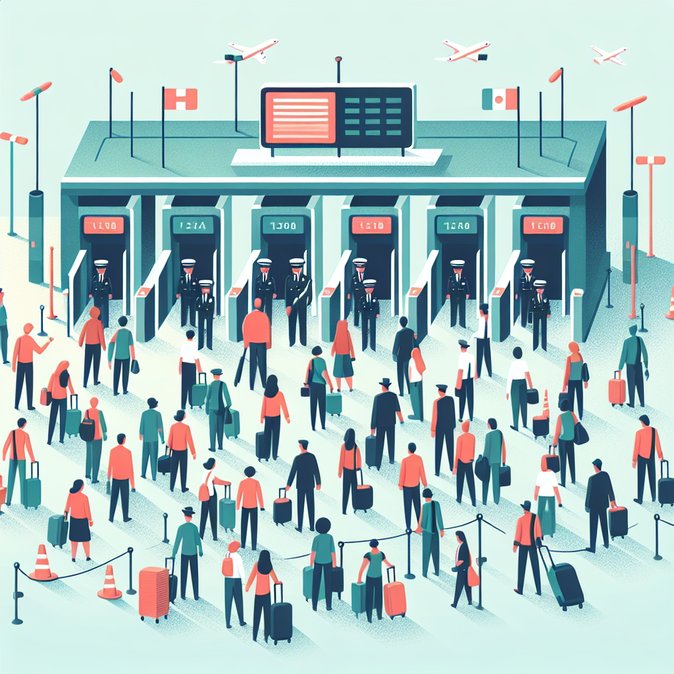
A growing list of governments are reinstating pre-departure testing and other health checks for passengers originating in China amid concern over the fast-spreading XBB.1.5 Covid variant. Portugal announced that, from Sunday, travellers must present a negative test taken within 48 hours of departure; Lisbon airport will also conduct wastewater sequencing on flights from China. Germany’s foreign ministry has simultaneously advised against all non-essential travel to the mainland, while Thailand will again require vaccination or recovery certificates for international arrivals. (gulftime.ae)
Authorities in India and several Asia-Pacific states have already imposed similar rules covering China, Hong Kong, Japan and South Korea. The European Union’s Health Security Committee “strongly encouraged” member states to adopt pre-flight testing and on-arrival mask mandates, a recommendation now being acted on by individual capitals.
Travel planners looking for a one-stop resource to track these shifting requirements can turn to VisaHQ, whose China portal (https://www.visahq.com/china/) collates real-time information on testing mandates, vaccination proof and visa documentation. The service streamlines compliance checks for both leisure and corporate travellers, helping them avoid last-minute surprises at the airport.
![Portugal, Germany and Thailand Re-impose Covid Testing for Arrivals from China]()
For Chinese business travellers the patchwork of restrictions represents a volatile compliance landscape just as outbound trips were beginning to recover. Mobility managers must verify country-specific rules—some accept PCR or antigen tests, others demand full-course vaccination proof—48 hours before departure and budget extra airport time for document checks.
Industry groups warn that renewed curbs could dampen China-to-Europe demand in the first quarter. Airlines may adjust capacity or re-route flight numbers to avoid stopovers in jurisdictions with onerous entry checks, raising the possibility of higher fares and longer journey times.
While the World Health Organization has yet to label XBB.1.5 a variant of concern, an updated risk assessment is expected within days. Until then, corporates are reviving contingency protocols—such as remote attendance at board meetings—to hedge against sudden border tightening.
Authorities in India and several Asia-Pacific states have already imposed similar rules covering China, Hong Kong, Japan and South Korea. The European Union’s Health Security Committee “strongly encouraged” member states to adopt pre-flight testing and on-arrival mask mandates, a recommendation now being acted on by individual capitals.
Travel planners looking for a one-stop resource to track these shifting requirements can turn to VisaHQ, whose China portal (https://www.visahq.com/china/) collates real-time information on testing mandates, vaccination proof and visa documentation. The service streamlines compliance checks for both leisure and corporate travellers, helping them avoid last-minute surprises at the airport.

For Chinese business travellers the patchwork of restrictions represents a volatile compliance landscape just as outbound trips were beginning to recover. Mobility managers must verify country-specific rules—some accept PCR or antigen tests, others demand full-course vaccination proof—48 hours before departure and budget extra airport time for document checks.
Industry groups warn that renewed curbs could dampen China-to-Europe demand in the first quarter. Airlines may adjust capacity or re-route flight numbers to avoid stopovers in jurisdictions with onerous entry checks, raising the possibility of higher fares and longer journey times.
While the World Health Organization has yet to label XBB.1.5 a variant of concern, an updated risk assessment is expected within days. Until then, corporates are reviving contingency protocols—such as remote attendance at board meetings—to hedge against sudden border tightening.