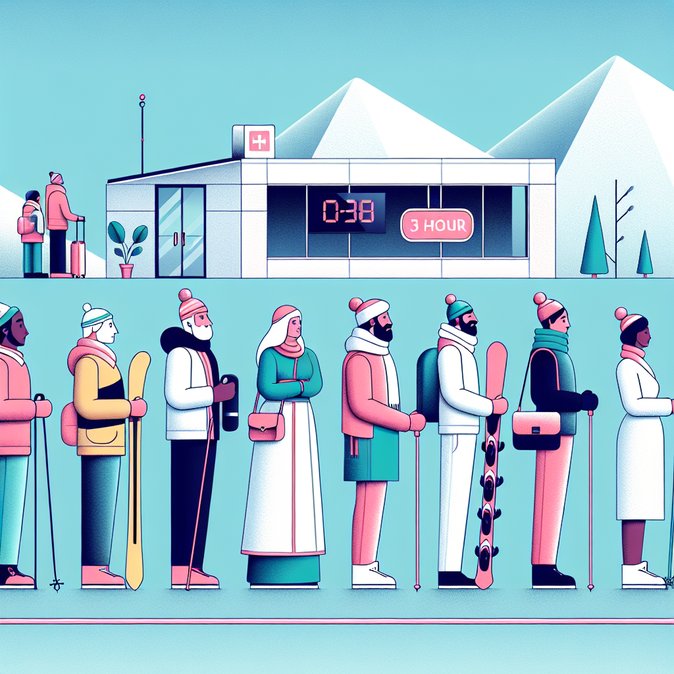
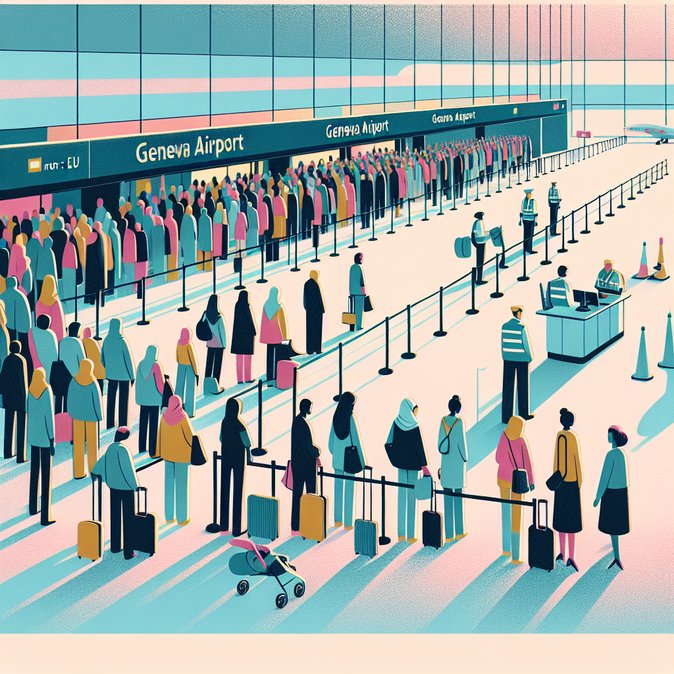
Swiss airports got a foretaste of what the 2026 summer rush could look like this weekend when the European Union’s new biometric Entry-Exit System (EES) faced its first true stress-test. According to reports carried by Semafor, skiers arriving on Saturday, 8 February, waited up to three hours at Geneva Airport’s passport control as non-EU travellers were funneled through newly installed self-service kiosks that capture fingerprints and a facial image before a first entry into the Schengen area is approved.(semafor.com)
EES is designed to replace the manual stamping of passports and to automate the calculation of each traveller’s remaining days under the “90-in-180” rule. While the technology worked, throughput fell sharply because first-time users required assistance, struggled with glove removal in sub-zero temperatures, and arrived without having been warned that hats or masks must come off for the photo capture. Airlines operating Geneva services, including SWISS and easyJet, have now updated pre-flight emails to highlight the new steps.
For travelers who want to ensure they meet all the new requirements before reaching the airport, VisaHQ’s Switzerland page (https://www.visahq.com/switzerland/) provides concise checklists, real-time EES and ETIAS updates, and personalized document reviews—making it easier to sail through these evolving border controls without unpleasant surprises.
![Three-Hour Queues at Geneva as EU Biometric Entry-Exit System Hits Peak Ski Weekend]()
Swiss airport operator Flughafen Zürich told local media that Zurich’s larger e-gate capacity limited waits to “30–40 minutes,” yet cautioned that peak Easter and summer weekends could see delays of “well over an hour” unless the federal government temporarily boosts border-guard staffing. Basel-Mulhouse, which sits on French soil, said it will keep a roving team of French police officers on standby to open additional manual booths if kiosk lines exceed 90 minutes.
Travel-management companies are already advising corporate clients to build longer connection buffers: a Zurich-based Big Four mobility practice said that missed rail transfers from Geneva Airport cost multinational employers “tens of thousands of francs” in re-issued tickets last ski season and that the figure “could easily double” if EES congestion persists. HR teams were urged to warn visiting executives, external board members and short-term assignees who hold third-country passports.
With full EES compliance mandated by April 10, 2026—and a second layer of screening, the ETIAS travel authorisation, due by year-end—Swiss authorities have little room for manoeuvre. The Federal Office for Customs and Border Security confirmed that it is reviewing whether to stagger kiosk registration volumes by flight origin if queues exceed four hours, but stressed that “complete suspension” of the system would require EU approval.
EES is designed to replace the manual stamping of passports and to automate the calculation of each traveller’s remaining days under the “90-in-180” rule. While the technology worked, throughput fell sharply because first-time users required assistance, struggled with glove removal in sub-zero temperatures, and arrived without having been warned that hats or masks must come off for the photo capture. Airlines operating Geneva services, including SWISS and easyJet, have now updated pre-flight emails to highlight the new steps.
For travelers who want to ensure they meet all the new requirements before reaching the airport, VisaHQ’s Switzerland page (https://www.visahq.com/switzerland/) provides concise checklists, real-time EES and ETIAS updates, and personalized document reviews—making it easier to sail through these evolving border controls without unpleasant surprises.
Swiss airport operator Flughafen Zürich told local media that Zurich’s larger e-gate capacity limited waits to “30–40 minutes,” yet cautioned that peak Easter and summer weekends could see delays of “well over an hour” unless the federal government temporarily boosts border-guard staffing. Basel-Mulhouse, which sits on French soil, said it will keep a roving team of French police officers on standby to open additional manual booths if kiosk lines exceed 90 minutes.
Travel-management companies are already advising corporate clients to build longer connection buffers: a Zurich-based Big Four mobility practice said that missed rail transfers from Geneva Airport cost multinational employers “tens of thousands of francs” in re-issued tickets last ski season and that the figure “could easily double” if EES congestion persists. HR teams were urged to warn visiting executives, external board members and short-term assignees who hold third-country passports.
With full EES compliance mandated by April 10, 2026—and a second layer of screening, the ETIAS travel authorisation, due by year-end—Swiss authorities have little room for manoeuvre. The Federal Office for Customs and Border Security confirmed that it is reviewing whether to stagger kiosk registration volumes by flight origin if queues exceed four hours, but stressed that “complete suspension” of the system would require EU approval.