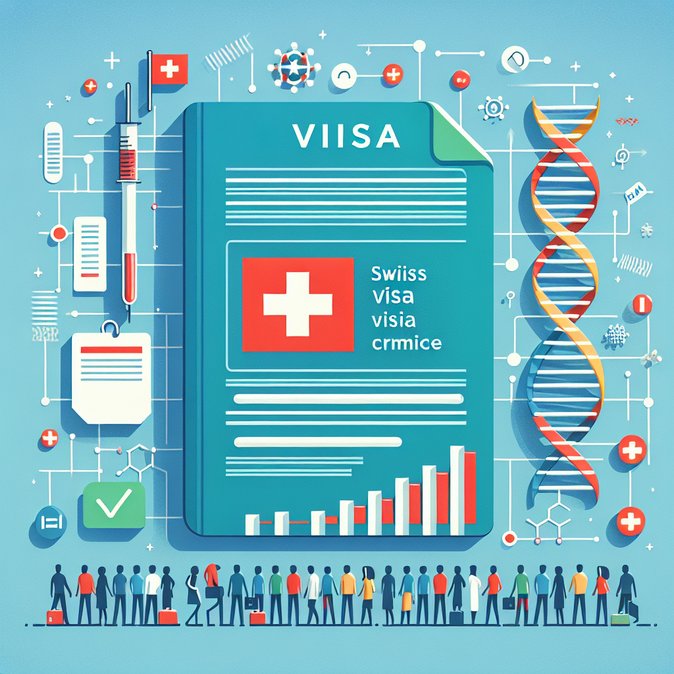
Swiss short-stay visitors to the United States can breathe a temporary sigh of relief: U.S. Customs and Border Protection (CBP) confirmed that travellers using the Visa Waiver Program will not have to submit DNA samples when applying for an ESTA, despite a proposal to include genetic data among “high-value elements” gathered at the border. The draft rule, published in December, remains open for public comment until midnight (EST) on 9 February 2026.(visaverge.com)
The notice also floats collecting up to five years of social-media usernames, phone numbers and e-mail addresses—data points that privacy advocates deem excessive. CBP argues that richer datasets would strengthen identity verification and fraud detection, but legal experts note that the agency has provided scant evidence linking DNA to overstays or security threats.
For Swiss travelers who want to navigate such evolving U.S. requirements without the guesswork, VisaHQ offers up-to-date guidance and hands-on assistance. Its Swiss portal (https://www.visahq.com/switzerland/) monitors regulatory changes in real time and can help applicants complete ESTA forms, gather supporting documents, and stay informed should future biometric demands—DNA or otherwise—come into force.
![DNA Collection Off the Table—For Now—as U.S. Weighs Broader ESTA Data Grab]()
Switzerland’s Federal Data Protection and Information Commissioner told Global Mobility News that Bern is “monitoring the rule-making process closely” because any expansion of mandatory biometrics for visa-waiver travellers could trigger reciprocal measures under Swiss law.
If adopted, the changes would affect roughly 500,000 Swiss nationals who use the Visa Waiver Program each year for business, tourism and academic conferences. Large Swiss multinationals with U.S. subsidiaries say they are preparing template communications to reassure mobile employees, but warn that compliance costs—ranging from updated consent forms to secure storage of new data fields—could rise sharply.
Stakeholders have until the end of today to file comments on the U.S. Federal Register portal. A final rule could be issued later in 2026, though implementation is unlikely before 2027 given procurement and systems-testing lead times.
The notice also floats collecting up to five years of social-media usernames, phone numbers and e-mail addresses—data points that privacy advocates deem excessive. CBP argues that richer datasets would strengthen identity verification and fraud detection, but legal experts note that the agency has provided scant evidence linking DNA to overstays or security threats.
For Swiss travelers who want to navigate such evolving U.S. requirements without the guesswork, VisaHQ offers up-to-date guidance and hands-on assistance. Its Swiss portal (https://www.visahq.com/switzerland/) monitors regulatory changes in real time and can help applicants complete ESTA forms, gather supporting documents, and stay informed should future biometric demands—DNA or otherwise—come into force.

Switzerland’s Federal Data Protection and Information Commissioner told Global Mobility News that Bern is “monitoring the rule-making process closely” because any expansion of mandatory biometrics for visa-waiver travellers could trigger reciprocal measures under Swiss law.
If adopted, the changes would affect roughly 500,000 Swiss nationals who use the Visa Waiver Program each year for business, tourism and academic conferences. Large Swiss multinationals with U.S. subsidiaries say they are preparing template communications to reassure mobile employees, but warn that compliance costs—ranging from updated consent forms to secure storage of new data fields—could rise sharply.
Stakeholders have until the end of today to file comments on the U.S. Federal Register portal. A final rule could be issued later in 2026, though implementation is unlikely before 2027 given procurement and systems-testing lead times.